
Can You Seal a Gravel Driveway With Blacktop Sealer?
Do not pour ordinary blacktop sealer over loose gravel. Match the fix to the problem: grading, gravel stabilization, a compatible binder, dust control, or proper asphalt paving.
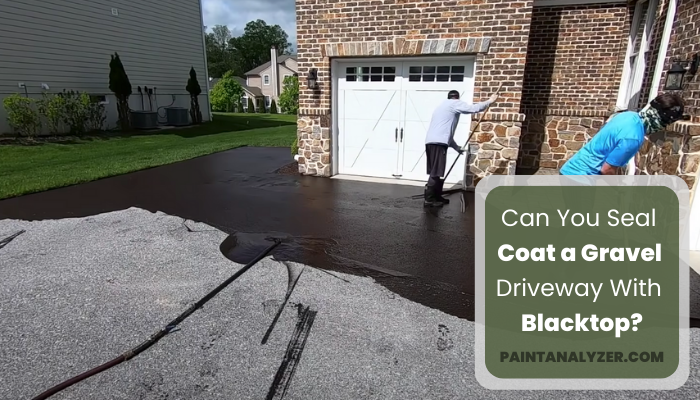
No—ordinary blacktop or asphalt driveway sealer should not be used as a coating over a loose gravel driveway. Driveway sealer is made to renew and protect an existing asphalt pavement film; loose aggregate does not provide the continuous asphalt surface the product is designed to coat. Pouring sealer over gravel can leave an uneven, messy surface without correcting the base, drainage, rutting, or stone migration that usually caused the problem.
If your real goal is to make a gravel driveway firmer, less dusty, or less prone to ruts, use a system designed for aggregate. Depending on the problem, that may mean regrading and compacting the driveway, adding the correct crushed aggregate, installing a gravel-stabilization grid, using a binder specifically approved for the aggregate and vehicle loads, or paving the driveway with asphalt.
Why blacktop sealer does not turn gravel into asphalt
An asphalt driveway is a compacted pavement made from mineral aggregate bound with asphalt cement. A driveway sealer is a comparatively thin maintenance coating applied after an asphalt pavement already exists. It is not a substitute for the asphalt mix, compaction, thickness, base preparation, or drainage design used to build pavement.
Loose gravel behaves differently. Individual stones move under tires, water passes through or around the aggregate, and the surface changes as the base settles. A film-forming sealer poured onto that moving surface cannot correct structural deficiencies underneath it.
Choose the treatment based on the problem you are trying to solve
| Problem | Better approach | What it does not do |
|---|---|---|
| Ruts, potholes, washboarding | Correct drainage, regrade, add suitable aggregate if needed, and compact | Does not create a sealed asphalt surface |
| Gravel migrates or feels loose | Consider a load-rated gravel stabilization grid or an aggregate stabilization system | Does not fix a weak or saturated sub-base |
| Dust | Improve gradation/compaction or use a dust-control product specifically approved for the site | Not every dust suppressant is suitable for residential runoff conditions |
| You want a bound natural-looking surface | Use a binder specifically designed for the selected aggregate and vehicle traffic | Compatibility depends on aggregate size, fines, drainage, climate, and product specification |
| You want black, sealed pavement | Build a proper asphalt pavement over a suitable prepared base | Sealer alone cannot perform this conversion |
How to improve a gravel driveway without paving it
1. Fix drainage first
Look for standing water, erosion channels, soft shoulders, and places where runoff crosses the driving surface. Repeated rutting often returns if water continues to saturate or wash out the base. Correcting the surface crown, ditching, culverts, or edge drainage may be more important than adding another surface product.
2. Regrade and compact the existing material
Pull displaced aggregate back into low areas, remove loose organic material, and restore a consistent profile. If the driveway lacks a well-graded compactable surface layer, a local aggregate supplier or driveway contractor can recommend material appropriate to the existing base and climate. Compacting in controlled lifts is more effective than simply spreading loose stone over potholes.
3. Use a gravel stabilization system only when it matches the load
Cellular gravel grids physically confine aggregate and can reduce migration and rutting while keeping the surface permeable. They still require the sub-base and installation method specified by the manufacturer. A grid placed over soft, poorly drained soil will not magically create a sound driveway.
4. Treat binders as engineered products, not as generic “sealer”
Some products are formulated to bind specific crushed aggregates into a firmer permeable surface. Their performance depends on particle-size distribution, fines, application rate, curing conditions, slope, and traffic. Use only a product whose technical data explicitly allows your aggregate and driveway use; make a small test area when the manufacturer recommends one.
When not to DIY the repair
- The driveway repeatedly sinks, pumps water, or develops deep ruts after grading.
- Runoff is entering a public road, neighboring property, well area, or sensitive drainage system.
- The driveway is steep enough that erosion or vehicle traction is a concern.
- You want to convert the surface to asphalt and need excavation, base correction, or paving equipment.
Common mistakes
- Pouring asphalt sealer over loose stone: it confuses a pavement-maintenance coating with a paving or stabilization system.
- Adding stone without fixing water: new gravel can disappear into the same soft spots.
- Using rounded decorative gravel for a traffic surface: aggregate shape and gradation affect how well a surface locks together.
- Buying a “binder” without reading the traffic rating: products intended for decorative paths are not automatically suitable for vehicle loads.
What “seal a gravel driveway” can mean
Homeowners often use the word seal for several different goals. Those goals require different products, so identify the outcome before buying anything:
- Stop loose stone from migrating: improve aggregate gradation/compaction or use a vehicle-rated cellular stabilization grid.
- Reduce dust: correct the surface mix and maintenance first; if a dust-control treatment is considered, use one specifically approved for the site and check local runoff/environmental restrictions.
- Create a resin-bound or bound-aggregate surface: use a binder system whose manufacturer explicitly approves the aggregate size, base, slope, drainage, climate, and vehicle loads.
- Get a black asphalt surface: that requires actual asphalt paving over a suitable base, not a thin maintenance sealer.
How to evaluate the driveway before choosing a product
- Check the base: walk and drive the route after wet weather. Soft pumping areas and repeated deep ruts suggest a base/drainage problem rather than a surface-coating problem.
- Check aggregate shape and fines: a driveway made largely from rounded decorative stone behaves differently from a compactable crushed aggregate blend.
- Check water movement: note low spots, edge erosion, runoff paths, blocked ditches, and places where water crosses the drive.
- Check slope and braking zones: steep sections and turning areas place higher shear loads on loose aggregate and some binder systems.
- Check the product TDS before purchase: confirm the intended substrate says gravel/aggregate—not merely “driveway”—and confirm vehicle traffic is permitted.
Why a small test area matters with gravel binders
Aggregate color, dust content, absorption, particle size, and fines can all affect appearance and bond. If a manufacturer allows DIY application, make the recommended sample area before treating the entire drive. Judge the cured sample for stone retention, tire pickup, color change, drainage, and whether the surface becomes too slick or brittle for the intended use.
What to do if blacktop sealer has already been poured on gravel
Do not automatically add another coat. Let the material cure as far as it can under the product conditions, keep vehicles off any tacky areas, and assess whether loose stone can be removed mechanically without spreading uncured material. If a thick asphalt-emulsion layer has contaminated a large area, a paving or driveway contractor may need to remove/rework the surface aggregate. The appropriate cleanup depends on the exact sealer and its SDS/TDS; do not wash uncured asphalt emulsion into soil, storm drains, or waterways.
Bottom line
If you searched for how to seal a gravel driveway, start by defining what “seal” means for your project. For a stable gravel surface, repair the base and drainage and use a gravel-specific stabilization method. For a true asphalt driveway, install asphalt. Save ordinary blacktop sealer for the existing asphalt pavement it was designed to maintain.
Sources and further reading
Guides are researched against primary documentation and observable evidence. Archived material is rewritten, checked, and substantially improved before publication.