
Can You Paint Over These Specialty Coatings and Sealants?
From masonry waterproofing paint to truck bed liner coating, each of these specialty products has its own specific surface chemistry that determines whether and how new paint will actually stick.
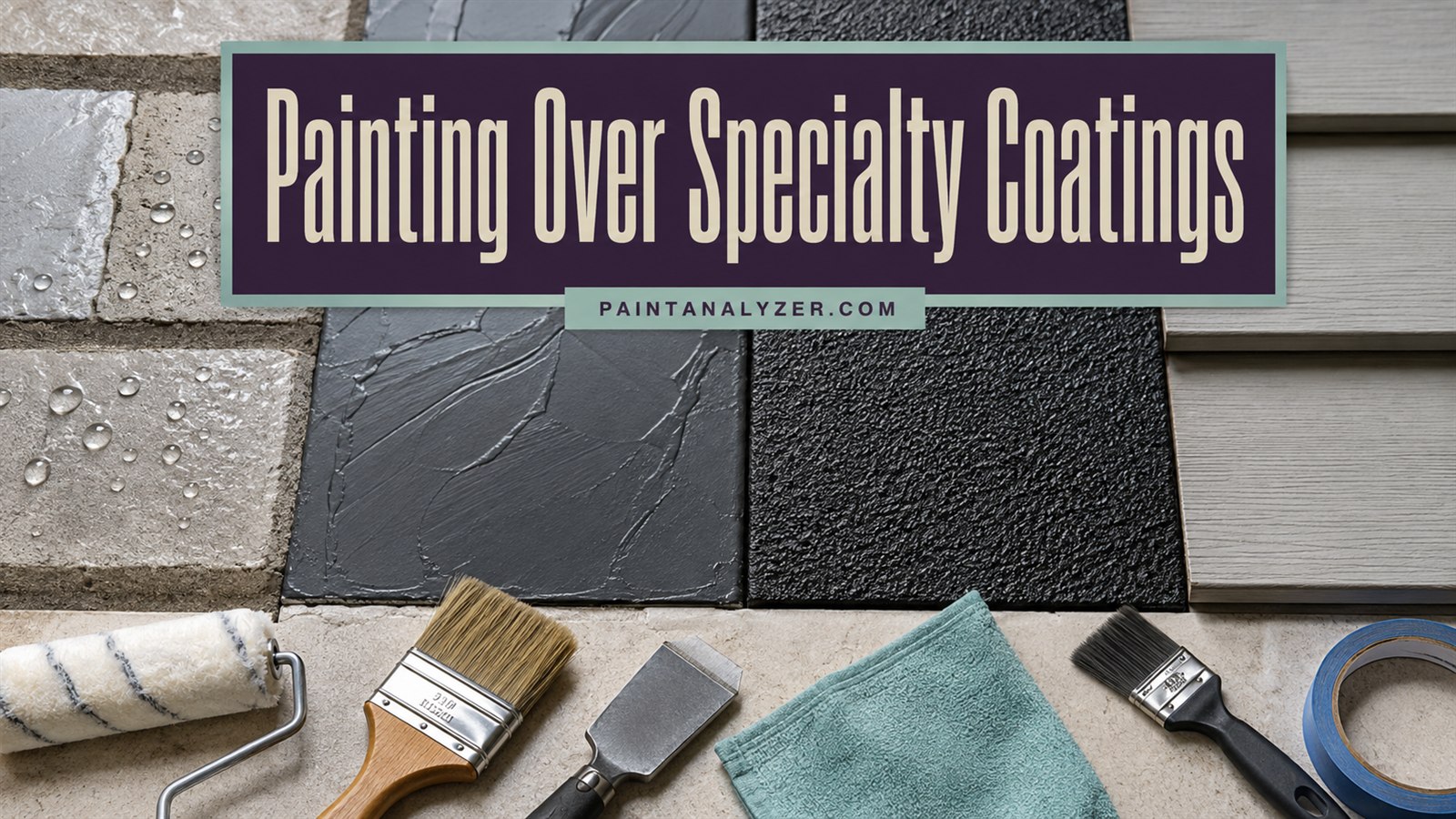
Several well-known specialty coatings and sealant products come up repeatedly with the same question — can you paint over this — and each one has a genuinely specific answer based on that product's particular surface chemistry and intended function.
1. Masonry waterproofing paint (like Drylok)
Yes — masonry waterproofing paint generally accepts a new topcoat once clean and, if glossy, lightly deglossed, following the same masonry painting prep; checking that the new paint is compatible with the waterproofing product's specific chemistry (water-based over water-based, typically) avoids adhesion issues.
2. Engineered wood siding (like Duratemp)
Yes, this type of engineered wood siding is generally designed to be painted or stained as part of normal maintenance — following standard exterior wood siding prep (cleaning, addressing any existing coating issues, priming) works well, similar to the approach covered for other engineered wood products on this site.
3. Flexible rubberized sealant (like Flex Seal)
This is genuinely difficult — flexible rubberized sealants are formulated with a low-surface-energy finish specifically to remain flexible and waterproof, and most standard paints don't adhere reliably to this surface even with sanding; a specialty flexible bonding primer designed for rubber substrates offers the best chance of success, though results can still be inconsistent.
4. Rust-preventive coating (like POR-15)
Yes, generally, once fully cured — this type of coating cures to a hard, glossy finish that, following the same deglossing and bonding primer approach covered for any hard glossy coating, accepts a topcoat reasonably well; checking the specific product's recoat window is worthwhile, since some rust-preventive coatings have a specific time window for best topcoat adhesion.
5. Spray-on truck bed liner (like Raptor Liner)
Yes — this type of textured, durable coating generally accepts paint on top once clean, since its inherently textured surface actually provides good mechanical grip for a new topcoat, though matching a flexible paint formulation to accommodate the liner's own flexibility gives more durable results.
6. Waterproofing membrane (like RedGard)
These products are typically installed under tile as a waterproofing layer rather than left exposed as a final surface, so painting over one directly isn't the typical use case — where one is visible and painting is genuinely needed, checking the specific product's compatibility with tile-adjacent coatings or paint is worthwhile given its specialized waterproofing function.
7. Water-repellent wood sealer (like Thompson's Water Seal)
This is difficult without proper prep — water-repellent sealers are specifically formulated to resist absorption, which is exactly what makes paint adhesion challenging; a thorough cleaning to remove as much residual sealer as possible, combined with light sanding and a bonding primer, gives the best chance of the new paint actually adhering reliably.
8. The common thread: check what the product was actually designed to do
In every case, understanding what a specialty coating or sealant was formulated to resist (moisture, adhesion, absorption) explains why it either accepts or resists new paint — products designed specifically to repel or resist something are, understandably, often the hardest ones to paint over successfully.
Guides are researched against primary documentation and observable evidence. Archived material is rewritten, checked, and substantially improved before publication.