
Can You Paint Over These Existing Coatings and Materials? A Quick-Reference Guide
From lacquer to limewash to garage floor epoxy, each of these existing coatings needs its own specific prep approach before new paint will actually stick and last.
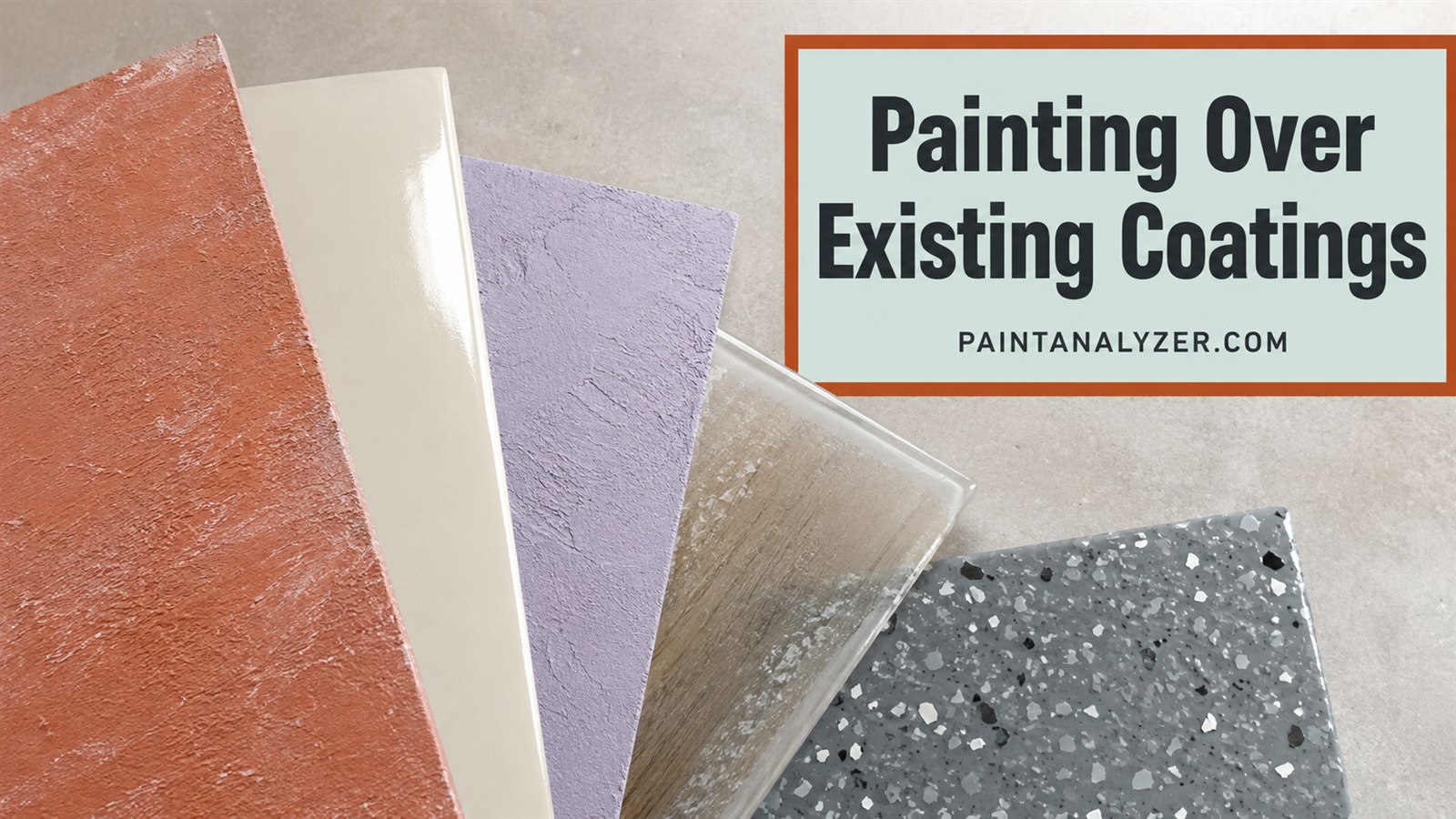
A wide range of existing coatings and materials come up again and again with the same basic question — can you paint over this — and while the general answer is usually yes with the right prep, each one has its own specific adhesion challenge worth understanding before starting.
1. Chalk paint
Yes — chalk paint's matte, absorbent surface actually takes new paint quite readily, needing only a light clean and, for a glossy topcoat sealed over the chalk paint, some light sanding to break that gloss before repainting.
2. Lacquer
Yes, with proper deglossing — lacquer cures to a hard, glossy finish, and following the same deglossing principle covered throughout this site (light sanding, a bonding primer), standard paint adheres well once that gloss is broken.
3. Limewash
Limewash's chalky, breathable, matte mineral finish generally takes new paint reasonably well after cleaning, though checking that any loose or powdery limewash residue is removed first (similar to addressing a chalking exterior surface, as covered elsewhere) gives a more stable base for the new paint.
4. Mod Podge
Yes — cured Mod Podge (a craft decoupage glue/sealer) generally accepts paint on top once fully dry, though testing adhesion on a small area first is worthwhile given some variation in how different Mod Podge formulations cure.
5. Polycrylic
Yes, with light sanding — polycrylic's clear protective topcoat has some sheen that benefits from a light scuff-sanding pass before painting, following the same adhesion logic covered for painting over any glossy clear finish.
6. Polymer clay
Cured polymer clay generally accepts acrylic paint reasonably well, since its surface has enough texture and porosity for paint to grip — a light sanding for an especially glossy cured clay surface can further improve adhesion if needed.
7. Existing old paint in generally sound condition
Yes, following standard repainting practice — cleaning, addressing any loose or peeling areas, and deglossing a glossy existing finish (covered in detail throughout this site) sets up new paint to adhere well over sound existing paint.
8. Garage floor epoxy
Painting over cured epoxy coating requires thorough deglossing (epoxy cures very hard and glossy) and a bonding primer specifically suited to epoxy surfaces — standard floor paint applied without this prep tends to peel relatively quickly from an unsanded epoxy floor.
9. Green algae
No — painting directly over active algae growth traps it under the new paint rather than addressing it, and it will likely continue growing and showing through; cleaning thoroughly with an appropriate algae-killing solution and allowing the surface to fully dry before painting is the correct approach.
10. Gelcoat (fiberglass surfaces)
Yes, following the same fiberglass painting approach — light sanding to deglossy the gelcoat, a bonding primer, then a durable topcoat suited to the specific application (marine, automotive, or general use).
11. A wallpaper border
Generally not recommended directly — a wallpaper border's raised edge and different surface texture compared to the surrounding wall tends to show through paint as a visible ridge; removing the border first (following standard wallpaper removal practice) gives a cleaner result than painting directly over it.
12. Duct tape residue or an area where duct tape was applied
Any remaining duct tape adhesive residue needs to be fully removed first (following the adhesive removal guidance) — paint applied directly over adhesive residue won't adhere reliably and the sticky residue can bleed through or prevent proper curing.
13. The general principle across all of these
Most existing coatings and materials can be painted over successfully once their specific surface characteristic — gloss, active growth, raised texture, adhesive residue — is properly addressed first; skipping this material-specific prep step is what causes most paint-over failures, not a fundamental incompatibility between the materials themselves.
Guides are researched against primary documentation and observable evidence. Archived material is rewritten, checked, and substantially improved before publication.