
Can You Paint Over Specialty Coatings and Sealers? (POR-15, Drylok, RedGard, and More)
Most of these specialty coatings are engineered to be exceptionally hard, sealed, or chemically inert — which means the same deglossing-plus-bonding-primer approach that works on any glossy sealed surface applies across nearly all of them.
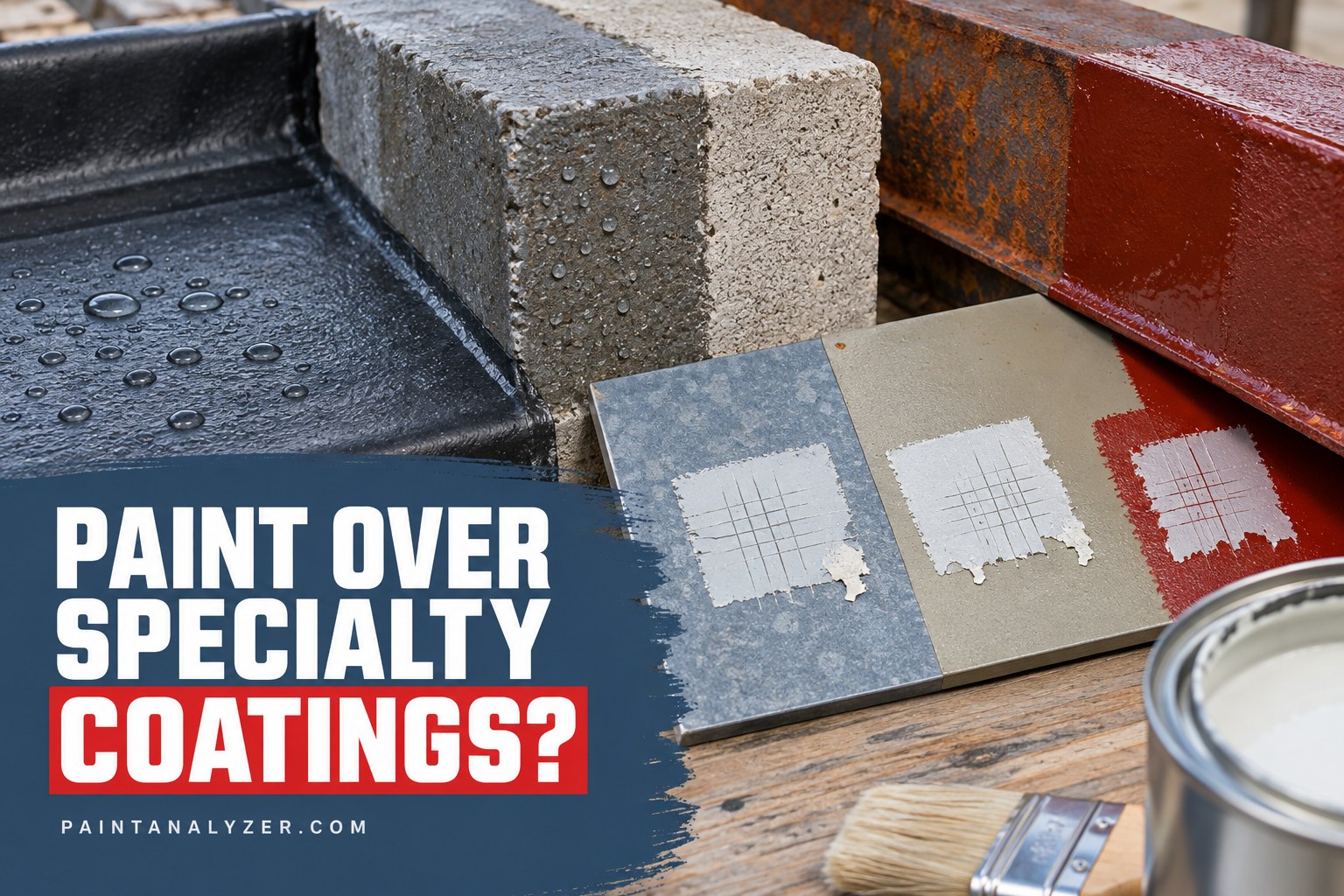
A recurring pattern runs through most of these specialty industrial and construction coatings: each one is formulated to be unusually hard, chemically resistant, or fully sealed — exactly the properties that make it a genuinely tough surface for a new coat of paint to grip without deliberate prep. Working through each product below.
1. POR-15 (rust-preventive coating)
POR-15 cures to an extremely hard, glossy, chemically resistant film specifically designed to seal out rust and moisture — painting over it is possible but needs the surface fully cured first (it can take weeks to reach full hardness) and a thorough scuff-sand to break its characteristically tough gloss, followed by a bonding primer rated for slick, sealed surfaces. Standard paint applied directly, without this prep, adheres poorly.
2. Drylok (masonry waterproofing paint)
Drylok is itself a paint product (a waterproofing masonry coating), so painting over a fully cured Drylok surface generally works well with standard masonry-compatible paint, following normal prep — clean, light scuff if the surface is glossy, and a compatible primer if switching between drastically different colors.
3. RedGard (waterproofing/crack-isolation membrane)
RedGard is a liquid-applied waterproofing membrane used in tile and wet-area installations — it's not typically meant to be a final visible surface, so painting over it usually only comes up if it's been left exposed unintentionally. It has a somewhat rubbery, flexible cured texture; a flexible bonding primer suited to rubberized surfaces gives the best chance of adhesion, though checking whether RedGard should actually remain exposed in its installed context (often it's meant to be covered by tile, not paint) is worth confirming first.
4. Thompson's Water Seal (deck/wood water repellent)
Thompson's and similar water-repellent sealers penetrate wood and leave a low-sheen, water-resistant surface — painting over it requires the sealer to have fully cured and weathered somewhat (many labels recommend waiting weeks to months), then a light sanding and a paint genuinely compatible with a water-repellent-treated substrate; skipping the wait risks poor adhesion since the repellent is still actively resisting liquid penetration, including from the new paint.
5. Flex Seal (rubberized sealant coating)
Flex Seal cures to a flexible, rubberized film — similar to the approach covered for painting rubber generally, a flexible, rubber-compatible paint (not a standard rigid paint film) is needed to avoid cracking as the Flex Seal layer continues to flex underneath it.
6. Raptor Liner / truck bed liner coatings
These are permanently bonded, texture-heavy protective coatings (distinct from temporary products like Plasti Dip) — painting over them is possible with a paint that can handle the heavy texture (often requiring a thicker application or accepting the texture will show through) and a bonding primer, though the rough texture itself limits how smooth any topcoat can ultimately look.
7. Garage floor epoxy
Cured epoxy floor coatings are extremely hard and glossy — the same aggressive sanding/etching-plus-bonding-primer approach covered for painting over polyurethane or powder coating applies here, just requiring more thorough abrasion given epoxy's particular hardness; many people instead choose to apply a fresh epoxy topcoat (same-chemistry-to-same-chemistry) rather than switching to standard paint, since epoxy-to-epoxy adhesion is generally more reliable.
8. Gelcoat (fiberglass boats/tubs)
As covered for fiberglass generally, gelcoat needs sanding to break its factory gloss, followed by a marine or fiberglass-rated primer — standard automotive or marine painting practice applies well here once that prep is done.
9. Lacquer
As covered in detail separately for putting lacquer over paint, the concern here runs the other direction too — painting over cured lacquer with standard paint is generally more straightforward than the reverse, since lacquer's solvents (the real risk in that other direction) aren't a factor when lacquer is the base layer; standard deglossing and a compatible primer are the main steps.
10. Limewash
Limewash is a very porous, matte, breathable traditional finish — painting over it with a standard non-breathable paint can trap moisture behind the new film in a way that echoes the vapor-permeability concern covered for painting brick; a genuinely breathable masonry paint, or continuing with limewash/mineral paint rather than switching to standard acrylic, preserves that breathability.
11. Polycrylic
Polycrylic is a water-based clear protective topcoat with a moderate sheen — painting over it needs the same deglossing and bonding-primer approach as any clear sealed finish, following the logic covered for painting over polyurethane generally, since the two products behave similarly as a paint-adhesion surface despite different chemistries.
12. The universal pattern across all of these
Nearly every product above shares the same underlying lesson: a hard, sealed, or chemically resistant surface needs mechanical (sanding) or chemical (deglosser) preparation plus a genuine bonding primer before new paint has a reliable chance of sticking — checking the specific product's own cure time and any manufacturer recoat guidance first is always worth doing before assuming a universal timeline applies.
Guides are researched against primary documentation and observable evidence. Archived material is rewritten, checked, and substantially improved before publication.