
Can You Paint Over Asbestos Tile? What You Need to Know
Painting can be a legitimate way to encapsulate intact asbestos tile without disturbing it, but any prep work that sands, cuts, or damages the tile itself creates a genuine health hazard.
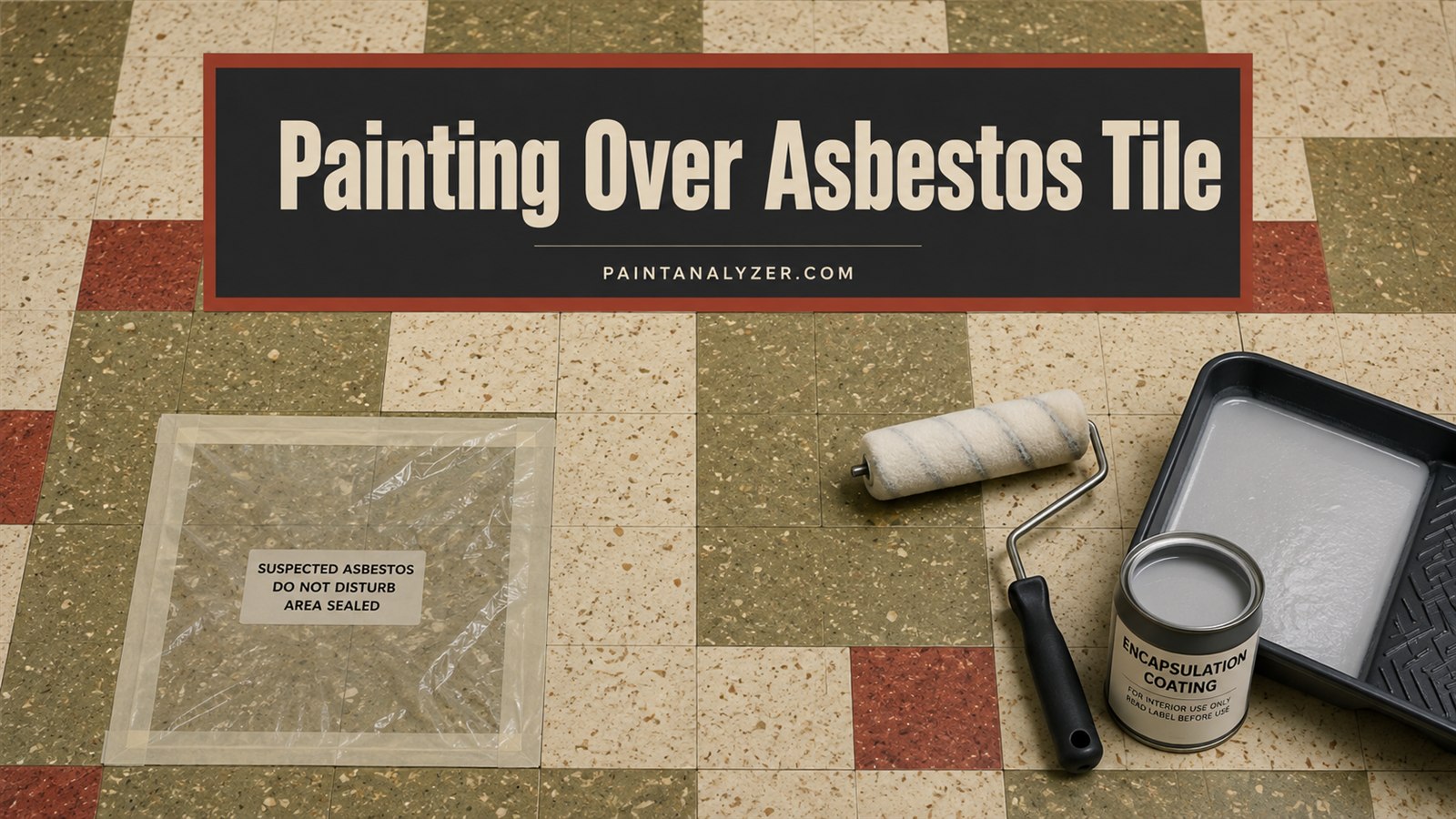
Asbestos-containing floor tile, common in homes built before the 1980s, requires real caution given asbestos's serious, well-documented health risks — painting over intact tile without disturbing it can be a legitimate encapsulation approach, but the process needs to be handled carefully and honestly.
1. First, confirm whether the tile actually contains asbestos
Many older vinyl floor tiles do contain asbestos, but not all do — the only reliable way to know for certain is testing, either with a home test kit or, more reliably, having a sample professionally analyzed by an accredited asbestos testing lab, rather than assuming based on the tile's age or appearance alone.
2. Undamaged, intact asbestos tile is generally lower risk left undisturbed
Asbestos poses a health risk primarily when its fibers become airborne, which happens when the material is damaged, cut, sanded, or otherwise disturbed — intact, undamaged asbestos tile that's simply sitting in place, without any of these disturbances, is generally considered lower risk than actively working on it.
3. Why painting over intact tile can be a reasonable encapsulation approach
Applying paint directly over confirmed-intact asbestos tile, without any sanding or surface prep that would disturb the material, can act as an encapsulation layer, sealing the tile's surface — this is a recognized general approach to managing asbestos-containing material in place when full removal isn't being pursued.
4. What you must never do: sand, scrape, or otherwise damage the tile
Any prep work that sands, scrapes, cuts, drills into, or otherwise damages asbestos tile releases fibers into the air, creating a genuine and serious health hazard — this is the single most important rule here, and it rules out normal deglossing or surface prep techniques used for other flooring.
5. Cleaning gently, without abrasive scrubbing
If cleaning is needed before painting, a gentle, damp-mop approach (never dry sweeping, which can raise dust, and never abrasive scrubbing) minimizes any disturbance to the tile's surface while still preparing it adequately for paint.
6. Using a paint appropriate for the flooring, applied without further surface prep
A floor-rated paint, applied directly following the manufacturer's instructions without any sanding step, avoids disturbing the tile while still achieving reasonable adhesion — checking that the product doesn't require aggressive surface prep for adhesion is part of choosing an appropriate product for this specific situation.
7. When professional abatement is the right call instead
For tile that's already damaged, cracked, or deteriorating, or for anyone planning more extensive flooring work that would disturb the material, professional asbestos abatement (following local and federal regulations) is the appropriate and legally required path — this isn't a situation where a DIY approach to removal or aggressive prep is a reasonable option given the genuine health stakes involved.
Guides are researched against primary documentation and observable evidence. Archived material is rewritten, checked, and substantially improved before publication.