
Can You Paint Over a Rusted Door?
Painting straight over active rust traps moisture and lets it keep spreading under the new coat — the rust has to be treated first, not just covered.
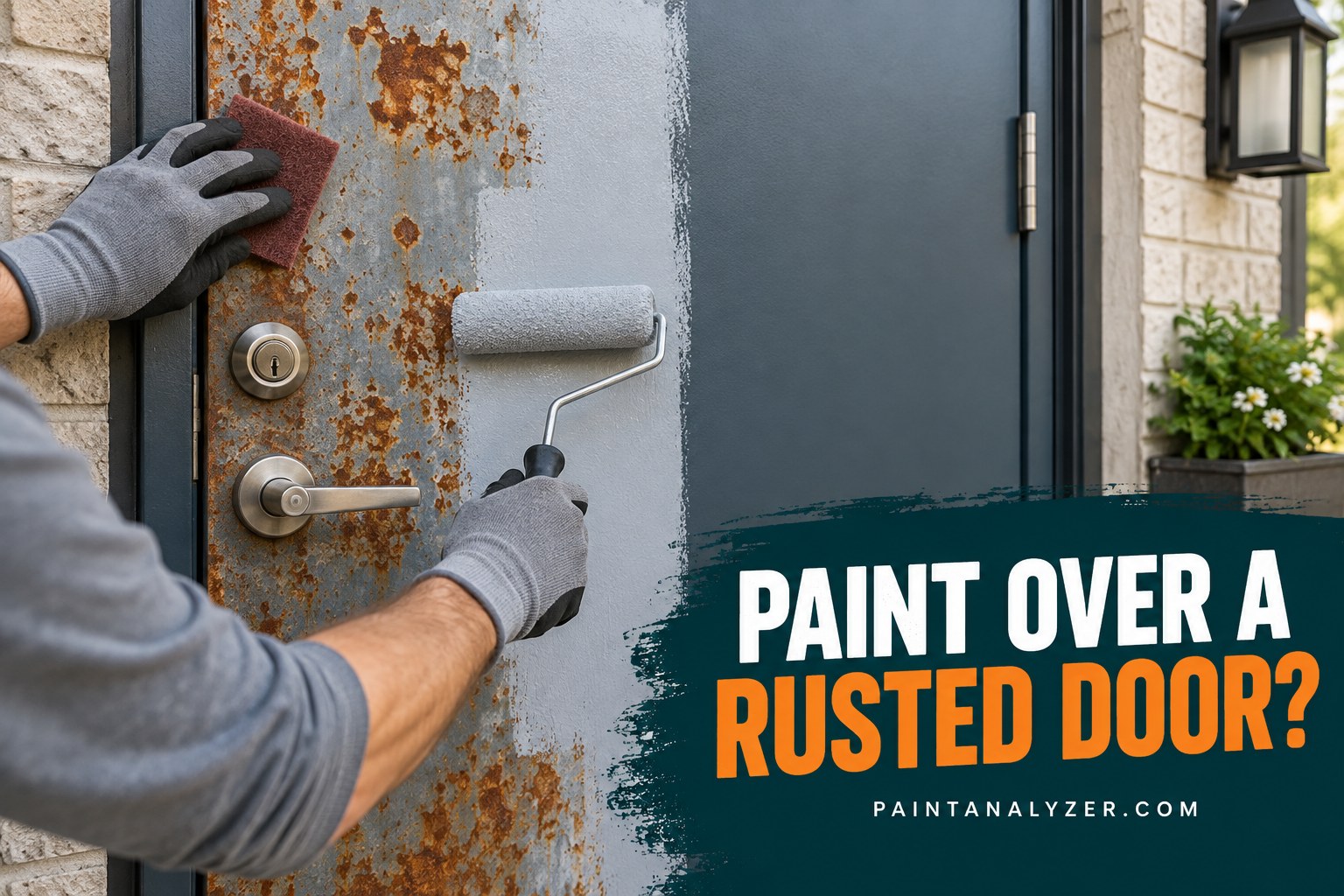
Painting directly over active, loose rust is a common reason a metal-door repaint fails early — corrosion continues beneath a coating that was never bonded to a stable surface, eventually causing bubbling or flaking from below.
The actual process
- Remove loose rust and scale — use a wire brush or a suitable abrasive until what remains is sound metal or a stable, tightly adhered rust layer. You don't necessarily need bare shiny metal everywhere; you do need to remove anything flaking or loose.
- Clean and degrease — rust-prone areas often have oil or grime mixed in, which blocks primer adhesion on its own, separate from the rust.
- Apply a rust-converting or rust-inhibiting primer specifically formulated for the purpose — this is the step that actually stops corrosion from continuing under the paint, not the topcoat.
- Topcoat with an exterior-rated metal paint once the primer has fully cured per its label instructions.
Rust converters vs. rust-inhibiting primers
Rust converters chemically react with remaining rust and leave a surface intended for subsequent coating; rust-inhibiting primers are formulated to protect prepared metal from renewed corrosion. They are not automatically a two-step stack. Some systems call for a converter followed by a compatible primer, while others are designed to be topcoated directly. Follow the specific product system rather than assuming more layers always mean better protection.
Why skipping straight to paint fails
Ordinary topcoat is not a substitute for rust treatment. Painting over unstable corrosion can look fine on application day and then fail from underneath as the metal continues to corrode, especially anywhere exposed to weather or condensation.
Find the moisture source before treating the rust
Rust at a bottom edge, around weatherstripping, or behind a kick plate often tells you where water is lingering. If a leaking threshold, failed seal, condensation problem, or trapped debris keeps the metal wet, the best primer system will still be working against the same cause. Repair drainage and sealing problems as part of the paint job rather than treating corrosion as a purely cosmetic defect.
Perforation changes the job from painting to repair
Surface rust can be cleaned and coated; metal that has thinned through, developed holes, or lost structural strength needs repair or replacement. Probe suspect areas carefully after removing loose scale. Paint and filler can hide a hole visually, but they do not restore the strength of a badly corroded door edge or frame.
Feather the transition around repaired areas
After removing loose paint and rust, sand the edge of the remaining sound coating so there is not a sharp ridge around the bare-metal patch. That improves both adhesion and appearance. Clean off abrasive dust and any residue required by the rust-treatment product before priming; contamination between steps can undo otherwise good mechanical prep.
Coat edges and exposed seams, not only the visible face
Corrosion often starts where the paint film is thin: door bottoms, folded seams, drilled holes, and chipped edges. If accessible and permitted by the door manufacturer, protect those prepared areas as part of the coating system. A perfect front face does little if water continues reaching bare metal around an untreated edge.
Respect compatibility and recoat windows
Rust treatments, primers, and finish coats can have specific cure and recoat requirements. Applying the next product too soon can trap solvent or interfere with the chemical conversion; waiting beyond a specified recoat window can require another scuff. Follow the labels as one system instead of treating "rust converter," "primer," and "metal paint" as universally interchangeable categories.
Guides are researched against primary documentation and observable evidence. Archived material is rewritten, checked, and substantially improved before publication.