
Can You Paint Laminate Flooring?
Laminate can be painted, but its slick, non-porous wear layer means adhesion — not color choice — is the entire challenge, and durability underfoot is a real limitation.
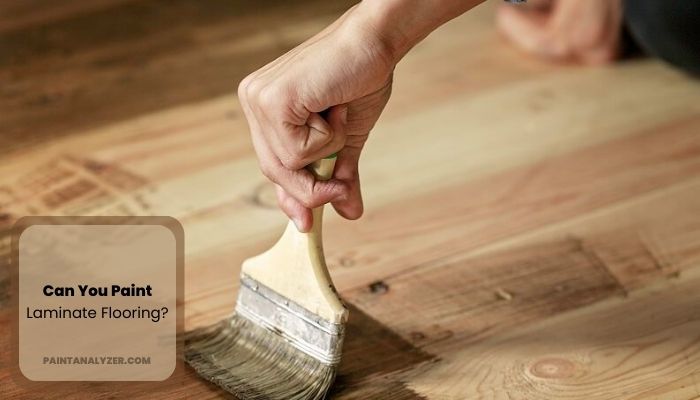
Laminate flooring can be painted, but its wear layer — the hard, slick, non-porous top coating that makes laminate durable and easy to clean — is exactly what makes paint adhesion difficult. This is a real, boundary-pushing project, not a standard repaint.
The core problem: adhesion
Laminate's wear layer is designed specifically to resist things sticking to it, including paint. Without real prep, paint can scratch, peel, or wear through quickly in high-traffic areas.
Prep that gives it a real chance
- Deep clean — remove all wax, polish, and residue; anything left on the surface further blocks adhesion.
- Scuff the wear layer — use the abrasive grade recommended for the bonding primer or floor-coating system, with the goal of dulling the slick surface without cutting through the decorative layer. Skipping this is a common reason laminate paint jobs fail.
- Use a bonding primer specifically formulated for slick, non-porous surfaces (often marketed for tile, laminate, or "hard to stick" surfaces) — a standard wall or floor primer is not the same product and won't perform the same job.
Paint and sealer choice
Use a coating explicitly rated for floors and compatible with the bonding primer underneath. Some systems also call for a compatible floor-rated clear topcoat; others are designed as a complete finish without one. Follow the coating system as a system rather than assuming any generic polyurethane will bond correctly over any floor paint.
Realistic expectations
Even with correct prep, a painted laminate floor is a lower-durability surface than the original laminate wear layer, and will need more frequent touch-ups in high-traffic zones (entryways, in front of a kitchen sink) than low-traffic rooms. This is a legitimate budget/cosmetic option, not a permanent floor refinish.
First confirm that replacement is not the cheaper long-term fix
Painting makes the most sense when the laminate is structurally sound and the project is a cosmetic bridge — for example, buying time before a later renovation. If boards are swollen, separating, flexing badly, or damaged by moisture, paint cannot stabilize them. Coating a failing floor only hides the evidence temporarily while adding prep work that replacement would have avoided.
Do not sand through the decorative layer
Laminate's top structure is thin compared with solid wood. The objective is to abrade the slick wear surface enough for the approved primer system, not to "refinish" it like hardwood. Aggressive sanding can cut through the printed decorative layer and expose the core, especially at edges and high spots. Use the abrasive and prep method specified by the bonding primer or floor coating you intend to use.
Test adhesion before committing the whole room
Choose a hidden area, perform the complete cleaning/abrading/primer/paint sequence, let it cure for the specified period, then scratch and scuff it in a way that resembles normal use. If the system releases easily there, more square footage will not fix the compatibility problem. Laminate products vary enough that a test is more useful than a universal grit number.
Plan for movement at joints and edges
A floating laminate floor moves slightly with temperature and humidity. Thick paint or clear finish bridging board seams can crack along those movement lines, and coating should not glue the perimeter expansion gap to walls or trim. Expect the board pattern to remain visible rather than trying to fill every seam into one monolithic painted surface.
Check topcoat compatibility instead of assuming polyurethane
If the floor paint system specifies its own clear protective coat, use that compatible system. A generic polyurethane over an unrelated floor enamel can create adhesion or curing problems. The word "floor-rated" matters on both layers, but compatibility between them matters just as much.
Guides are researched against primary documentation and observable evidence. Archived material is rewritten, checked, and substantially improved before publication.