
Can You Paint Kitchen Cabinets Without Removing the Doors?
Painting cabinet doors in place is possible and common, but it trades some finish quality and edge coverage for convenience — here is the real tradeoff.
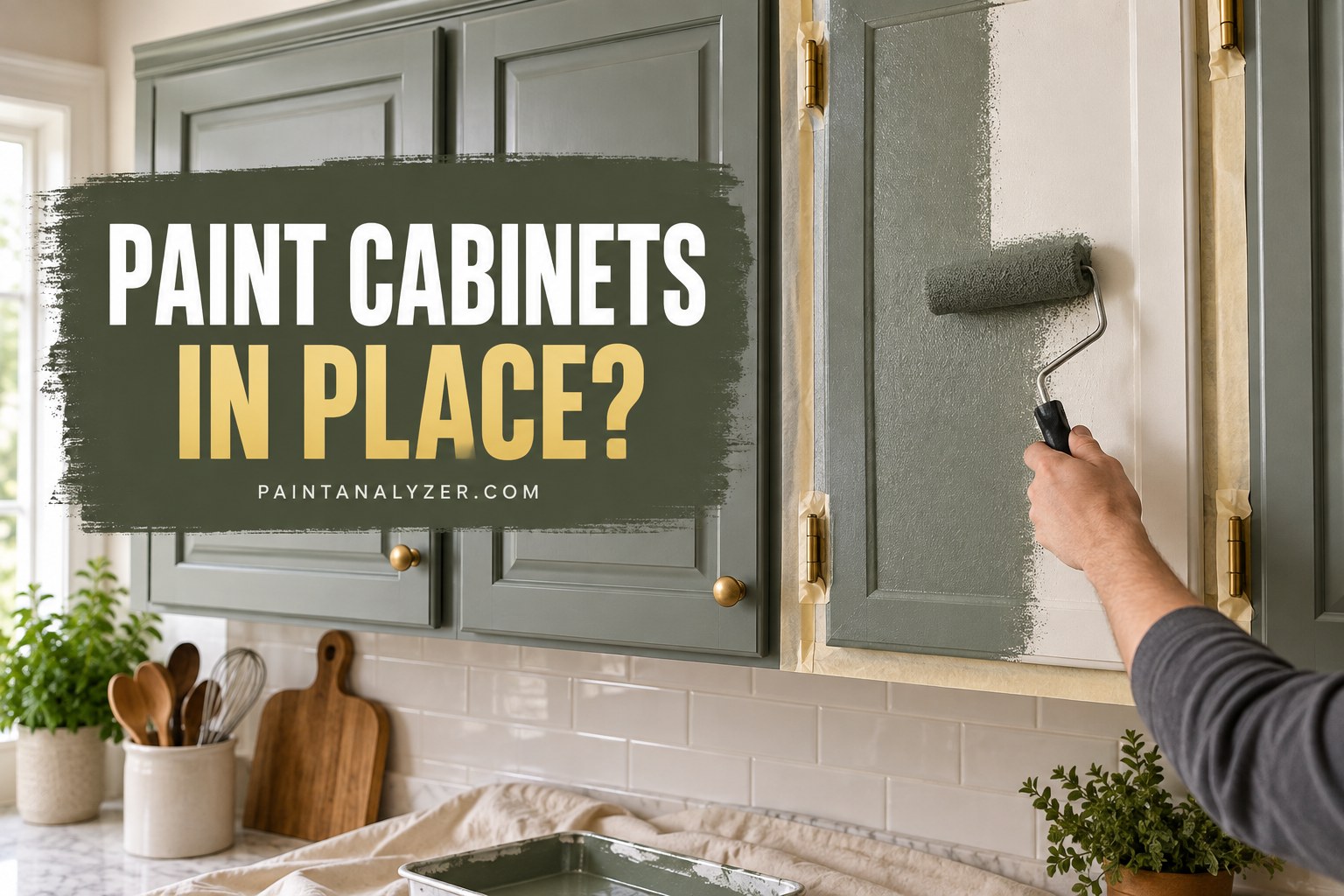
Yes, cabinet doors can be painted while still hung — it's a common shortcut, especially for a quick refresh — but it's a real tradeoff against the better result you get from removing them.
What you gain by leaving doors on
Speed and no reinstallation/rehanging risk (misaligned hinges, stripped screw holes on old cabinets are a real annoyance). For a quick color refresh on doors already in decent shape, painting in place is a reasonable choice.
What you lose
- Edge and profile coverage — panel edges, inside corners of raised-panel doors, and areas behind hinges are much harder to coat evenly with the door hanging and swinging.
- Drips and sags — painting vertically increases the chance of runs, especially with a sprayer, compared to laying doors flat on sawhorses.
- Hardware and hinge masking — every hinge, handle, and the surrounding wall/cabinet box needs careful masking; removed doors let you paint hardware-free in one motion.
The reasonable middle ground
Remove just the doors and drawer fronts (lay them flat, unhinged) but leave the cabinet boxes mounted and paint those in place — boxes have simpler flat surfaces that are genuinely fine to paint vertically, while doors benefit the most from being laid flat with hardware off.
If you do paint doors in place
Remove hardware (handles, knobs) rather than masking around it, use an angled sash brush for panel edges and corners, and apply multiple thin coats according to the coating instructions. A controlled film builds and levels more cleanly than trying to get full coverage from one heavy coat, regardless of whether the doors are hanging or flat.
Cleaning matters more on cabinets than on most walls
Kitchen doors accumulate invisible cooking oils, hand oils, polish, and cleaner residue. Paint can appear to cover that contamination while bonding poorly underneath it. Degrease thoroughly, rinse or wipe according to the cleaner instructions, and let the surface dry before sanding. Sanding a greasy door first tends to smear contamination across a larger area.
Label hardware and door positions if you remove anything
The middle-ground approach works best when reassembly is controlled. Mark each door and hinge location discreetly, keep screws/hardware grouped, and photograph unusual hinge adjustments before disassembly. Older cabinet boxes are not always perfectly square; a door that fit one opening well may need annoying adjustment if it is returned to another.
Do not paint hinge movement surfaces
If doors stay installed, mask hinges carefully rather than coating them. Paint on hinge knuckles, screw heads, or adjustment mechanisms can crack, bind movement, and make later service difficult. Removing handles and knobs is usually worth the few minutes because the finish can flow continuously around the holes instead of creating a ridge against taped hardware.
Cure time matters before normal kitchen use
A cabinet coating can be dry enough for another coat while still too soft for doors to close against bumpers, hardware to be tightened aggressively, or greasy hands to scrub the surface. Follow the coating's cure guidance and treat the doors gently at first. Blocking — two newly painted surfaces sticking together — is a common way a careful cabinet job gets damaged immediately after reassembly.
Use a cabinet/trim coating system, not ordinary wall paint by habit
Cabinets are high-touch surfaces. Choose a coating rated for the substrate and the hardness/cleanability the job needs, along with any recommended bonding primer. The decision to leave doors hanging affects application convenience; it does not change what performance the cured coating must provide.
Guides are researched against primary documentation and observable evidence. Archived material is rewritten, checked, and substantially improved before publication.