
Can You Paint Inside a Fire Pit?
The interior firebox needs a genuine high-heat product rated for direct flame contact — standard heat-resistant paint isn't rated for this, only the exterior of a fire pit should get a standard heat-resistant product.
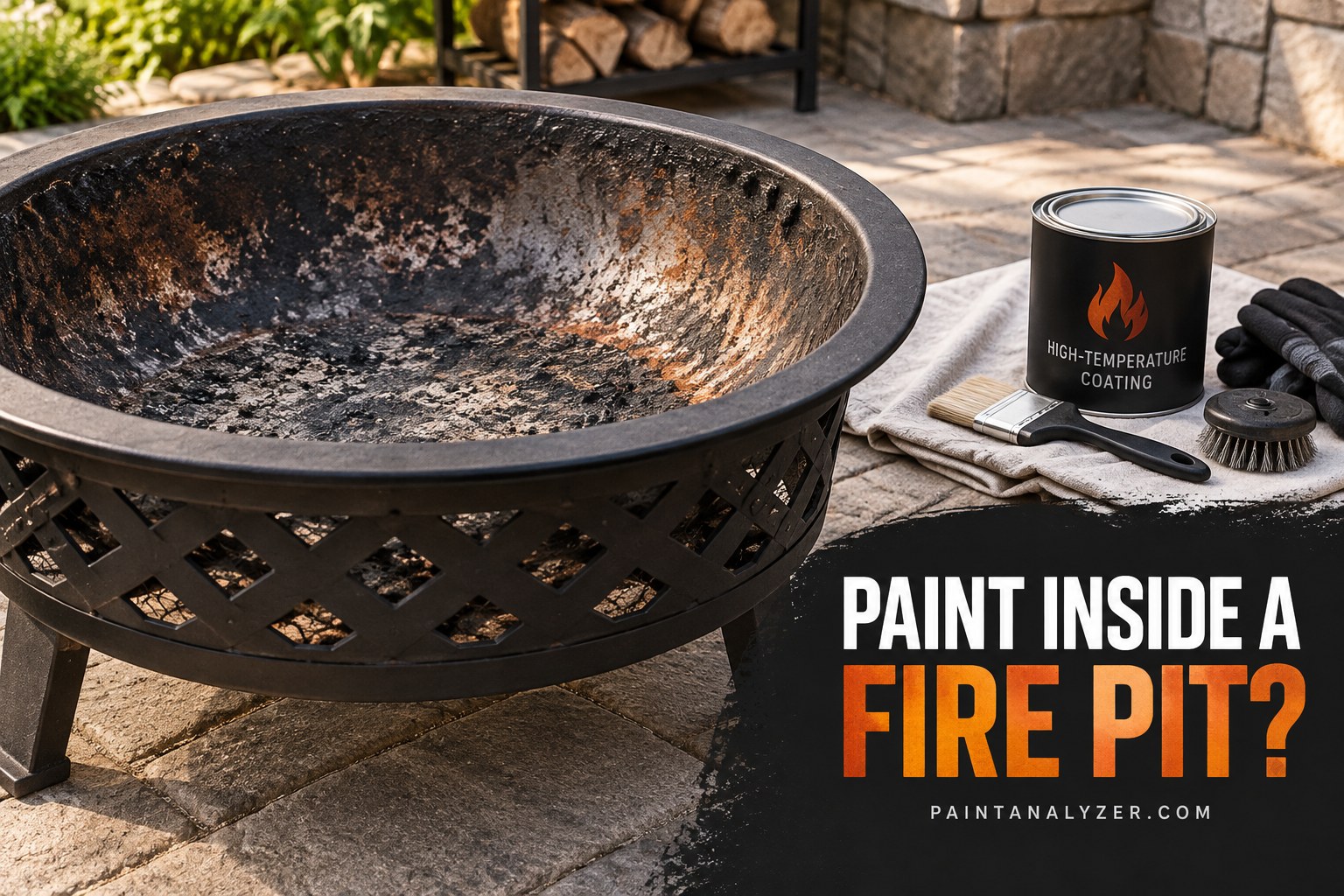
A fire pit's interior firebox — the part in direct, sustained contact with actual flame — needs a considerably higher heat rating than the exterior sides, which is exactly why this project requires two different product categories rather than one all-purpose heat-resistant paint applied everywhere.
1. The interior firebox needs an extreme-heat-rated product
The area in direct flame contact reaches temperatures well beyond what standard "heat-resistant" paint (often rated to a few hundred degrees) is formulated to survive — as covered for heat-resistant paint generally, specialty high-heat coatings rated into the 1200°F+ or even 2000°F+ range are what's actually needed for a genuine firebox interior, not a standard grill- or radiator-rated product.
2. Many fire pit manufacturers specifically recommend leaving the interior unpainted
For a metal fire pit, checking the specific manufacturer's guidance is worth doing before painting the interior at all — many recommend leaving the firebox interior in its bare, natural state (sometimes intentionally designed to develop a natural, heat-tempered patina over time) rather than painting it, since even an extreme-heat-rated product faces genuinely demanding conditions inside an active firebox.
3. If painting the interior anyway: use only a genuinely extreme-heat-rated product
A specialty high-heat coating explicitly rated for direct flame or firebox
contact — checking the specific temperature rating against what an actual
wood fire produces (which can exceed 1100°F/600°C at its hottest points)
Using anything less than a product explicitly tested and rated for this level of direct, sustained heat risks the paint failing, off-gassing, or burning off unevenly during the fire pit's first real use — this is a situation where checking the product's actual rated temperature against realistic fire temperatures matters more than assuming any paint labeled "heat resistant" is sufficient.
4. The exterior sides — a more standard heat-resistant paint job
The fire pit's exterior, which experiences radiant heat but not the extreme direct-flame temperatures the interior does, can generally use a standard heat-resistant metal paint (the same category covered for grills and stoves) rather than the extreme interior-firebox-rated product — this is the more straightforward part of the project, following standard heat-resistant metal painting practice.
5. Curing/break-in process
Many heat-resistant paint products specify a break-in or cure cycle — often a series of gradually hotter, controlled fires (or an oven cure for smaller parts) — to properly cure the coating to its full heat tolerance before regular use. Skipping this initial cure process, where the product calls for it, risks the paint failing prematurely during genuine full-heat use.
6. Ventilation and fume considerations during initial burns
A newly painted or coated metal surface, even with a rated heat-resistant product, can off-gas some odor during its first few uses as it fully cures under real heat — doing the first few fires in a well-ventilated outdoor area (which a fire pit typically already is, given its outdoor use) and being aware this is normal for the break-in period, rather than a sign of a failed application, is worth knowing going in.
Guides are researched against primary documentation and observable evidence. Archived material is rewritten, checked, and substantially improved before publication.