
Can You Paint Anodized Aluminum Window Frames?
Yes, but anodizing is specifically an extremely hard, sealed surface treatment — which means it needs more aggressive deglossing or etching than typical bare or painted aluminum to actually accept new paint.
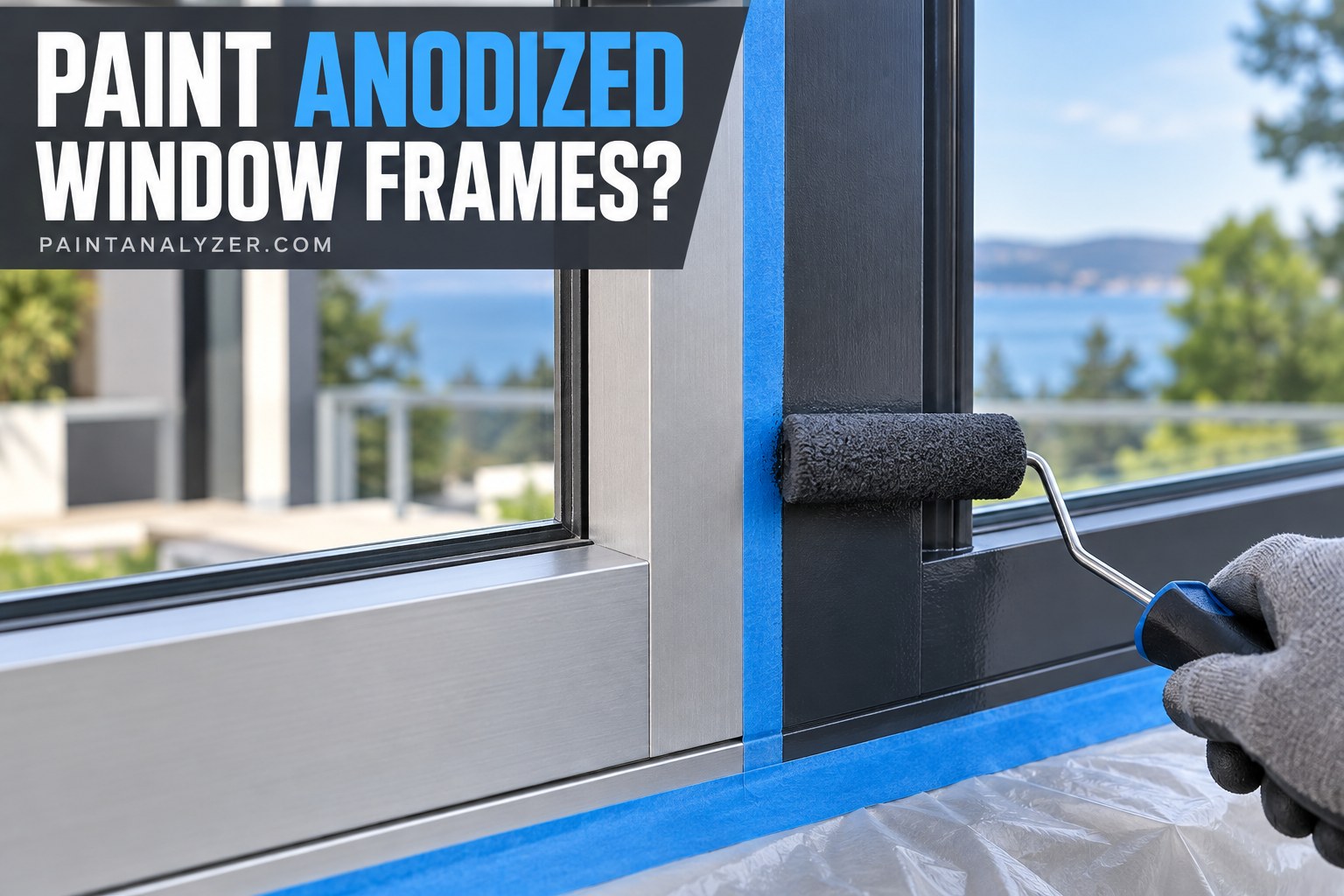
Anodized aluminum window frames can be painted, but anodizing — an electrochemical process that creates an exceptionally hard, sealed oxide layer on the aluminum's surface — is specifically designed to be corrosion-resistant and low-maintenance, which makes it a genuinely tougher surface for paint to bond to than either bare or standard painted aluminum.
1. Why anodizing resists paint more than other aluminum finishes
The whole point of anodizing is a hard, dense, chemically stable surface layer that resists corrosion and wear on its own — that same stability is exactly what makes it resistant to paint adhesion, since there's very little for paint (or even a standard primer) to mechanically or chemically key into without more aggressive surface preparation than typical bare aluminum needs.
2. Cleaning and degreasing first
Wash thoroughly with a degreasing cleaner to remove any accumulated grime, oils, or residue from the window frame's years of exposure and handling — a clean baseline matters here as much as for any other surface, even before the more aluminum-specific prep steps.
3. Sanding or etching — more aggressive than typical metal prep
220-grit (or coarser, depending on the anodized layer's hardness) sandpaper,
sanding until the surface loses its factory sheen entirely
Anodized surfaces generally need a more thorough scuff-sand than typical bare or painted aluminum to break through enough of that hard oxide layer's smoothness for primer to actually grip — a light pass that would be adequate on ordinary metal may not be sufficient here.
4. Use a primer specifically rated for anodized aluminum or "difficult" metal surfaces
A standard metal primer may not bond as reliably to anodized aluminum's particular surface chemistry as one specifically formulated for anodized or otherwise hard-to-adhere metal finishes — checking a primer's label specifically for anodized aluminum compatibility, rather than assuming any general metal primer will perform equally well, matters more here than on more paint-receptive metals.
5. Choosing a topcoat
Once properly sanded/etched and primed, a quality exterior-rated metal enamel or 100% acrylic paint can be used as the topcoat — the demanding part of this job is entirely in the adhesion-focused prep work; the actual topcoat application follows standard exterior metal painting practice once the surface has actually been prepared to accept it.
6. Consider whether professional refinishing is the better option
For a full set of window frames (as opposed to a small trim piece), and given how demanding proper anodized-surface prep genuinely is, a professional metal refinishing or powder-coating service may produce a more reliable, longer-lasting result than a DIY paint job — worth weighing against the DIY route specifically because anodized surfaces are among the more failure-prone DIY paint adhesion challenges if the prep work is rushed or incomplete.
Guides are researched against primary documentation and observable evidence. Archived material is rewritten, checked, and substantially improved before publication.