
Can You Paint a Kitchen Sink?
Yes, with a specialty epoxy refinishing kit rather than standard paint — a kitchen sink's constant water, heat, and abrasion exposure is genuinely harsher than what regular paint is built to survive.
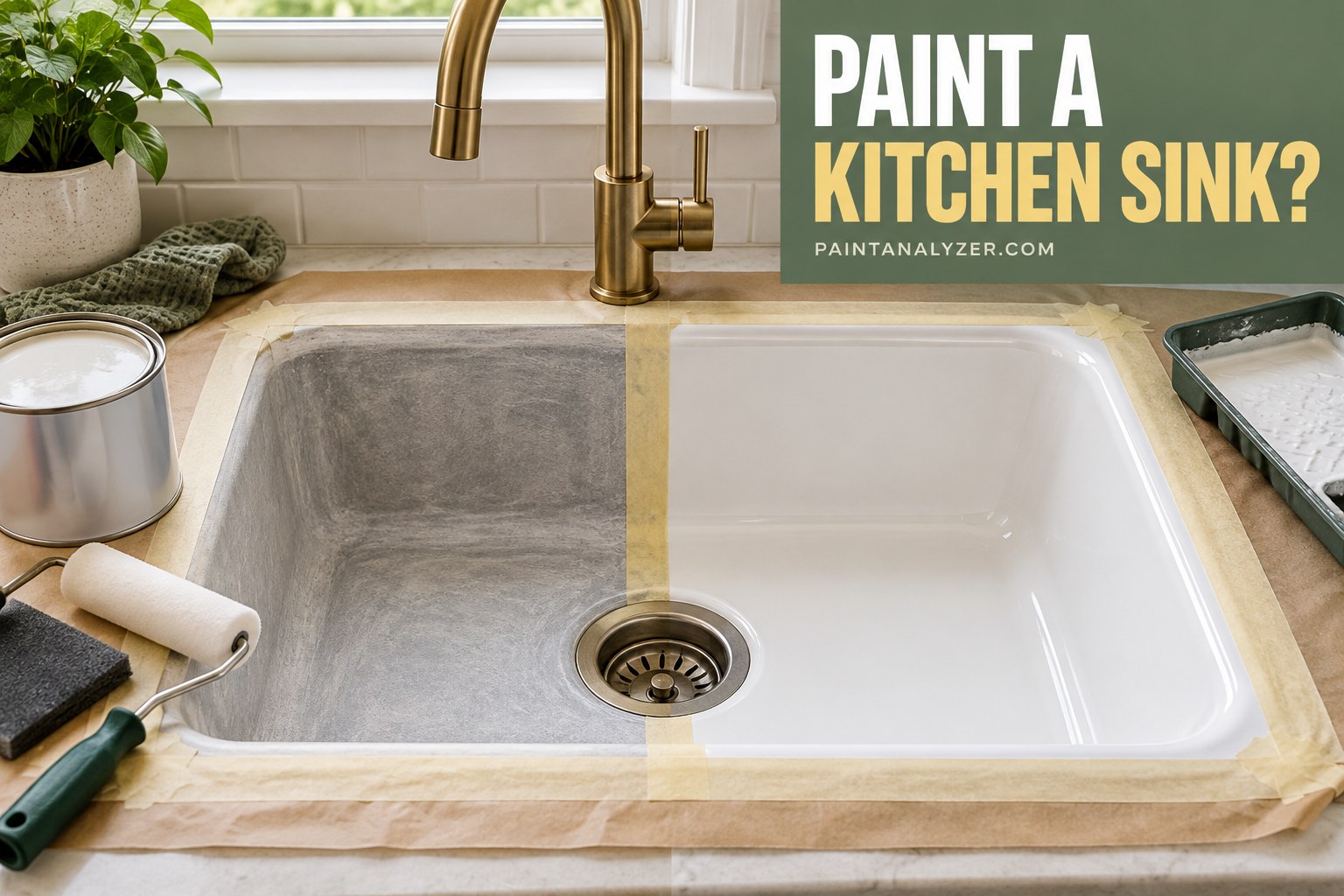
A kitchen sink is one of the more demanding surfaces in a home to refinish — constant water exposure, temperature swings (hot and cold water, hot pans), scrubbing, and contact with food and cleaning chemicals all place real, ongoing stress on any coating. Standard paint, even a quality enamel, isn't formulated to survive this combination reliably, which is exactly why dedicated epoxy refinishing kits exist as the appropriate product category here.
1. Why standard paint isn't the right choice for a sink
Regular paint, even durable enamel, isn't formulated for the specific combination of constant water immersion, thermal cycling, and physical abrasion a kitchen sink experiences daily — it's likely to chip, peel, or wear through relatively quickly under that use, in a way it wouldn't on a less demanding surface like trim or furniture.
2. Epoxy refinishing kits — the appropriate product category
A dedicated sink/tub/tile epoxy refinishing kit, specifically rated for wet,
high-wear surfaces
These kits use a two-part epoxy system (or, in professional applications, a sprayed urethane/epoxy coating) specifically engineered for water immersion, thermal cycling, and abrasion resistance — genuinely a different product category from standard paint, built for exactly this kind of demanding wet-surface application.
3. Surface prep is critical
1. Clean thoroughly, removing all soap scum, mineral deposits, and grease
2. Repair any chips or cracks per the kit's specific instructions
3. Sand or etch the surface per the kit's instructions to promote adhesion
   (many kits include or recommend an etching product for this)
4. Mask surrounding areas thoroughly (faucet, countertop edges)
4. Application and cure time
Epoxy refinishing kits typically require careful mixing of the two-part epoxy per exact instructions, application in thin even coats, and — critically — a genuinely extended cure time before the sink can be used again, often 48-72 hours or longer per the specific product. Using the sink before this full cure time has elapsed risks damaging the coating before it's reached its full hardness and chemical resistance.
5. Realistic durability expectations
Even a properly applied epoxy refinishing coating has a finite lifespan — commonly cited as several years under normal use, sometimes considerably less with heavy use or if abrasive cleaners are used against the manufacturer's care instructions. This is a genuine refinishing option, not a permanent, indefinite fix equivalent to a new sink.
6. When professional refinishing is the better call
For a sink with significant existing damage, or when a more durable, longer-lasting result matters more than DIY cost savings, a professional refinishing service (often using sprayed, professional-grade coating systems not readily available in a DIY kit) typically produces a more durable, even result than a DIY epoxy kit — worth weighing against the kit route specifically for a heavily-used kitchen sink.
7. Care after refinishing
Once refinished, avoiding abrasive scrubbers, harsh chemical cleaners, and extreme heat (setting a very hot pan directly in the sink) meaningfully extends the coating's usable life — the specific kit or professional service's care instructions are worth following closely, since this is a genuinely more delicate surface than the original sink material in most cases.
Guides are researched against primary documentation and observable evidence. Archived material is rewritten, checked, and substantially improved before publication.