
Can You Paint a Driveway?
Yes, with a dedicated concrete/masonry floor paint or a resurfacer coating — not standard exterior paint, which isn't built for a driveway's combination of vehicle weight, tire friction, and constant weather exposure.
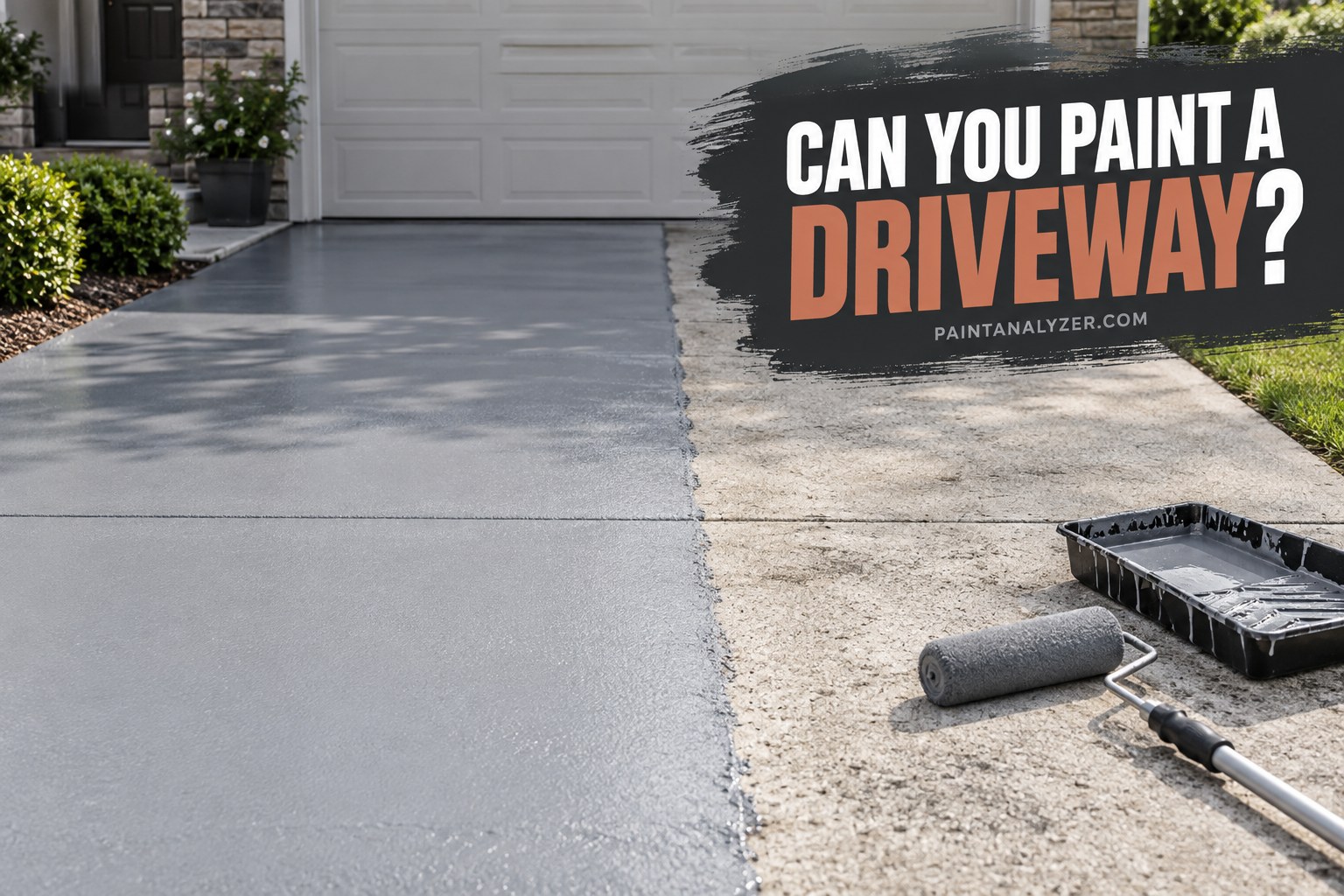
A concrete or asphalt driveway can be painted or coated to refresh its appearance or add a protective layer, but this needs a genuinely different product category than standard exterior wall or trim paint — a driveway experiences vehicle weight, tire friction, and constant full weather exposure that ordinary paint isn't engineered to survive.
1. Concrete driveways: use a dedicated concrete floor paint or coating
A concrete/masonry floor paint or epoxy garage-floor-style coating, specifically
rated for vehicle traffic
These products are formulated for the specific combination of abrasion (tire contact), UV exposure, and moisture cycling a driveway experiences — standard exterior wall paint lacks the abrasion resistance for this and will wear through relatively quickly under actual vehicle use.
2. Surface prep for concrete
1. Clean thoroughly — a pressure washer, plus a degreaser for any oil stains
2. Repair cracks and significant damage first
3. Etch the concrete (many products include or recommend an etching solution)
   to open up the surface for better adhesion, since new/sealed concrete can
   be too smooth and dense to accept coating well otherwise
4. Ensure the concrete is fully dry before coating
3. Asphalt driveways — different product category entirely
Asphalt driveways use dedicated asphalt sealer/coating products, not the same concrete-rated paint used for a concrete driveway — asphalt sealer is formulated specifically for asphalt's different surface chemistry and is the standard, well-established product for refreshing and protecting an asphalt driveway's appearance and surface integrity.
4. Realistic durability expectations
Even a properly applied, vehicle-rated concrete driveway coating has a finite lifespan under real vehicle traffic — expect to recoat periodically (the specific interval depends on traffic volume, climate, and the exact product) rather than treating this as a permanent, one-time fix.
5. Why oil and grease stains need pretreatment before coating
Existing oil or grease stains on a concrete or asphalt driveway can bleed through a new coating if not properly cleaned and treated first — a dedicated degreaser, applied and rinsed thoroughly before any priming or coating step, addresses this; skipping it risks the same stain showing through the new coating relatively quickly.
6. Cure time before returning the driveway to vehicle use
Driveway coatings typically need a genuinely extended cure time before they can handle vehicle weight and tire friction — often several days, sometimes longer depending on the specific product and weather conditions. Returning a vehicle to the driveway before the coating has fully cured risks damaging it before it's reached full hardness, potentially requiring the whole job to be redone.
7. When resurfacing, not just coating, is the better call
For a driveway with significant structural damage — deep cracks, major settling, extensive deterioration — a coating or paint doesn't address the underlying structural issue; a proper concrete or asphalt repair/resurfacing (potentially requiring a professional) should happen first, with cosmetic coating reserved for a driveway that's structurally sound but just needs a surface refresh.
Guides are researched against primary documentation and observable evidence. Archived material is rewritten, checked, and substantially improved before publication.