
Can You Paint a Car Radiator With Spray Paint?
Yes, but only the exterior housing — never the actual cooling fins or core, where paint buildup would insulate the radiator and interfere with the heat dissipation it exists to perform.
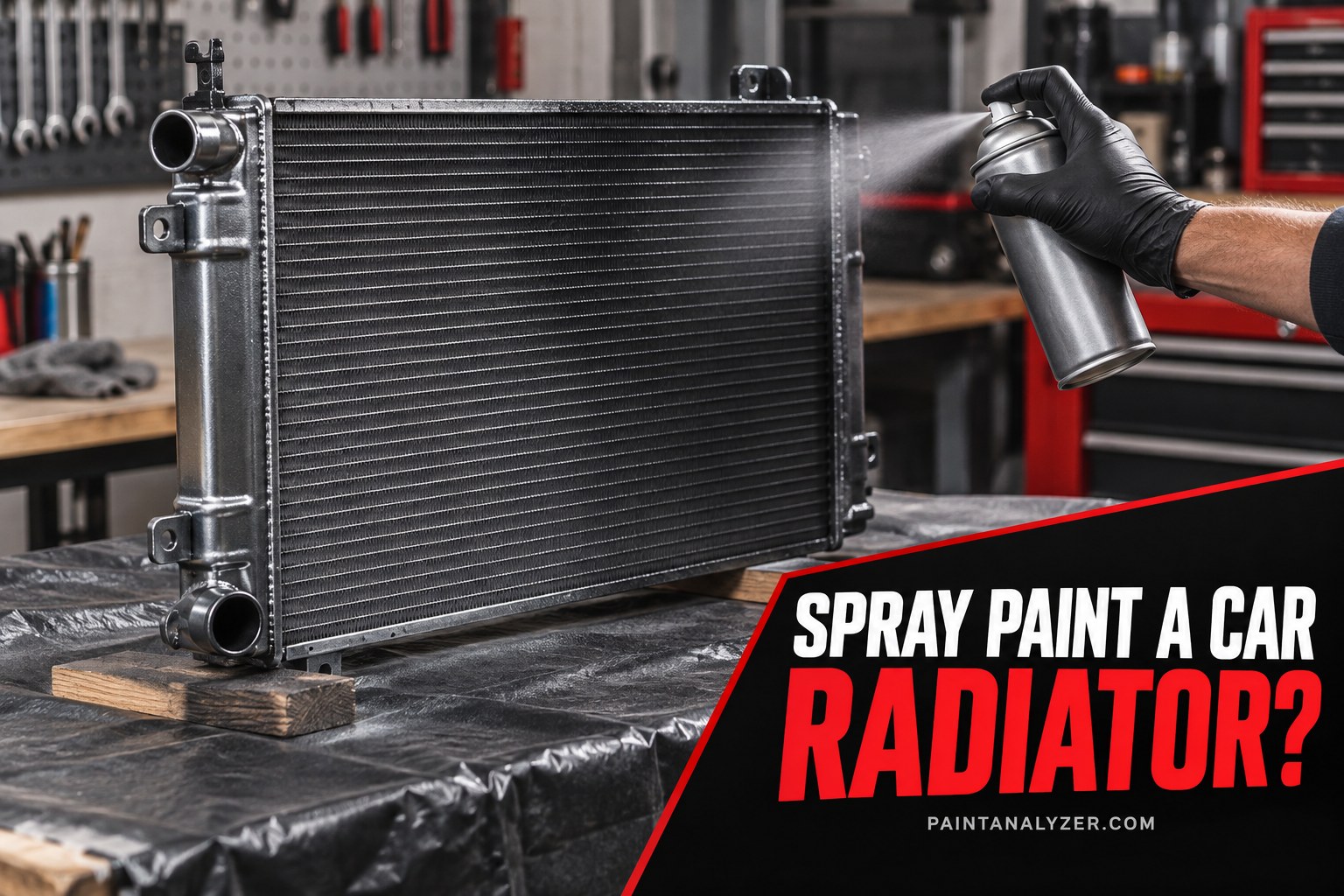
A car radiator's visible exterior housing or end tanks can be painted for a cosmetic touch-up, but the radiator's actual cooling fins and core — the part doing the real work of dissipating engine heat — should never be painted, since even a thin paint layer adds insulation that interferes with the heat transfer the radiator exists to perform.
1. Why the cooling fins and core are off-limits
A radiator cools the engine by transferring heat from coolant, through thin metal fins, to the air passing through them — this heat transfer depends on the metal's surface being as thermally conductive as possible. Even a thin paint coating adds a genuine insulating layer, which can meaningfully reduce cooling efficiency and, in more extreme cases, contribute to overheating.
2. What's actually safe to paint: the housing and end tanks only
The radiator's outer housing, brackets, and plastic or metal end tanks (parts not directly involved in the actual fin-and-core heat exchange) can be painted for cosmetic purposes without the same heat-dissipation concern — this is the area most visible in an engine bay and the reasonable target for a cosmetic refresh.
3. Masking the fins and core thoroughly before spraying anything nearby
1. Mask the cooling fins and core completely with painter's tape and plastic
   sheeting
2. Remove the radiator from the vehicle if practical, for more controlled
   spraying and complete masking
3. Spray only the housing/end tank areas in light, even coats
Thorough masking matters more here than on most spray projects, since overspray drifting onto the fins — even unintentionally — carries the same heat-dissipation concern as deliberately painting them.
4. Choosing an appropriate paint for the housing
A high-temperature-rated spray paint (following the same general logic covered for heat-resistant paint, since the housing still sits in a genuinely warm engine-bay environment even if it's not the primary heat-exchange surface) is a reasonable choice — a standard non-heat-rated spray paint risks discoloring or degrading from ambient under-hood heat over time.
5. Cleaning thoroughly before painting
Degrease the housing thoroughly before painting — engine bays accumulate genuine grease and road grime, and any residual oil undermines paint adhesion the same way it would on any other surface.
6. Realistic expectations
This is a cosmetic touch-up for a visible engine-bay component, not a functional upgrade — keep expectations proportional to that: light, even coats on the housing only, careful masking of the actual cooling surfaces, and acceptance that this won't change how the radiator performs, only how its visible housing looks.
Guides are researched against primary documentation and observable evidence. Archived material is rewritten, checked, and substantially improved before publication.