
Can Self-Leveling Compound Be Used on Bitumen?
Bitumen's flexible, oily surface needs a specific isolation membrane or specialty primer before standard self-leveling compound will bond reliably on top of it.
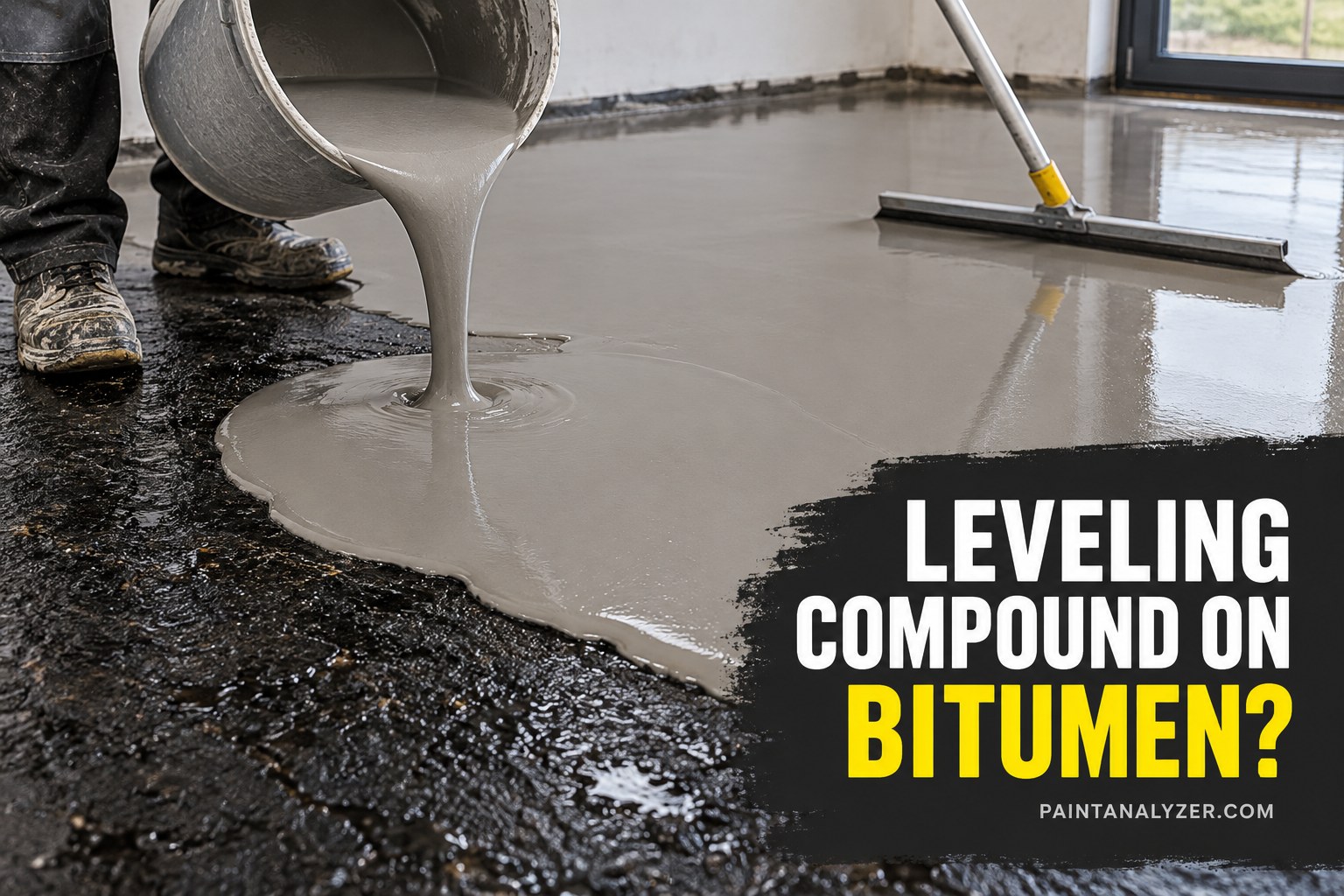
Self-leveling compound can be applied over bitumen (asphalt-based flooring or damp-proofing material), but bitumen's flexible, somewhat oily surface presents a genuine adhesion challenge that standard self-leveling compound application over concrete doesn't need to address.
1. Why bitumen presents a specific challenge
Bitumen's flexible, petroleum-based composition can bleed through or interfere with the curing and adhesion of standard cement-based self-leveling compound applied directly on top — this is a genuinely different adhesion challenge than the concrete substrate self-leveling compound is more commonly used with.
2. Assessing the bitumen's condition first
Checking that the existing bitumen is sound, well-adhered, and not deteriorating or excessively soft (bitumen can soften somewhat in heat) determines whether it's a reasonable substrate to build on top of at all, or whether removal is a more appropriate first step.
3. Using an isolation membrane
An isolation membrane, installed between the bitumen and the self-leveling compound, physically separates the two materials, preventing the bitumen's bleed-through issue and providing a stable, compatible surface for the self-leveling compound to bond to instead.
4. Using a bitumen-specific primer as an alternative approach
Some specialty primers are formulated specifically to seal bitumen and provide a compatible surface for subsequent flooring products — checking that a primer is specifically rated for use over bitumen, rather than a general-purpose concrete primer, matters given bitumen's distinct chemistry.
5. Following the self-leveling compound manufacturer's specific guidance
Different self-leveling compound manufacturers may have different specific recommendations or restrictions regarding application over bitumen — checking the specific product's technical guidance, rather than assuming all self-leveling compounds handle this substrate identically, gives more reliable, product-specific direction.
6. Testing in a small area before committing to a full floor
Given bitumen's known compatibility challenges, testing the chosen primer or membrane and self-leveling compound combination in a small area first, and checking for proper cure and adhesion after an appropriate waiting period, confirms the approach works before committing to the entire floor area.
7. When professional flooring guidance is worth seeking
Given the genuine compatibility complexity between bitumen and self-leveling compound, consulting with a flooring professional or the self-leveling product's technical support line for guidance specific to the exact bitumen product and condition involved is a reasonable step before a larger flooring project.
Guides are researched against primary documentation and observable evidence. Archived material is rewritten, checked, and substantially improved before publication.