
Can Rust-Oleum Be Used on Wood?
Yes — Rust-Oleum makes several product lines genuinely formulated for wood, not just their well-known metal/rust-focused products, so checking the specific product line matters more than the brand name alone.
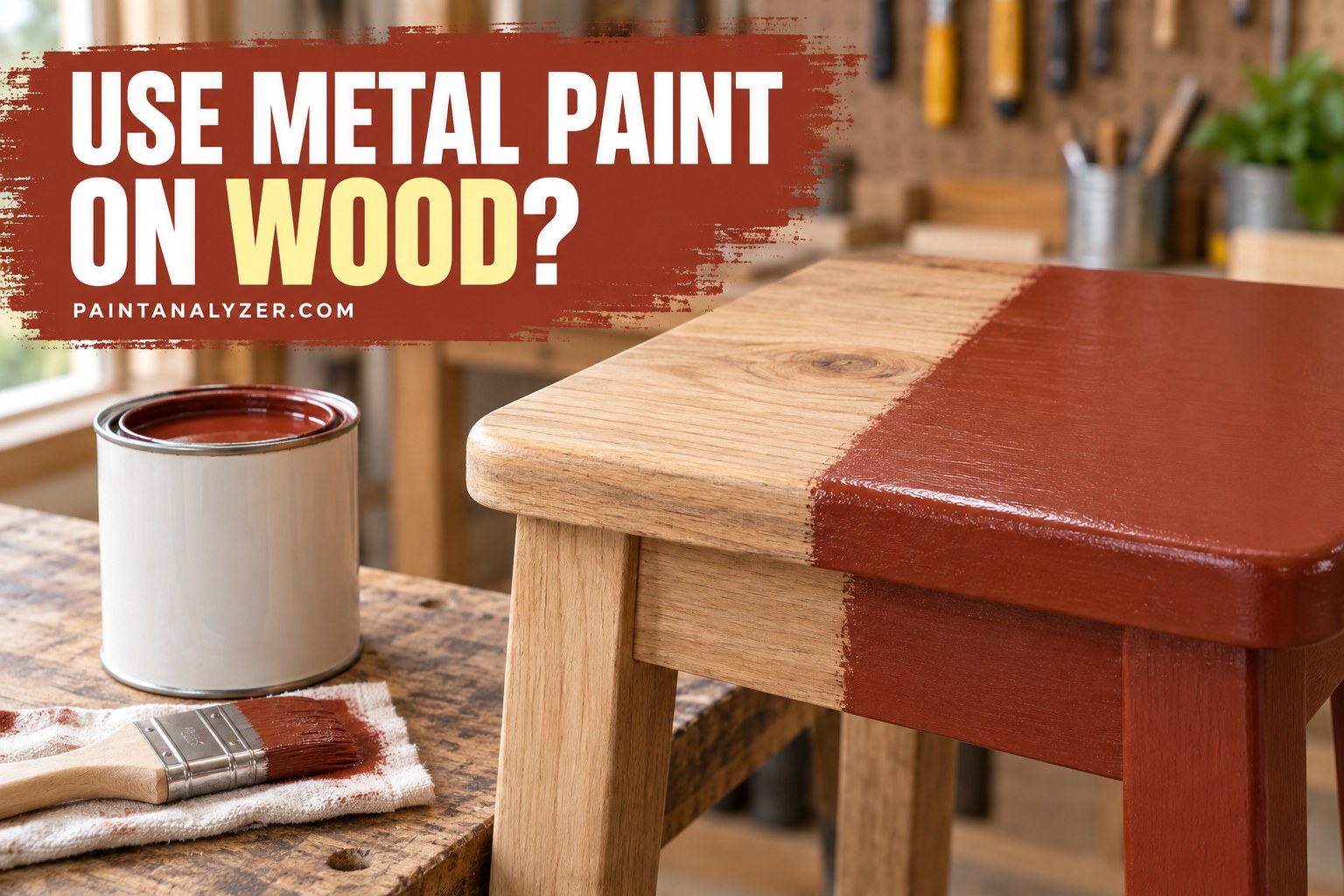
Rust-Oleum is best known for rust-preventive metal paint, but the brand makes a considerably wider product range than that reputation suggests — several Rust-Oleum lines are specifically formulated for wood, and the real question isn't "does the brand work on wood" but "which specific product line is actually rated for wood."
1. Why checking the specific product matters more than the brand name
A large paint brand like Rust-Oleum sells dozens of distinct product lines, each formulated for specific surfaces and use cases — a product genuinely excellent for bare metal isn't automatically the right choice for wood, and vice versa. Checking the specific product's labeled surface compatibility (wood, metal, plastic, masonry) matters more than assuming brand reputation alone answers the question.
2. Rust-Oleum lines commonly formulated for wood
Several Rust-Oleum product lines are explicitly marketed and formulated for wood surfaces — furniture paint and chalk-style paint lines, wood stain products, and general-purpose enamel paints labeled for multi-surface use including wood. Checking the specific product's own label for "wood" in its listed compatible surfaces is the reliable way to confirm before purchasing.
3. Rust-Oleum's metal-focused products, used on wood — generally not the intended use
Products specifically formulated and marketed for rust prevention on bare metal aren't generally intended for wood, and using them there skips whatever wood-specific formulation (flexibility for wood's natural movement, appropriate porosity handling) a genuine wood-rated product would provide — this doesn't necessarily mean total failure, but it's using a product outside its intended, tested use case.
4. Standard wood prep still applies regardless of brand
Whichever Rust-Oleum (or any other brand's) wood-rated product is chosen, standard wood preparation still applies — cleaning, sanding, and priming with a stain-blocking primer where relevant (knots, tannin-prone species), following the same wood-prep fundamentals covered throughout this site regardless of which specific paint brand ends up being used.
5. Multi-surface products — a genuine middle ground
Many modern paint products, including several Rust-Oleum lines, are explicitly formulated and tested for multiple surfaces at once (wood, metal, and sometimes plastic or masonry) — these multi-surface products are a legitimate, real option when a project spans more than one material, as long as the specific product's label actually confirms wood as one of its rated surfaces.
6. The practical takeaway
Rust-Oleum absolutely makes products genuinely suited to wood — the deciding factor is checking the specific product line's own labeled surface compatibility before buying, rather than assuming either "it's Rust-Oleum, so it must be for metal" or "it's a trusted brand, so any of their paint works on any surface." Both assumptions skip the actual useful information printed right on the can.
Guides are researched against primary documentation and observable evidence. Archived material is rewritten, checked, and substantially improved before publication.