
Can Roof Tiles Be Painted?
Yes, and it's a real option for restoring a faded roof's appearance — but the job needs a genuinely roof-rated paint system, careful cleaning, and realistic expectations about maintenance and safety.
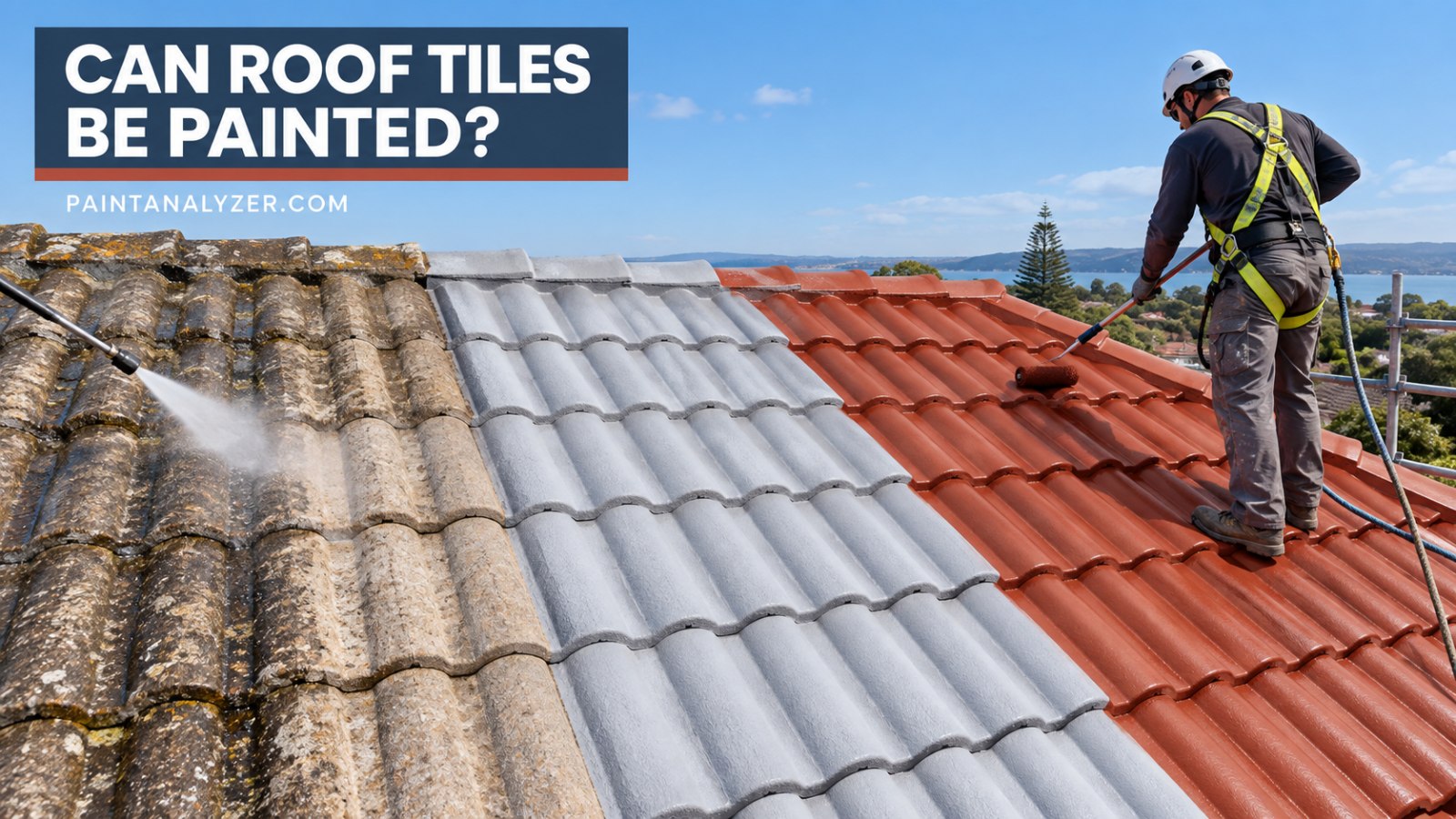
Painting roof tiles (concrete, clay, or similar) is a legitimate, established practice for restoring a faded or discolored roof's appearance without full replacement — but it's a genuinely different scale and safety consideration than most other painting projects, and it needs a paint system specifically engineered for roofing exposure, not general exterior paint.
1. Safety first — this is real roof work
Roof tile painting involves working at height on a sloped, potentially slippery surface — proper fall protection, appropriate footwear, and either genuine roofing experience or hiring a professional roof-painting contractor are worth taking seriously here in a way that doesn't apply to most other exterior painting projects covered on this site. This is genuinely one of the situations where professional help is the more sensible default for most homeowners.
2. Thorough cleaning is essential before painting
Pressure washing (at an appropriate pressure for the specific tile material,
to avoid damage) to remove algae, moss, lichen, and general grime
Roof tiles accumulate biological growth (algae, moss, lichen) and general atmospheric grime that must be fully removed before painting — paint applied over this buildup doesn't bond reliably and traps the organic growth underneath, which continues developing and can cause the new paint to fail relatively quickly.
3. Use a roof-specific paint system, not general exterior paint
Dedicated roof tile paint/coating systems (often elastomeric or acrylic-based, specifically formulated for the extreme UV, weather, and temperature cycling a roof surface experiences) are the appropriate product category here — standard wall or fence exterior paint isn't formulated for a roof's considerably harsher exposure and won't hold up nearly as long in that environment.
4. Priming, where the specific system calls for it
Many dedicated roof paint systems include or recommend a specific primer step, particularly for porous concrete tiles — following the specific manufacturer's complete system (primer plus topcoat, both from the same product line where recommended) generally gives more reliable, tested results than mixing products from different sources.
5. Realistic durability and maintenance expectations
Even a quality roof paint job has a finite lifespan — typically several years to over a decade depending on the product, climate, and roof orientation/sun exposure — and roof tiles facing intense, direct sun exposure will show wear faster than more shaded sections. Budgeting for eventual recoating, rather than treating this as a permanent one-time fix, is the realistic expectation.
6. When painting tiles isn't the right call
Tiles that are cracked, significantly deteriorated, or have underlying structural or leak issues need those problems addressed first — painting doesn't fix a damaged or failing tile, it only changes its surface appearance, and painting over a genuine structural problem just delays a repair that will eventually need to happen anyway, potentially after further damage.
Guides are researched against primary documentation and observable evidence. Archived material is rewritten, checked, and substantially improved before publication.