
Can Powder-Coated Metal Be Painted?
Yes, with the same core adhesion logic as any other hard, glossy, sealed finish — powder coating is intentionally tough and chemical-resistant, which is exactly what makes it need proper deglossing or sanding before paint will actually stick.
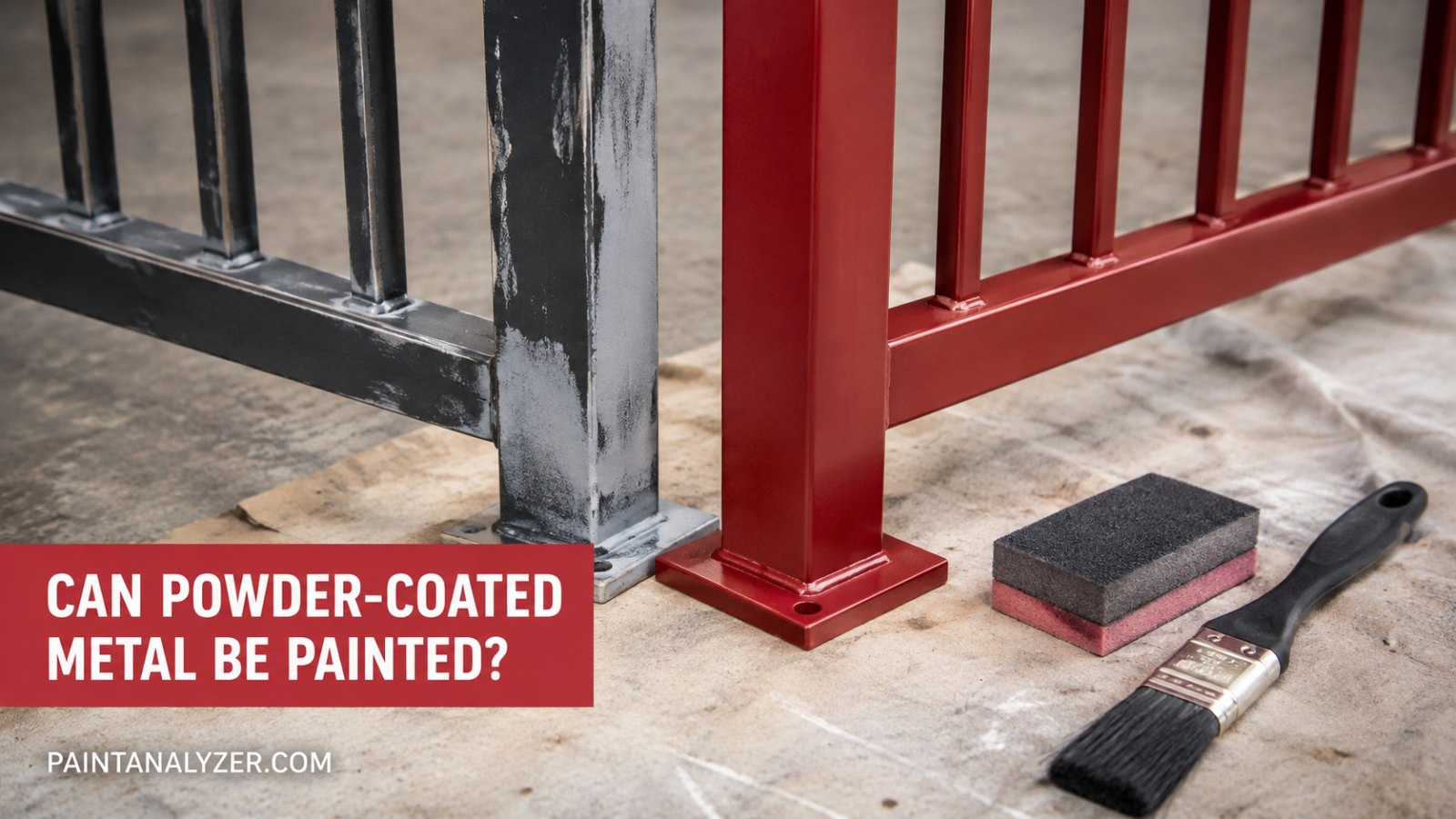
Powder coating is an electrostatically applied, oven-cured finish specifically engineered to be exceptionally hard, chemical-resistant, and durable — genuinely great properties for the original finish, but exactly what makes it a challenging surface for standard paint to bond to without the right prep, following the same general logic covered for any hard, glossy sealed surface.
1. Clean thoroughly first
Wash with soap and water or a degreasing cleaner to remove any dirt, oils, or residue — powder-coated surfaces (outdoor furniture, railings, some appliances) often accumulate grime that needs removing before any prep work makes sense.
2. Sand to break the surface's hard, glossy sheen
220-grit sandpaper, sanding the entire surface until it looks uniformly dullThis is the essential step — powder coating's whole point is a hard, tightly-bonded, low-porosity finish, which gives standard paint very little to mechanically grip without first roughening the surface. Every part being painted needs this treatment, not just a partial pass, since any remaining glossy patches are weak points where new paint is more likely to fail first.
3. Clean off sanding dust
Wipe thoroughly with a tack cloth or a cloth dampened with mineral spirits before priming — dust left on the surface prevents even primer adhesion across the whole area.
4. Use a bonding primer rated for glossy or slick surfaces
Even after sanding, a dedicated bonding primer adds meaningful additional adhesion insurance — the combination of proper sanding plus a genuine bonding primer is the more reliable approach than relying on either step alone, particularly for an item that will see regular handling or outdoor exposure.
5. Choosing the topcoat
Once properly sanded and primed, most quality exterior-rated paints (100% acrylic latex or an appropriate enamel) work as a normal topcoat — the prep work is what makes the surface receptive to paint at all; the topcoat choice afterward follows standard logic for whatever the item's actual use and exposure conditions call for.
6. Realistic durability expectations
Paint applied over properly prepped powder coating generally performs reasonably well, but it's worth being realistic that it won't match powder coating's own exceptional original durability and chemical resistance — for an item getting genuinely heavy wear or chemical exposure, having it professionally re-powder-coated (rather than painted) remains the more durable long-term option, if that's a realistic possibility for the specific item.
7. When touch-up, not a full repaint, is the better call
For minor chips or scratches in an otherwise sound powder-coated finish, a small, careful touch-up (using the sand-and-bond-primer approach on just the affected spot) is often more practical than repainting the entire item — reserving a full repaint for powder coating that's genuinely failing or extensively worn across the whole surface.
Guides are researched against primary documentation and observable evidence. Archived material is rewritten, checked, and substantially improved before publication.