
Can I Paint Over My Stained Deck?
Yes, but stain and paint bond to wood differently, and a stained deck needs real prep — stripping or heavy sanding — before paint will actually stick, rather than simply being applied over the existing stain.
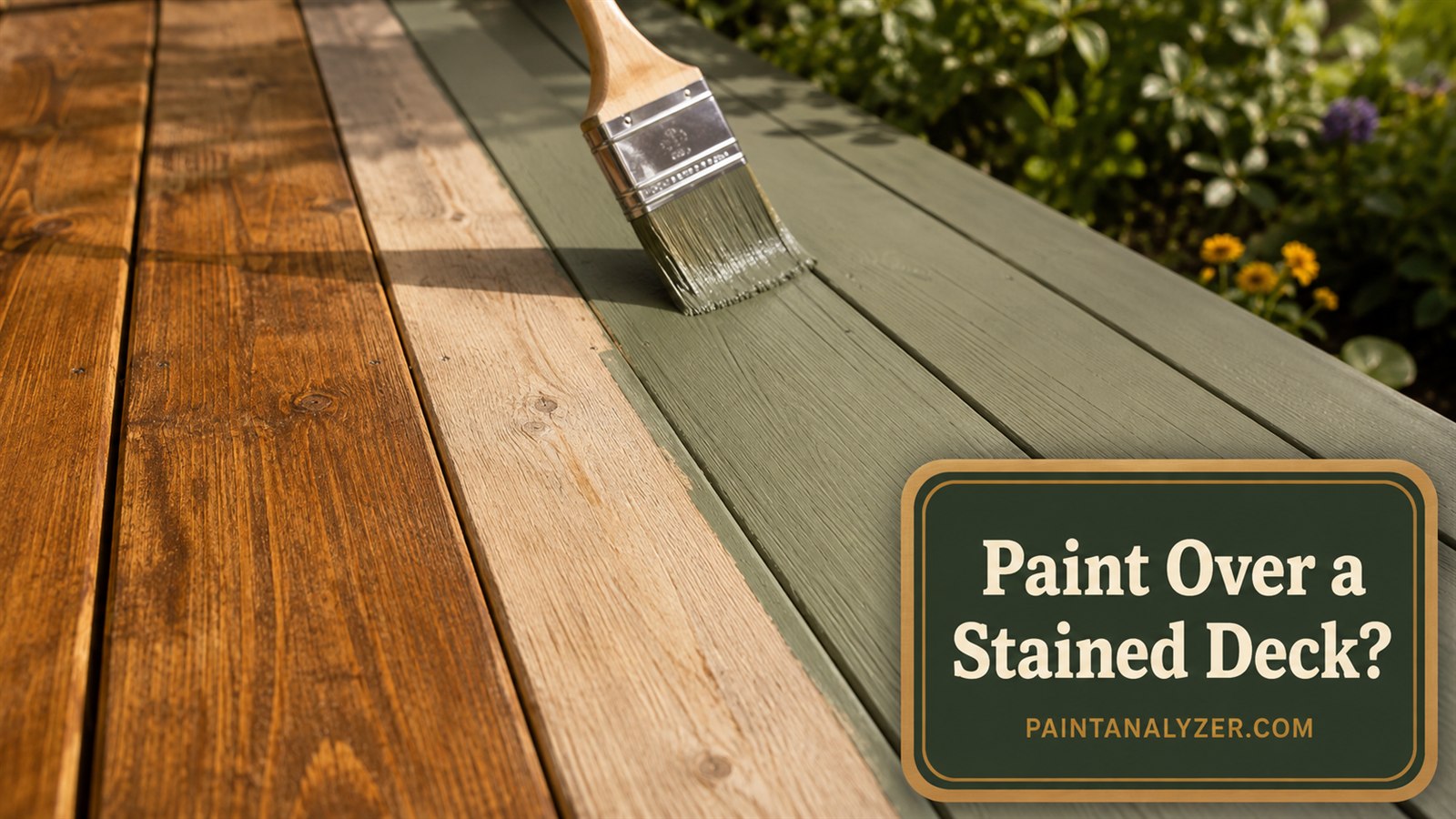
Painting over a previously stained deck is doable, but stain and paint interact with wood in fundamentally different ways — stain penetrates into the wood fibers, while paint forms a film on top of the surface — and that difference is exactly why simply painting directly over existing stain, without real prep, tends to produce poor adhesion.
1. Why stain complicates paint adhesion
A penetrating, non-film-forming stain (many semi-transparent and some solid-color deck stains) soaks into the wood rather than sitting on top of it as a continuous layer — paint applied directly over it doesn't have the same continuous film to bond to that it would have over a previous coat of paint, and adhesion is often noticeably weaker as a result, especially on areas with heavier stain penetration.
2. Cleaning and stripping — the essential first step
1. Clean thoroughly with a deck cleaner or a diluted bleach solution to remove
   dirt, mildew, and any surface grime
2. Strip as much of the existing stain as practical with a wood/deck stripper
   product, following its specific instructions
3. Rinse thoroughly and allow the deck to dry completely — often several days
Full removal of a penetrating stain is often not fully achievable, since it's soaked into the wood fibers rather than sitting on the surface — the goal of stripping is removing as much surface residue and loose material as practical, not necessarily achieving bare, stain-free wood everywhere.
3. Sanding to open up the wood surface
After stripping, a light sanding pass helps remove remaining surface residue and opens up the wood grain slightly, giving primer and paint more to grip — this is a meaningful step for a stained deck specifically, more so than it would be for a bare, never-finished deck.
4. Use a bonding primer formulated for exterior wood
A quality bonding primer, specifically rated for exterior use and previously-finished wood, is worth treating as a required step rather than optional — this is the step that most directly addresses stain's weaker adhesion surface compared to a film-forming previous coat.
5. Choose a paint genuinely rated for deck use, not just any exterior paint
A dedicated deck paint (formulated for foot traffic and the specific wear a horizontal, walked-on surface experiences) holds up considerably better than a general exterior wall paint applied to a deck — deck surfaces see abrasion and wear that vertical exterior walls don't, and the paint product should be matched to that reality.
6. Consider whether staining again, rather than switching to paint, might be the more practical choice
Given the extra prep work switching from stain to paint requires, and paint's tendency to eventually chip and require more labor-intensive stripping for future refinishing (compared to a stain, which can often simply be recoated), re-staining is sometimes the more practical long-term choice for a deck specifically — worth weighing against paint's different look and coverage before committing to the switch.
7. Realistic maintenance expectations once painted
A painted deck generally needs more careful, involved maintenance going forward than a stained one — chips and wear are more visible and more work to touch up on paint than reapplying a fresh coat of stain, which is a real ongoing consideration for a horizontal, heavily-walked surface exposed to full weather.
Guides are researched against primary documentation and observable evidence. Archived material is rewritten, checked, and substantially improved before publication.