
Why Does My Paint Look Like Cottage Cheese? Is It Frozen?
That lumpy, curdled texture is almost always freeze damage — latex paint's water content forms ice crystals that permanently break the paint's emulsion, and stirring generally can't fix it once this has happened.
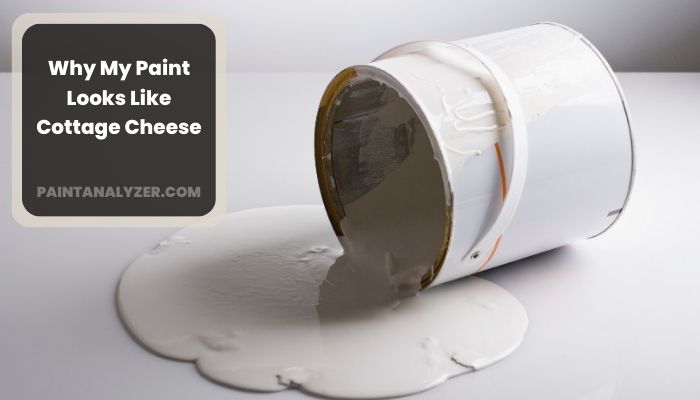
Latex paint with a lumpy, curdled, "cottage cheese" texture — rather than a smooth, uniform consistency — has almost always frozen at some point, even if it doesn't feel cold now and even if it was only briefly exposed to freezing temperatures during storage or transport.
1. Why freezing does this specifically
Latex paint is an emulsion — pigment and binder particles suspended evenly in a water-based carrier. When that water freezes, it forms ice crystals that physically disrupt this suspension; as it thaws, the paint doesn't reliably re-form the same smooth, even emulsion it started as, instead separating into the lumpy, curdled texture that reads as "cottage cheese."
2. Why stirring usually doesn't fix it
This is a genuinely different situation from paint that's just settled in the can (which stirring does fix) — freeze damage is a structural change to the emulsion itself, not simply separated components sitting in layers. Vigorous stirring can sometimes improve very mild freeze damage slightly, but paint with a pronounced curdled, lumpy texture generally can't be fully restored to a smooth, usable consistency by mixing alone.
3. Confirming it's actually freeze damage, not something else
Freeze-damaged paint typically shows a distinctly lumpy or curdled texture throughout, sometimes with a slightly separated, watery-looking liquid visible alongside thicker clumps — this differs from mold (a musty odor, often localized surface growth) or simple settling (smooth once restirred, no lumpy texture even before mixing).
4. Does it always mean the paint is unusable?
For mild freeze damage, straining the paint through a paint strainer bag or fine mesh can sometimes remove the worst of the lumps, leaving a paint that's usable though possibly with slightly altered performance (finish, coverage, or durability may not fully match the original unfrozen product). For more significant, pronounced curdling, replacing the paint is generally the more reliable choice than trying to salvage it for anything beyond a very forgiving, low-visibility use.
5. Preventing this going forward: proper storage matters
Store latex paint above freezing at all times — an unheated garage, shed, or
vehicle in winter are all common places paint accidentally freezes
Most latex paint manufacturers specify a minimum storage temperature (commonly around 40°F/4°C or higher) — storage locations that seem reasonable in warmer months (a garage, a shed) can drop well below freezing in winter without much thought, which is exactly how paint accidentally freezes between projects rather than during any obvious cold-weather mishap.
6. Does one freeze-thaw cycle always ruin it, or does it depend?
Some paint manufacturers claim their formulations can survive a limited number of freeze-thaw cycles without significant damage — but this varies considerably by specific product and formulation, and isn't something to rely on as a general rule. If paint has been exposed to freezing and shows any curdled texture on inspection, treating it as compromised (checking it before use rather than assuming it's fine) is the safer approach.
7. Oil-based paint is generally more freeze-tolerant
Because oil-based paint doesn't rely on a water-based emulsion the way latex does, it's generally considerably more tolerant of cold storage temperatures without the same curdling risk — this is a genuine, if minor, practical advantage of oil-based paint specifically for storage in an unheated space, separate from the other trade-offs between the two paint types covered elsewhere.
Guides are researched against primary documentation and observable evidence. Archived material is rewritten, checked, and substantially improved before publication.