
What Size Pressure Washer Is Best to Strip Paint Off a Deck?
A pressure washer in the 3000 PSI range with a wide fan tip strips deck paint effectively without gouging the wood — going too aggressive risks real surface damage.
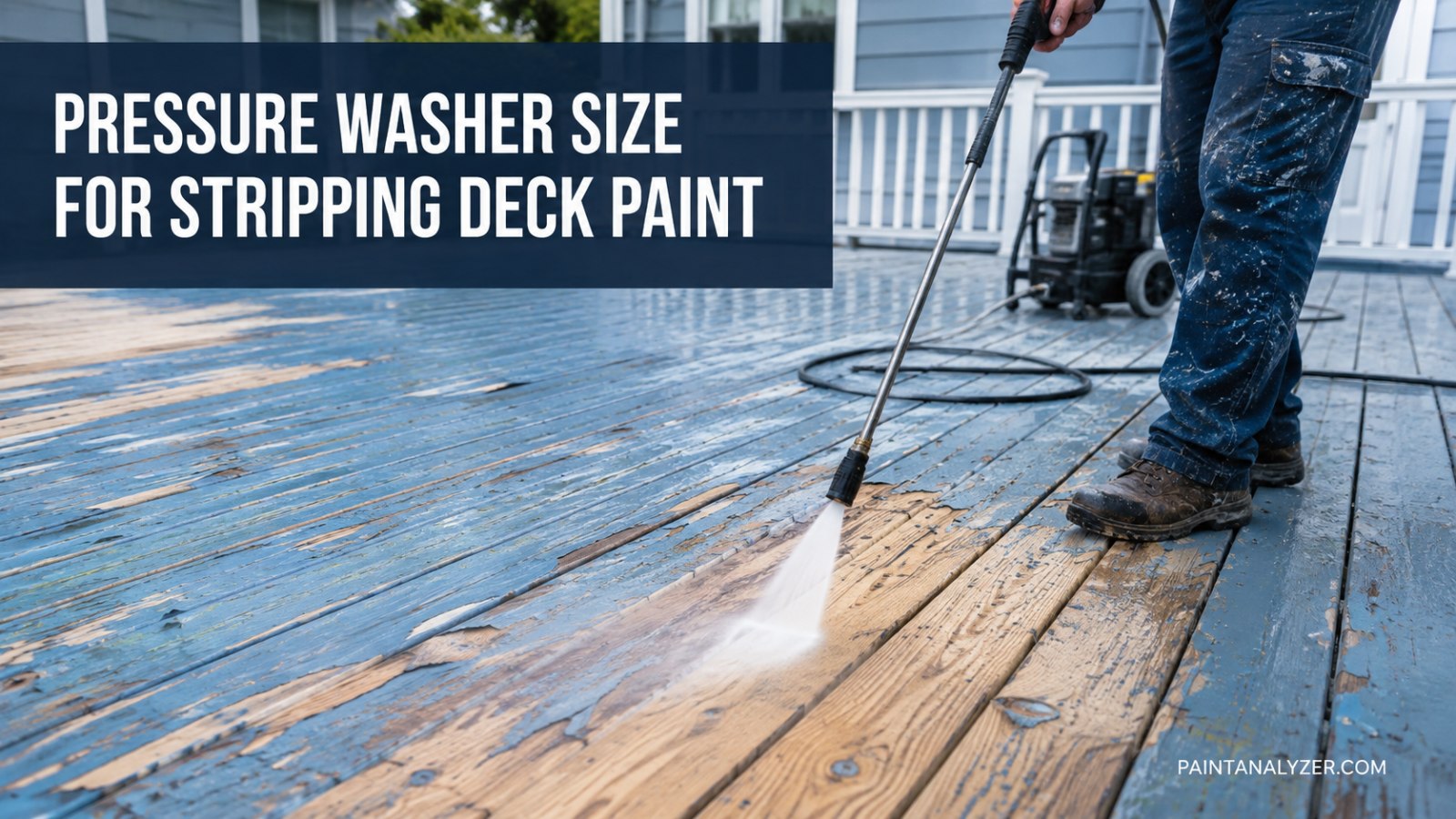
Using a pressure washer to strip failing paint off a deck is a genuinely effective method, but choosing the right pressure level and technique matters, since too much pressure risks gouging and damaging the wood surface underneath the paint being removed.
1. A moderate PSI range works best for wood decks
A pressure washer in roughly the 2500-3000 PSI range is generally sufficient to strip loose, failing deck paint without being so aggressive that it damages the wood fibers underneath — significantly higher pressure increases the risk of etching or gouging the wood surface, particularly on softer wood species.
2. Nozzle/tip selection matters as much as PSI
A wider fan-spray tip (like a 25-degree tip) distributes pressure over a larger area than a narrow, concentrated tip, reducing the risk of gouging a specific spot while still providing enough force to lift failing paint — a very narrow, high-concentration tip is more likely to damage wood even at a moderate PSI rating.
3. Testing on an inconspicuous area first
Testing the pressure washer's actual effect on a small, hidden area of the deck first confirms the chosen PSI and tip combination effectively removes paint without gouging the specific wood — this is worth doing before working across the entire visible deck surface.
4. Maintaining proper distance and angle
Keeping the spray wand at an appropriate distance from the surface (following the pressure washer's specific guidance, generally further back than you'd think reduces risk) and using a consistent, sweeping motion rather than concentrating spray on one spot reduces gouging risk regardless of the specific PSI used.
5. This method works best on already-failing, loose paint
Pressure washing is most effective at removing paint that's already loose, cracked, or peeling — for paint that's still well-adhered, pressure washing alone often isn't sufficient, and combining it with a chemical deck stripper (applied first, following the product's instructions) gives more complete results.
6. Follow-up sanding after pressure washing
Pressure washing typically leaves the wood surface somewhat rough or with raised grain — following up with sanding, once the deck is fully dry, smooths the surface and prepares it properly for the next coat of stain or paint.
7. When pressure washing isn't the right approach
For an older, more fragile deck, or wood that's already showing significant rot or soft spots, high-pressure washing can cause more damage than it resolves — a gentler chemical stripping approach, following the guidance covered for stripping paint from wood elsewhere on this site, may be the safer choice for a deck in more compromised condition.
Guides are researched against primary documentation and observable evidence. Archived material is rewritten, checked, and substantially improved before publication.