
Ways to Seal and Protect Your Chalk-Painted Furniture
Chalk paint always needs a sealant, and the right choice — wax, polyacrylic, or polyurethane — depends on how much water and wear the specific piece will actually face.
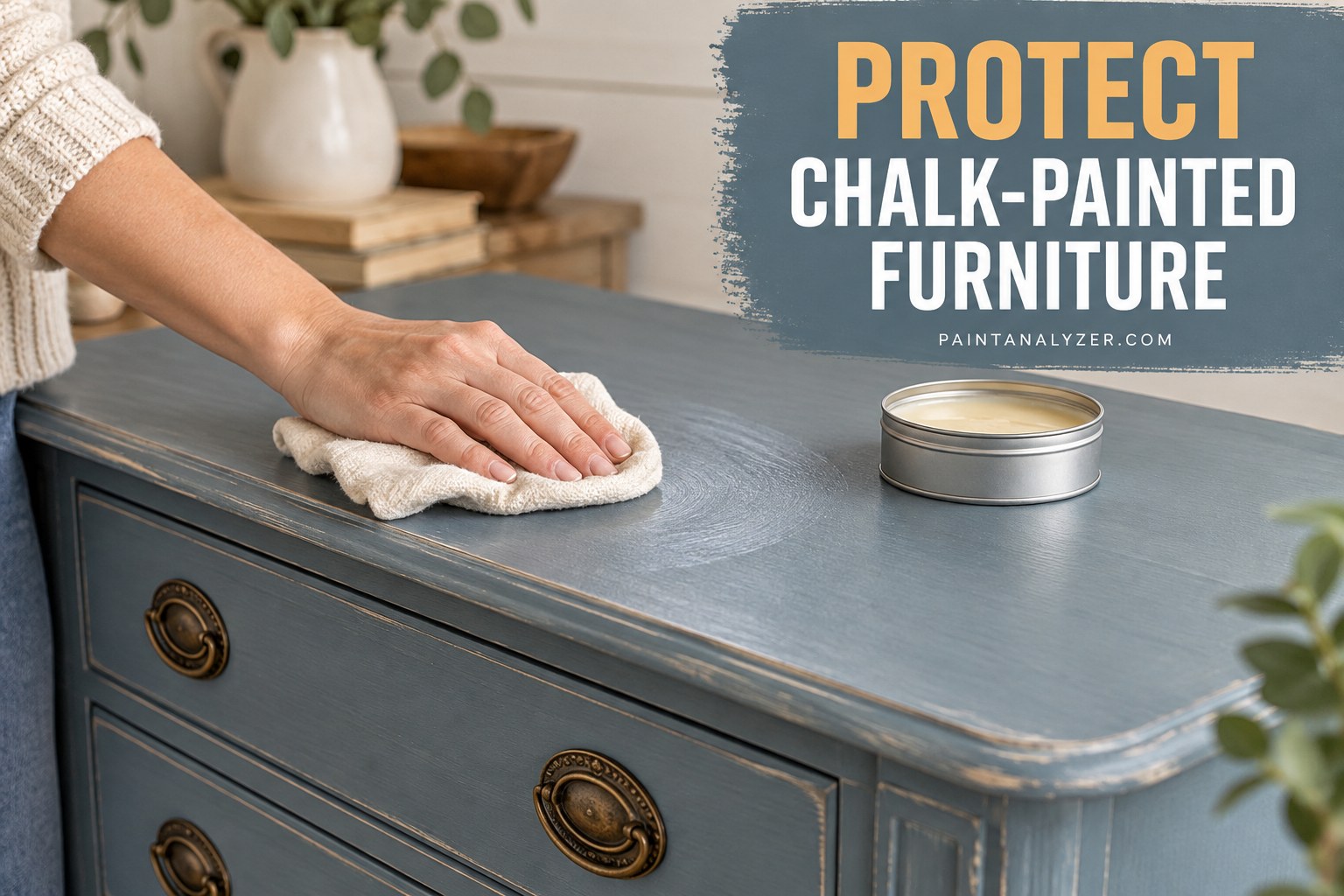
As covered for chalk paint's water resistance elsewhere on this site, sealing is essentially non-negotiable for chalk-painted furniture given its naturally porous, matte, unprotected surface — the right sealant choice depends on how much wear and moisture exposure the specific piece will actually face.
1. Wax: the traditional chalk paint sealant
Clear or dark furniture wax, buffed into the paint following the standard chalk paint waxing technique, gives a soft, low-sheen protective finish and (with dark wax specifically) can add an antiqued tint — it's the traditional choice for chalk paint's characteristic soft, matte look, though it offers more modest water and wear resistance than a harder topcoat.
2. Polyacrylic: a more durable, still low-odor option
A water-based polyacrylic topcoat provides notably better durability and water resistance than wax, while remaining low-odor and easy to apply with a brush or foam applicator — this is a good middle-ground choice for furniture seeing more regular handling or occasional moisture than a purely decorative piece.
3. Polyurethane: maximum durability for high-use pieces
For furniture facing genuinely heavy use (a frequently-used tabletop, a piece in a high-traffic area), a polyurethane topcoat offers the most durable protection of the common options, at the cost of a higher sheen than wax and a longer cure time before the piece can return to normal use.
4. Applying wax correctly
1. Apply a thin, even layer of wax with a brush or lint-free cloth
2. Let it set briefly per the product's instructions
3. Buff thoroughly with a clean cloth to a soft sheen
4. Apply a second coat for high-touch areas needing extra protection
5. Applying a polyacrylic or polyurethane topcoat correctly
Using a high-quality synthetic brush or foam applicator, applying in thin, even coats with minimal overlapping strokes (to avoid visible lap marks), and allowing full dry time between coats gives the smoothest, most even protective result with either of these harder topcoat options.
6. Matching sealant choice to the piece's actual use
A purely decorative piece with minimal handling can reasonably use wax alone; a piece with moderate regular use benefits from polyacrylic's improved durability; a piece facing heavy daily use or water exposure (a kitchen or bathroom piece) is better served by polyurethane's maximum protection.
7. Reapplying wax periodically as ongoing maintenance
Wax-sealed chalk paint benefits from periodic reapplication (following the specific product's recommended interval) as it wears from handling over time — this is part of wax's normal maintenance cycle, distinct from a harder topcoat like polyurethane, which generally doesn't need this kind of periodic refresh.
Guides are researched against primary documentation and observable evidence. Archived material is rewritten, checked, and substantially improved before publication.