
Ways to Make Your Acrylic Paint More Opaque
Some acrylic colors are naturally more transparent than others due to their specific pigments — a few reliable techniques boost opacity when full coverage matters.
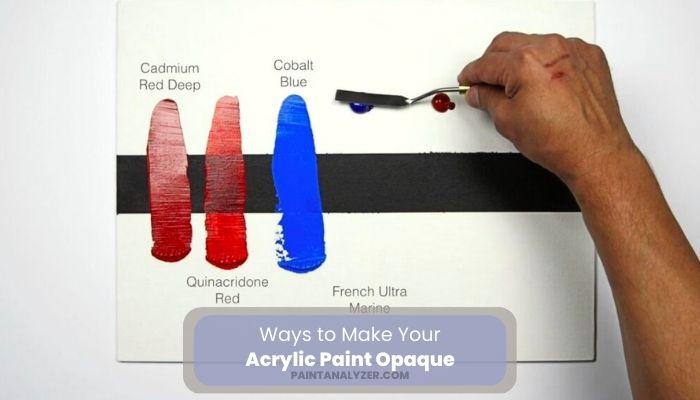
Some acrylic paint colors are naturally more transparent than others, based on the specific pigment's inherent optical properties rather than paint quality — when full opacity matters for a specific technique or coverage need, a few reliable methods help increase it.
1. Understand that some pigments are naturally more transparent
Certain pigments (many blues and some reds, for instance) are naturally more transparent regardless of brand or quality, while others (like titanium white and many earth tones) are naturally more opaque — checking a specific paint's opacity rating, often listed on the label or manufacturer's website, sets realistic expectations before assuming a transparency issue is a paint quality problem.
2. Apply multiple thin coats rather than one thick coat
Building up opacity through several thin coats, allowing each to dry before the next, generally achieves more even, solid coverage than trying to achieve full opacity in a single thick application, which can also show more brush texture and take longer to dry evenly throughout.
3. Mix in a small amount of white or an opaque color
Adding a small amount of titanium white (one of the most opaque pigments) or another naturally opaque color into a transparent color increases overall opacity, though this does lighten and slightly shift the resulting color, which needs to be accounted for in the color mixing.
4. Use a dedicated opacity or gesso-based medium underneath
Applying a layer of gesso or a specific opaque underpainting layer before the transparent color goes on top can help block out what's underneath more effectively, giving the transparent color a more neutral, opaque base to sit on rather than fighting against the canvas's own color or texture showing through.
5. Choose a heavy-body paint over a fluid or soft-body formulation
Heavy-body acrylic paint generally has a higher pigment concentration than fluid or soft-body formulations, giving it somewhat better inherent opacity — for a project where opacity is a priority, choosing a heavy-body product over a more fluid one is a reasonable starting consideration.
6. Avoid over-thinning transparent colors
Since thinning paint (with water or a medium) reduces pigment concentration per unit of paint, avoiding excessive thinning of an already transparent color helps preserve as much of its available opacity as possible — this is particularly relevant when combining the opacity-boosting techniques above with any thinning for flow improvement.
7. The practical takeaway
Full opacity from an inherently transparent pigment has real limits, but combining thin, multiple coats, a small amount of an opaque additive, and starting from a neutral, opaque base gives meaningfully better coverage than expecting a single thin coat of a naturally transparent color to achieve full opacity on its own.
Guides are researched against primary documentation and observable evidence. Archived material is rewritten, checked, and substantially improved before publication.