
Ways to Avoid Brush Strokes When Painting With Acrylics
Acrylic's fast drying time is what makes visible brush strokes more common than with oil paint, but a few adjustments to paint consistency, brush choice, and technique minimize them effectively.
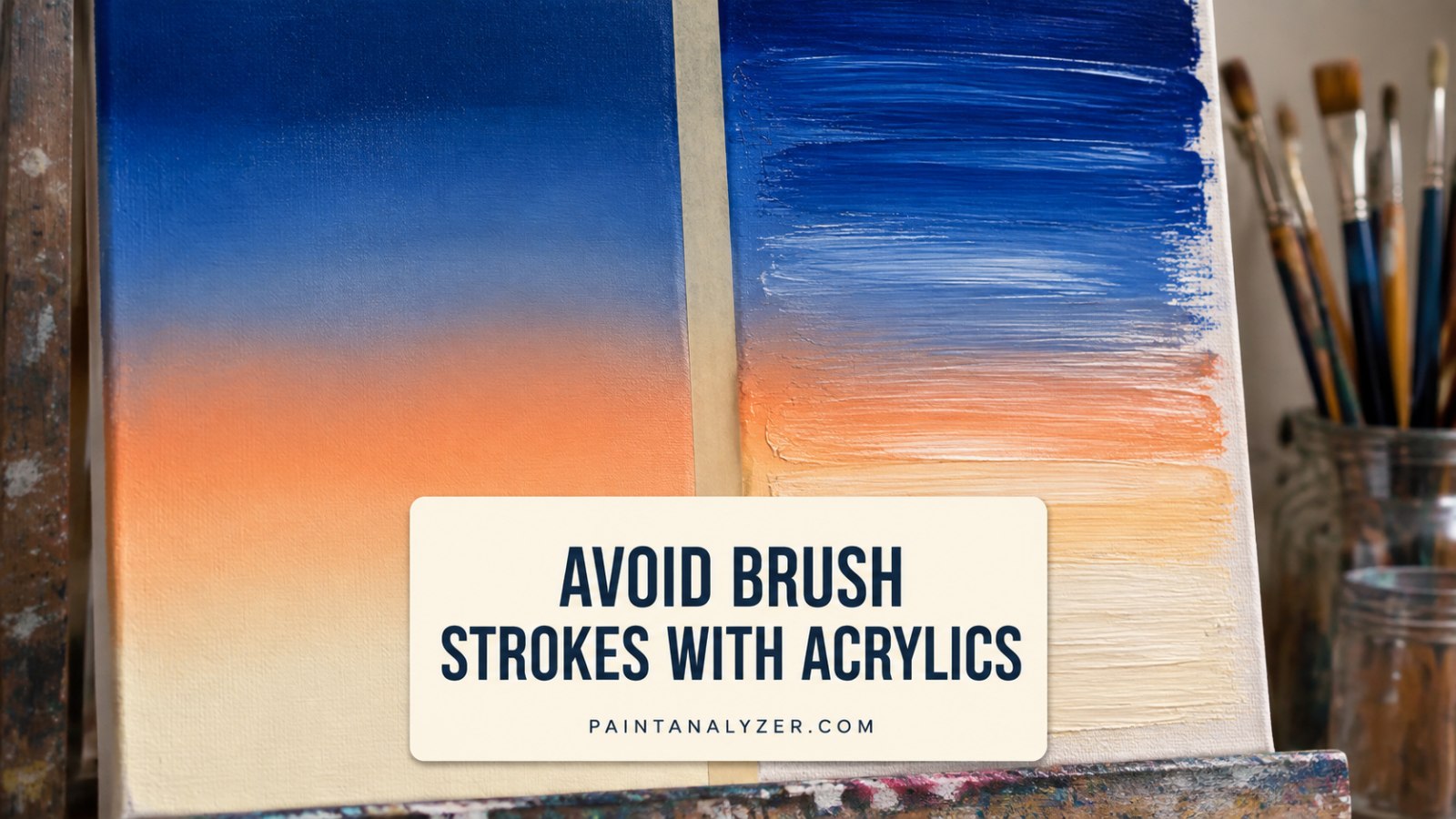
Acrylic paint's fast drying time, while an advantage for many purposes, makes visible brush strokes more likely than with slower-drying oil paint, since there's less time for the paint to self-level before it sets — a few adjustments to paint consistency, tools, and technique meaningfully reduce this effect for anyone wanting a smoother finish.
1. Use a flow improver or slow-drying medium
Adding a flow-improving medium (or Floetrol, as covered elsewhere on this site for latex paint, though dedicated acrylic flow mediums also exist) extends acrylic's working time and improves how it levels, giving brush strokes more time to blend and settle before the paint sets.
2. Thin the paint slightly
Acrylic straight from the tube or jar is often thick enough to hold visible brush texture — thinning slightly with water or a flow medium (without over-diluting, which reduces coverage and opacity) helps the paint spread and level more smoothly.
3. Use a soft, high-quality synthetic brush
A soft synthetic brush leaves less visible texture than a stiffer bristle brush, which tends to drag and leave more pronounced marks — choosing a brush suited to smooth blending, rather than one designed for textured, expressive strokes, supports the goal of a smoother finish.
4. Apply thin layers and blend while wet
Working in thin layers, and blending adjacent colors or strokes while the paint is still wet (acrylic's fast dry time means this window is short, making prompt blending important), gives smoother transitions than trying to blend after the paint has already begun to set.
5. Work in a cooler, more humid environment if brush strokes are a persistent problem
Acrylic dries faster in warm, dry conditions — painting in a slightly cooler, more humid environment (or using a stay-wet palette to keep paint workable longer) extends the blending window, giving more opportunity to smooth out strokes before the paint sets.
6. Consider a palette knife for certain smooth areas
A palette knife can apply and spread paint with less inherent texture than a brush for certain flat, smooth areas of a composition — this is a genuinely different tool and technique, worth considering specifically for sections where brush texture is a persistent issue.
7. Sand very lightly between layers, for a technique-heavy approach
For an artist specifically prioritizing an ultra-smooth finish across an entire piece, very light sanding of a fully dried layer (using an extremely fine grit, and only where the technique and paint thickness allow it safely) can smooth out texture before the next layer is applied — this is a more advanced approach best tested on a sample piece first.
Guides are researched against primary documentation and observable evidence. Archived material is rewritten, checked, and substantially improved before publication.