
Plaster of Paris vs. Joint Compound: What's the Difference?
Plaster of Paris sets fast and hard through a chemical reaction, making it great for molds and quick structural fills but hard to sand smooth — joint compound stays workable longer and sands easily, which is exactly why it's the standard drywall finishing product.
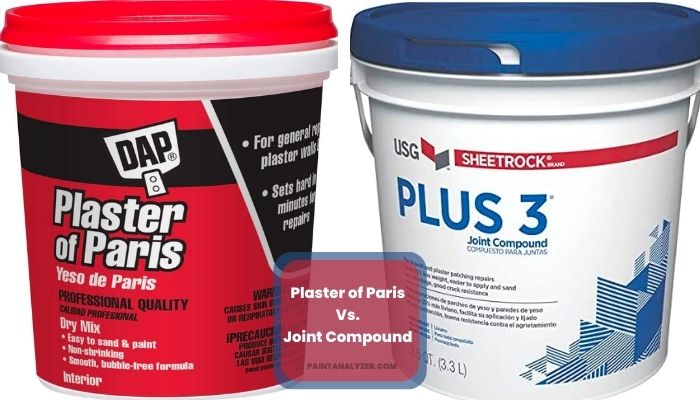
These two white, powder-based (or pre-mixed) products look superficially similar but behave very differently once applied — the distinction comes down to how each one hardens, and that difference is exactly why joint compound, not plaster of Paris, is the standard choice for finishing drywall seams before painting.
1. How each one actually sets
Plaster of Paris sets through a genuine chemical reaction (with water) that happens quickly — often within 15-30 minutes — and produces a hard, dense, stone-like material once cured. Joint compound (drywall mud) dries primarily through water evaporation, which is a slower process, and remains workable considerably longer before it firms up, then continues drying and shrinking slightly over a longer period.
2. Why plaster's fast, hard set makes it hard to work with for wall finishing
That quick, hard-setting reaction is genuinely useful for molds, casting, and certain quick structural repairs — but it's a real liability for smooth wall finishing work, since it sets too fast to allow the kind of feathering, smoothing, and multiple thin-coat buildup that a clean, invisible drywall seam repair actually needs. Once plaster of Paris sets, it's also considerably harder to sand smooth than joint compound.
3. Why joint compound is the standard drywall product
Joint compound's longer working time and evaporation-based drying make it far easier to spread, feather out to a smooth, gradual edge, and sand down to an invisible finish — exactly what's needed for taping and finishing drywall seams, corners, and screw holes to a smooth, paint-ready surface.
4. Shrinkage — a genuine practical difference
Joint compound, drying through evaporation, shrinks somewhat as it dries — which is exactly why a proper drywall finish typically involves multiple thin coats rather than one thick application, allowing each coat to shrink and be smoothed before the next. Plaster of Paris shrinks minimally by comparison, since its hardening is a chemical set rather than primarily an evaporation process.
5. Where plaster of Paris is still the better choice
- Molds and casting — its fast, hard set and fine detail capture make it well-suited for this.
- Quick structural or decorative repairs where hardness and speed matter more than a perfectly smooth, feathered finish.
- Certain traditional plasterwork and decorative techniques — a distinct craft from standard drywall finishing.
6. Painting over each
Both need to be fully dry (and, for plaster, fully cured/hardened) before painting, and both generally benefit from priming before the topcoat, for the same even-absorption reasons that apply to any patched or repaired drywall surface — the difference in the product itself doesn't change this basic priming logic once the repair is complete and ready for paint.
Guides are researched against primary documentation and observable evidence. Archived material is rewritten, checked, and substantially improved before publication.