
How to Safely Dispose of Rags Soaked With Mineral Spirits
This is a genuine fire-safety issue, not an overcautious footnote — oil-soaked rags left balled up can spontaneously combust from their own oxidation heat, without any external spark or flame.
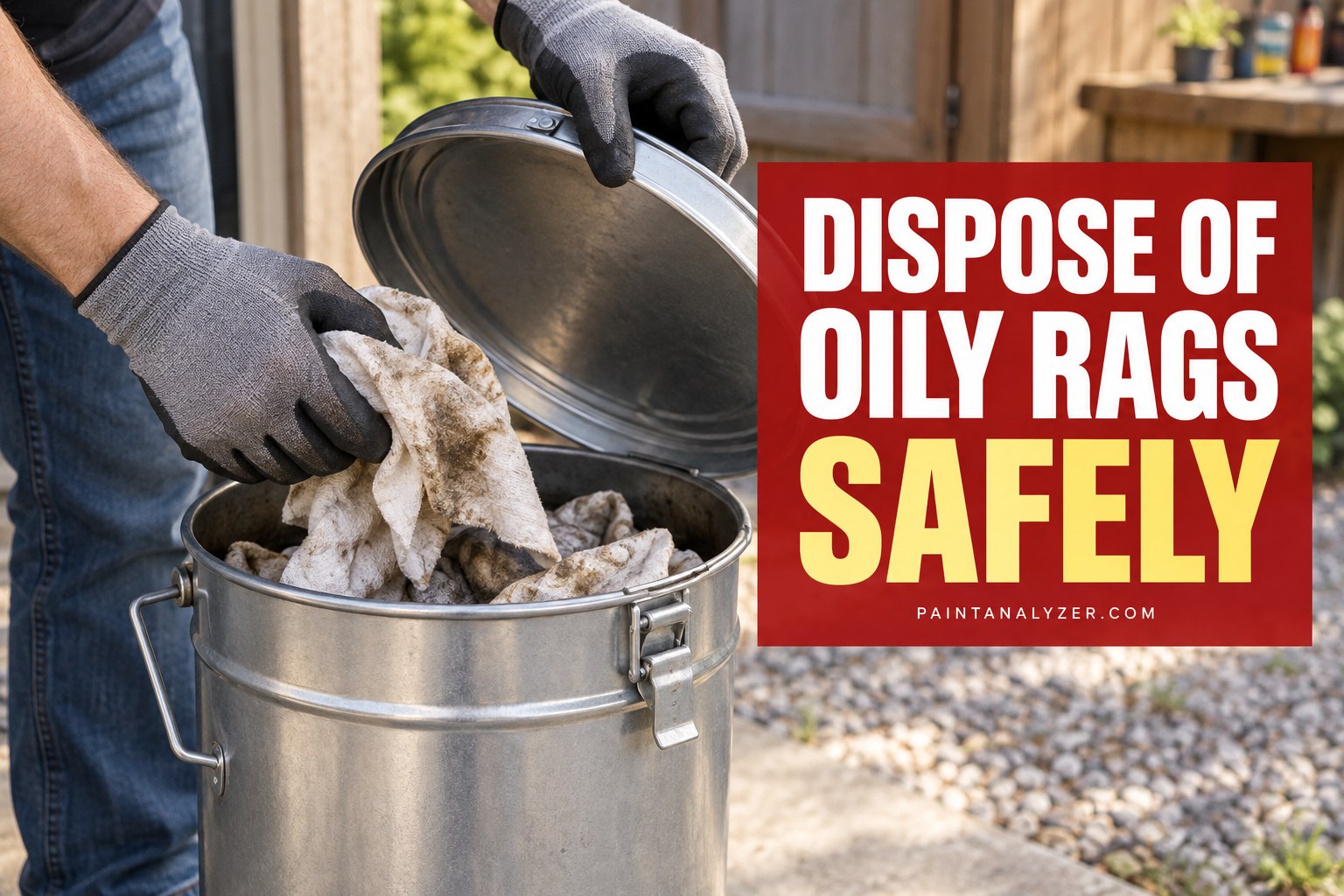
This is one of the few genuinely serious, non-exaggerated safety warnings in painting — rags soaked with mineral spirits, linseed oil, or other oil-based products can spontaneously combust without any external heat source or spark at all, purely from the heat generated as the oil oxidizes while air-drying, if that heat has nowhere to escape.
1. Why this actually happens
Oil-based solvents and finishes generate heat as they oxidize (react with oxygen) while drying — spread flat with airflow around them, that heat dissipates harmlessly into the surrounding air. Balled up or piled together, insulated by the surrounding fabric, that same heat has no way to escape and can build up until it reaches the fabric's ignition point — a documented, real cause of house and garage fires, not an overstated caution.
2. The safe drying method — this is the actual fix
1. Lay each rag completely flat, individually, with space between them
2. Dry outdoors if possible, away from anything flammable, on a non-combustible surface
3. Never pile, ball up, or stack wet rags together while drying
4. Allow to dry completely — this can take a day or more depending on how saturated
   they are and the weather
Laying rags flat and separated maximizes airflow and heat dissipation — this single step is what actually prevents the spontaneous-combustion risk; a rag that's fully air-dried this way is safe to bag with normal household trash afterward in most areas, though local regulations should still be checked.
3. Submerging in water as an alternative
Submerge the rags completely in a sealed metal container filled with waterWater prevents the oxidation reaction that generates the combustion risk in the first place — a sealed metal container of water is a standard alternative to air-drying, especially useful when there's no safe outdoor space available for flat drying, or when dealing with a large quantity of rags at once.
4. Using a dedicated flammable-waste can
An OSHA-compliant self-closing metal waste can, specifically rated for oily rags, is standard practice in a workshop or job site setting — these contain the rags in a sealed, fire-resistant container and are the appropriate choice for anyone generating this kind of waste regularly rather than as a one-off home project.
5. Never just throw wet, oil-soaked rags directly in a regular trash bin
Balled up and thrown straight into a trash bag or bin, oil-soaked rags retain the exact insulated, heat-trapping conditions that create the spontaneous combustion risk — this applies to an indoor trash can, a garage bin, or a dumpster equally, and is specifically the scenario that leads to a fire starting hours after a project has already wrapped up and everyone has gone home.
6. Check local hazardous waste disposal rules
Some municipalities classify oil-saturated rags as hazardous waste requiring disposal through a specific hazardous waste collection program, rather than regular household trash, even once fully dried — checking local regulations before disposal is worth doing, since requirements vary by location.
Guides are researched against primary documentation and observable evidence. Archived material is rewritten, checked, and substantially improved before publication.