
How to Paint Motorcycle Rims: A Wheel Painting Guide
Motorcycle rims need careful masking of the tire and valve stem, thorough deglossing, and a durable, heat-tolerant paint given their exposure to brake heat and road debris.
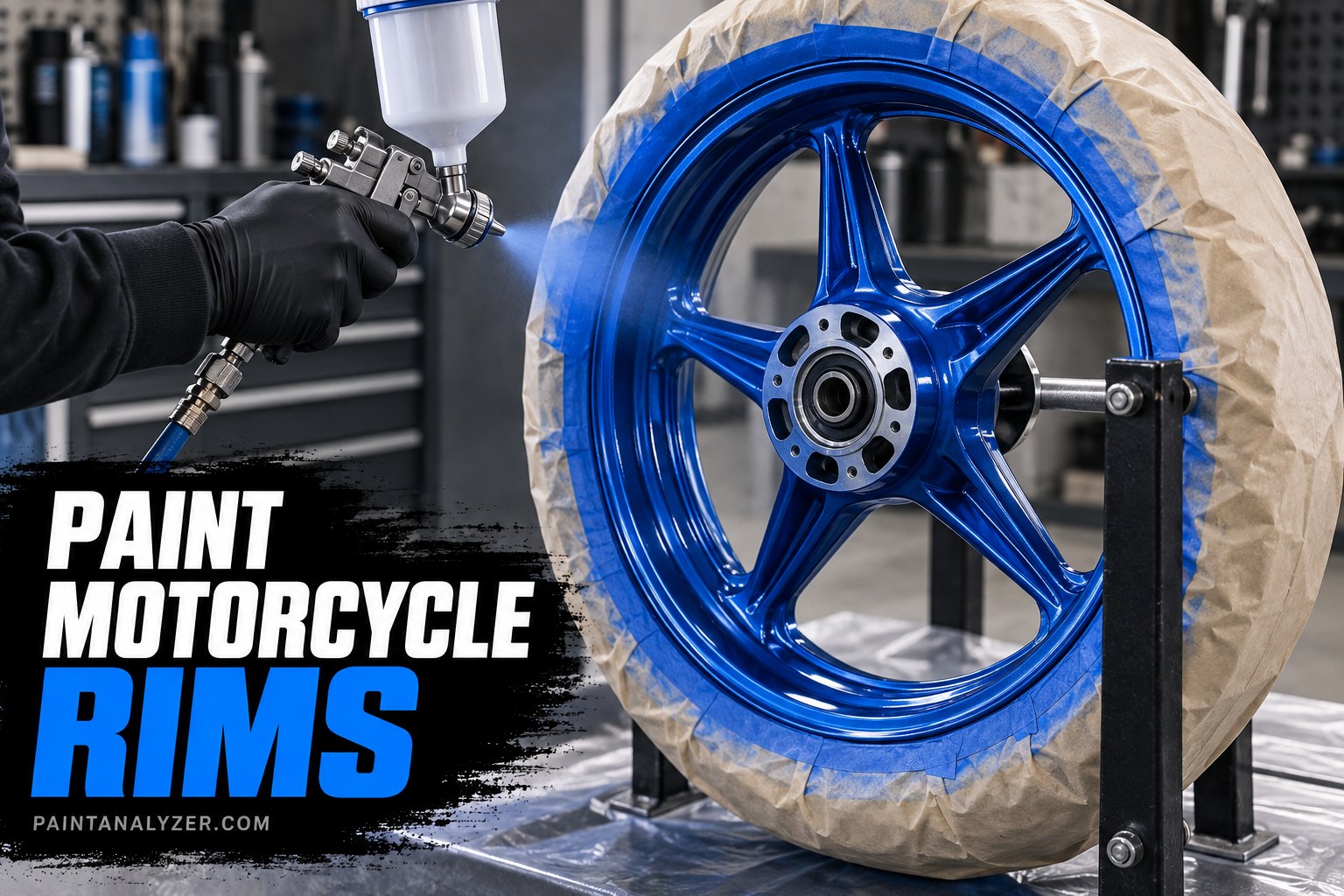
Painting motorcycle rims is a popular customization and refresh project, following broadly similar principles to painting car wheels but with some specific considerations around the wheel's smaller size, the tire mounted directly against it, and its exposure to brake heat.
1. Remove the wheel from the motorcycle if possible
Removing the wheel entirely, rather than painting it in place, gives full, even access to the whole rim surface and makes masking the tire and valve stem considerably easier and more thorough than working around an installed wheel.
2. Mask the tire and valve stem thoroughly
The tire itself needs complete masking, since automotive paint isn't meant to be on a tire's rubber surface — a rim-specific masking approach (tucking masking material into the bead area where the tire meets the rim) protects the tire fully during the painting process.
3. Clean and degrease the rim thoroughly
Removing brake dust, road grime, and any old wax or protective coating gives the subsequent sanding and priming steps a genuinely clean surface — brake dust in particular is a common contaminant on wheels that needs thorough removal before painting.
4. Sand to deglossy the existing finish
Following standard wheel-painting prep, light sanding across the rim's surface breaks any existing clear coat or factory finish gloss, giving the new paint system a surface it can properly adhere to.
5. Prime, then apply a durable, heat-tolerant paint
Given a motorcycle rim's exposure to brake heat and road debris, a paint specifically rated for wheels (formulated for both durability and some heat tolerance) holds up considerably better than a general-purpose automotive paint not designed for this specific exposure.
6. Apply a clear coat for protection and shine
A clear coat over the finished color protects the paint from ongoing exposure to brake dust, road debris, and cleaning products, while also giving the finished rim its final gloss level.
7. Allow full cure time before reinstalling and riding
Following the paint system's full cure time before reinstalling the wheel and riding protects the still-curing paint from the immediate stress of installation and road use, which can mark or chip paint that hasn't fully hardened yet.
Guides are researched against primary documentation and observable evidence. Archived material is rewritten, checked, and substantially improved before publication.