
How to Dry Acrylic Paint Slower or Faster
Acrylic's fast dry time is convenient for a quick project and frustrating for detailed blending — here is how to control it in both directions.
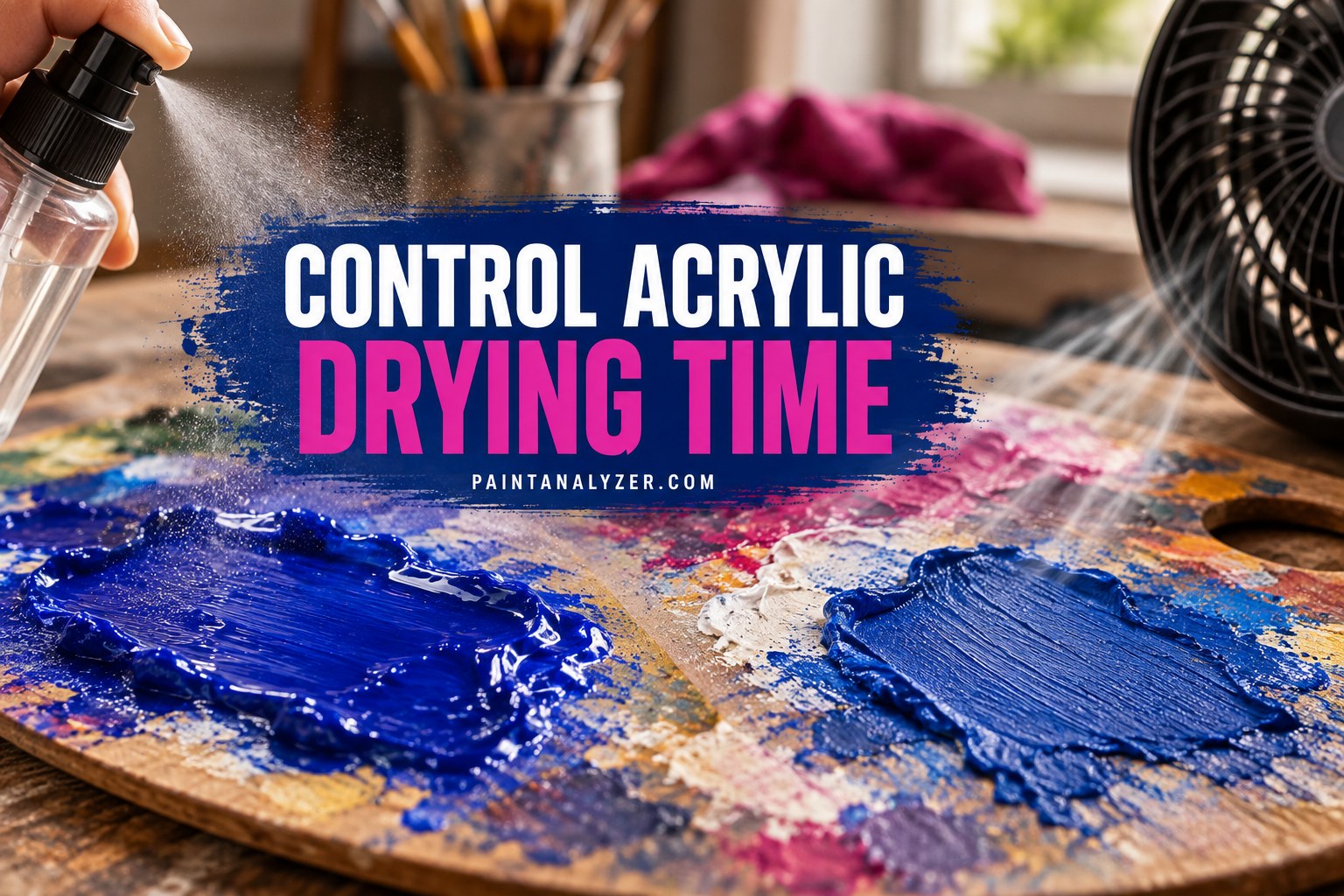
Acrylic paint's naturally fast dry time is a genuine advantage for quick projects and a real limitation for techniques that need extended blending or working time — temperature, humidity, and additives all give you real control over which direction it goes.
To dry acrylic paint slower
- Work in a cooler, more humid environment — both heat and dry air speed up water evaporation from the paint film, so reducing either slows drying.
- Use a retarder medium — mixed directly into the paint, a retarder is specifically formulated to extend working time without significantly changing the paint's other properties (see our acrylic medium guide).
- Apply thicker layers — more volume takes longer to fully dry through, though this also affects texture and isn't a substitute for a retarder if you specifically need more surface working time.
- Mist lightly with water periodically during a session to keep the paint surface workable longer, particularly on a palette rather than the actual project surface.
To dry acrylic paint faster
- Increase airflow — a fan across the surface (not pointed to raise dust onto wet paint) speeds evaporation meaningfully.
- Apply thinner layers — thin coats dry faster than thick ones, and multiple thin coats often give a better result than one thick coat regardless of drying-speed goals.
- Increase ambient warmth (within reason) — a warm, dry room speeds drying; a hair dryer on a low, cool-to-warm setting held at a safe distance can speed drying on a small project, used carefully to avoid disturbing wet paint.
- Reduce humidity in the workspace if practical (a dehumidifier for an indoor studio setting).
Why this matters beyond convenience
Drying too fast can cause cracking in thicker applications and makes blending or wet-on-wet techniques difficult. Drying too slow in humid conditions can risk smudging, dust settling into the still-wet surface, or simply holding up a project's timeline unnecessarily — matching the dry time to what the specific technique actually needs is the real goal, not maximizing speed in either direction by default.
Guides are researched against primary documentation and observable evidence. Archived material is rewritten, checked, and substantially improved before publication.