
Different Types of Painter's Tape and When to Use Each
Standard, delicate-surface, and multi-surface painter's tape each solve a different masking problem — using the wrong one risks either paint bleed or damage when removed.
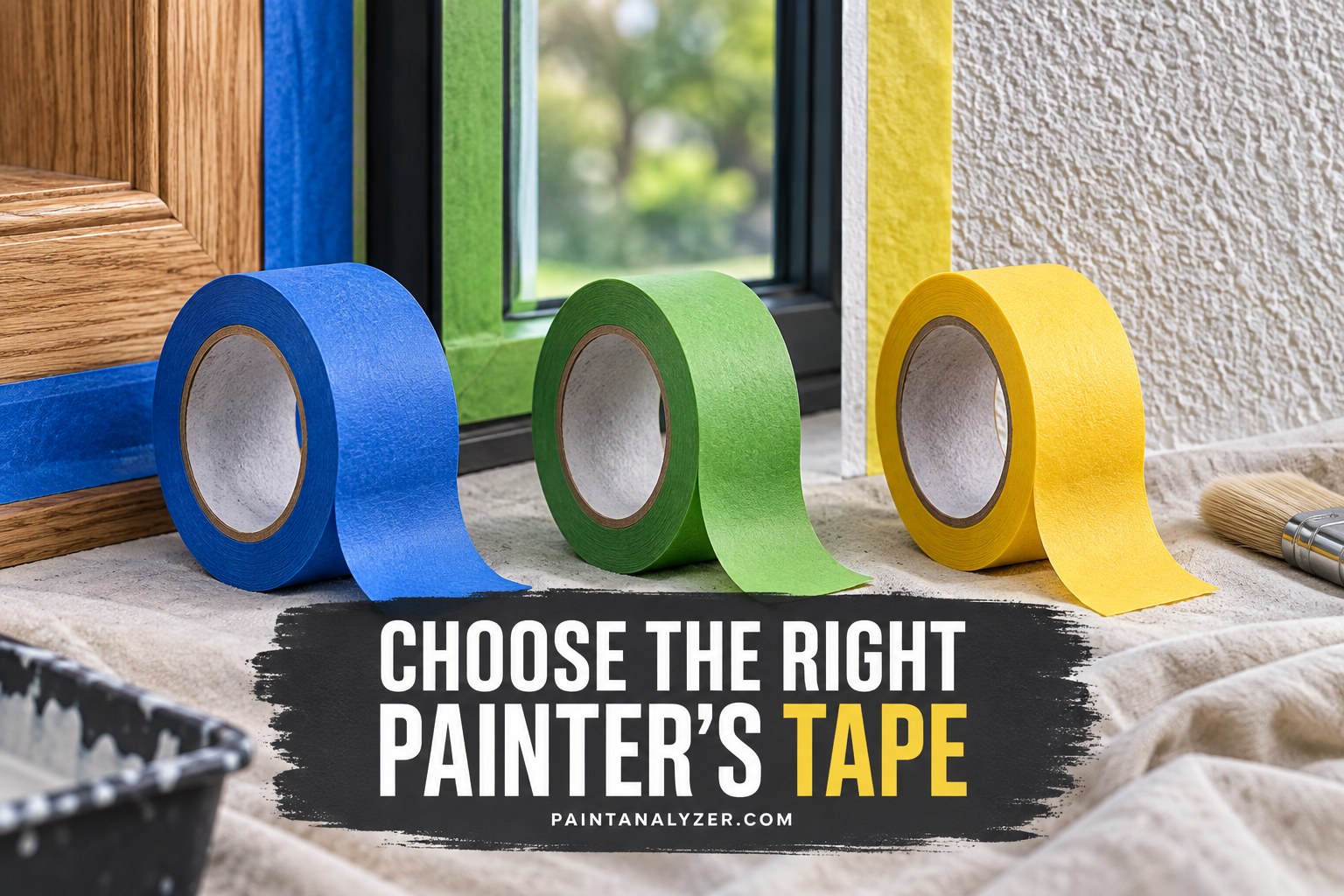
Painter's tape comes in several distinct types, each formulated for a specific masking situation — using the wrong type for a given surface or duration risks either paint bleeding underneath it or damage to the surface when the tape is eventually removed.
1. Standard (blue) painter's tape
The most common general-purpose option, standard blue painter's tape works well for typical trim, edge, and general masking needs on most painted surfaces, with a moderate adhesive strength suited to short-to-medium-term use (typically up to about 14 days before removal is recommended).
2. Delicate surface (often labeled green or purple) tape
Formulated with a gentler adhesive specifically for surfaces that could be damaged by a stronger adhesive — freshly painted surfaces, wallpaper, or other delicate finishes — this tape reduces the risk of pulling up the surface underneath when removed, at the cost of a somewhat less secure seal against paint bleed.
3. Multi-surface tape
Designed to work reliably across a range of different surface textures (smooth, textured, glossy) without needing to switch tape types for different parts of a project, multi-surface tape offers versatility for a project involving several different substrate types.
4. Extended-stay tape
Formulated for longer-duration projects (multiple weeks) without leaving adhesive residue or becoming difficult to remove, extended-stay tape suits a project where masking needs to remain in place considerably longer than standard tape's recommended removal window.
5. Exterior-specific tape
Formulated to withstand UV exposure and outdoor weather conditions without degrading or losing adhesion prematurely, exterior tape is the appropriate choice for any outdoor masking application, where standard interior-formulated tape may not hold up as reliably to sun and weather.
6. Sharp-line or high-adhesion tape
Formulated with a stronger seal specifically to prevent any paint bleed underneath, this type suits situations demanding the crispest possible paint line — useful for a striped accent wall or other detail work where even minor bleed-through would be noticeable.
7. Choosing the right tape for a specific project
Matching tape type to the specific surface being masked, the project's expected duration, and whether it's an interior or exterior application gives more reliable results than defaulting to standard tape for every situation — a delicate surface with the wrong tape can be damaged on removal, while a long exterior project with standard interior tape may fail well before the project is complete.
Guides are researched against primary documentation and observable evidence. Archived material is rewritten, checked, and substantially improved before publication.