
Can You Tint Lacquer for Furniture Finishing?
Yes, using lacquer-compatible toners or dyes specifically formulated for the purpose — regular paint pigment isn't the right additive, since it can affect lacquer's clarity and curing properties.
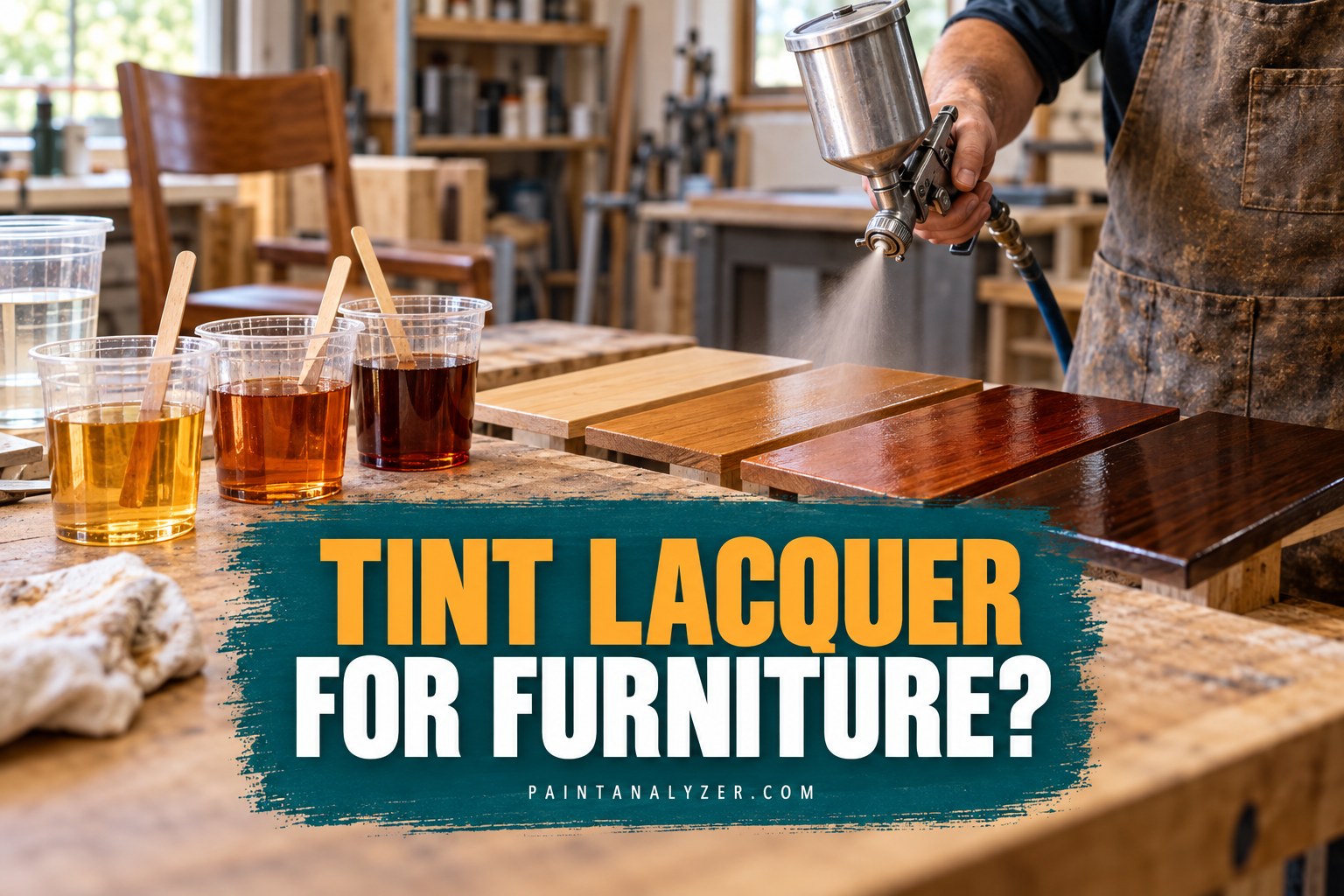
Tinting lacquer for furniture work is a well-established technique, but it needs the right kind of colorant — a lacquer-compatible toner or dye formulated specifically for this purpose, not standard paint pigment, which can interfere with lacquer's characteristic clarity and its fast-curing chemistry.
1. Use a lacquer-compatible toner or dye, not standard paint colorant
Lacquer toners (concentrated, transparent colorants specifically formulated
for lacquer systems) or aniline dyes compatible with the specific lacquer type
These products are formulated to dissolve fully and evenly into lacquer's specific solvent system without disrupting how it cures or clouding its characteristic clarity — standard paint pigment, not designed for this chemistry, can behave unpredictably when added directly to lacquer.
2. Toner vs. dye — a real distinction for the final look
A toner adds both color and some opacity, letting the wood grain show through less as more is added — useful for evening out color variation across different wood pieces in the same project. A dye adds color while remaining more fully transparent, preserving more of the wood's natural grain and figure — the choice depends on whether hiding grain/color variation or preserving it is the actual goal.
3. Testing the mixed color on a sample piece first
1. Mix a small test batch of tinted lacquer
2. Apply to a scrap piece of the same wood species being finished
3. Let it fully dry and cure before judging the color
4. Adjust the tint ratio as needed before committing to the full project
Tinted lacquer's final color depends on both the toner/dye itself and the specific wood's own color and grain underneath it — testing on the actual wood species, not just checking the tinted lacquer's color in the can, gives a far more accurate preview of the real final result.
4. Building color gradually with multiple thin coats
As with most finishing techniques, applying tinted lacquer in several thin coats rather than one heavily-tinted thick coat gives more control over the final color depth and avoids the uneven, blotchy appearance a single heavy application can produce.
5. Sealing with clear lacquer over the tinted coats
A final clear (untinted) lacquer topcoat over the tinted coats protects the color layer and can add depth and richness to the finished appearance — a common practice in professional furniture finishing, similar in spirit to how a clear coat protects and enhances color in automotive painting.
6. Why this matters for matching existing furniture
Tinted lacquer is a genuine tool for matching a new piece of furniture to an existing set's color, or for evening out color variation between different boards in the same project — professional furniture finishers rely on this technique specifically for these color-matching situations, where a standard clear or single-color finish wouldn't achieve the needed consistency.
Guides are researched against primary documentation and observable evidence. Archived material is rewritten, checked, and substantially improved before publication.