
Can You Paint Over Clear Coat?
Yes, and this is standard automotive repainting practice — clear coat needs the same sanding and priming treatment as any other hard, glossy sealed finish before new paint will bond properly.
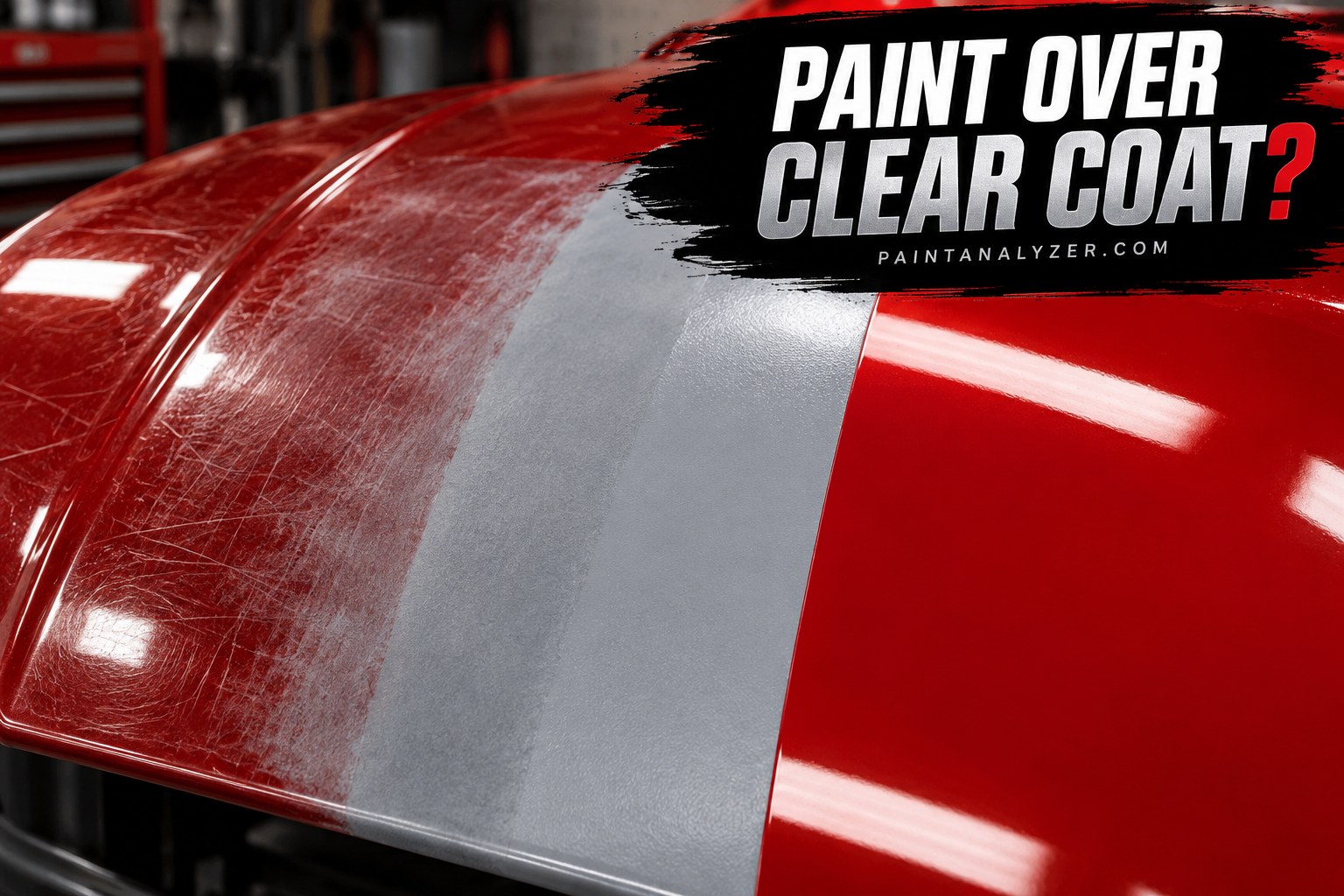
Painting over an existing clear coat — typically on a vehicle, but the same logic applies to any clear-coated surface — is standard automotive and refinishing practice, following the same deglossing-and-priming approach covered for any hard, glossy, sealed finish.
1. Clean thoroughly first
Remove wax, grease, and any road grime with an automotive-appropriate degreasing cleaner — a clean surface matters here just as much as for any other painting project, and any residual wax specifically interferes with new paint adhesion.
2. Sand to break the clear coat's gloss
Wet-sand with an appropriate grit (often starting around 400-600 for
initial scuffing, finer for final prep) across the entire surface
being repainted
Clear coat's whole purpose is a hard, glossy, protective seal — exactly the same fundamental adhesion challenge covered for any glossy sealed surface, and the same sanding solution applies directly here, following standard automotive refinishing technique.
3. Address any clear coat damage or peeling first
Areas where the clear coat is already failing, peeling, or has UV damage (following the same UV degradation concept covered for oxidized clear coat) need that damaged material removed back to sound clear coat or base paint before new paint is applied — painting over already-failing clear coat just means the new paint fails along with it.
4. Prime if needed for color coverage or additional adhesion
For a significant color change, or extra adhesion insurance on a particularly glossy or hard clear coat, an automotive primer-surfacer between the sanded clear coat and the new base color follows standard body shop practice.
5. Standard base coat and clear coat application from there
Once properly sanded (and primed, if needed), the new paint job proceeds with standard automotive base coat and clear coat application, following the same process and cure-time considerations covered for automotive painting generally.
6. Why skipping the sanding step is the most common failure point
Painting directly over an unsanded, glossy clear coat — hoping the new paint will simply stick — is the most common reason a DIY automotive repaint fails early, with the new paint peeling or chipping away from the slick surface underneath relatively quickly. This single step is worth treating as non-negotiable.
7. When professional refinishing is worth considering
Given the surface-prep precision and spray equipment involved in a genuinely smooth, durable automotive repaint over existing clear coat, professional refinishing remains a reasonable choice to weigh against DIY, particularly for a vehicle where finish quality and long-term durability matter more than cost savings.
Guides are researched against primary documentation and observable evidence. Archived material is rewritten, checked, and substantially improved before publication.