
Can You Bake Acrylic Paint in the Oven?
For most standard craft acrylics, no — baking is specifically a technique for certain enamel-based paint pens and dedicated bakeable paint lines, not a general way to cure or set ordinary acrylic craft paint.
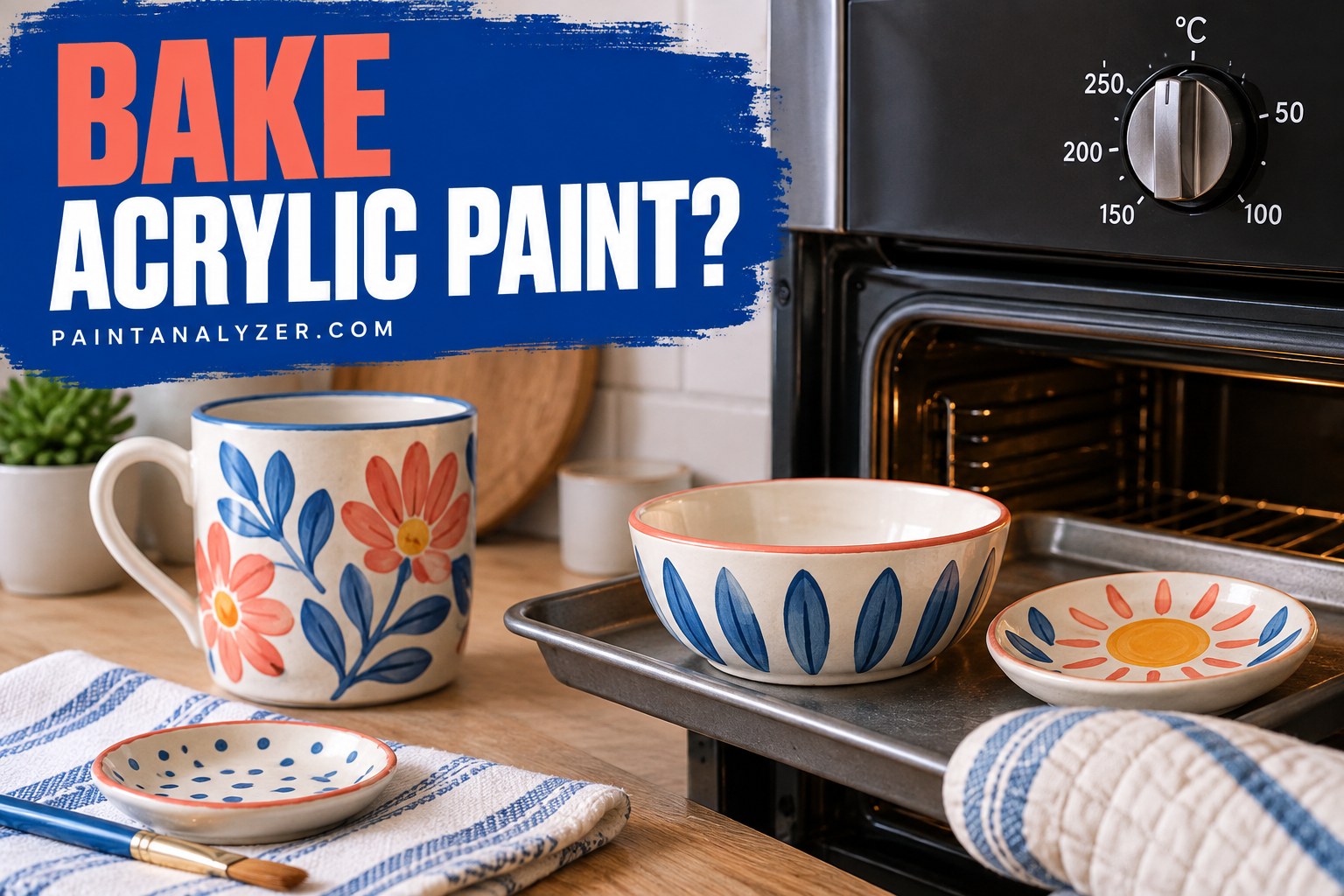
The popular "bake your painted mug in the oven to set it" technique that circulates widely online is specifically associated with certain enamel-based paint pens and dedicated bakeable acrylic enamel product lines — not standard craft acrylic paint, which behaves differently and generally isn't intended for this process.
1. What baking actually does, for the products it's formulated for
Certain enamel paint pens and dedicated bakeable acrylic enamel products are specifically formulated to cure harder and more durably when baked at a controlled oven temperature after air-drying — this baking step chemically cross-links the paint's binder in a way that room-temperature air-drying alone doesn't fully achieve, genuinely improving durability and wash resistance for these specific product lines.
2. Standard craft acrylic paint isn't formulated for this
Ordinary craft acrylic paint cures through water evaporation at room temperature, and it isn't engineered with the same heat-curing chemistry that dedicated bakeable products have — baking standard craft acrylic doesn't reliably achieve the same durability improvement, and can produce inconsistent results (some paints may discolor, bubble, or not improve in durability at all).
3. Check the specific product's label before baking anything
This is the one step that actually resolves the confusion: checking whether the specific paint or paint pen used is explicitly labeled as oven-bakeable, with stated temperature and time instructions, rather than assuming any acrylic paint can be treated the same way based on something seen online. A product without explicit baking instructions on its label wasn't tested or formulated for that process.
4. Following the specific baking instructions when a product IS rated for it
1. Let the painted item air-dry fully first — per the product's instructions,
   often 24-72 hours before baking
2. Place in a cold oven (not preheated) and bring up to the specified
   temperature gradually
3. Bake for the specific time and temperature the product label states
4. Let cool fully in the oven before removing
Starting in a cold oven and heating gradually (rather than placing a piece into an already-hot oven) reduces thermal shock risk, particularly relevant for glass or ceramic items — following the specific product's exact instructions matters more here than general baking intuition, since different bakeable products have different tested temperature and time requirements.
5. Even with a rated product, "food safe" and "dishwasher safe" aren't automatic
Baking a compatible paint improves its durability, but it doesn't automatically make a painted surface food-safe for direct food contact or fully dishwasher-safe — checking the specific product's label for these separate certifications, rather than assuming baking alone confers them, matters for anything intended for regular food or drink contact.
6. The practical takeaway
Don't bake standard craft acrylic paint expecting the same result promised for dedicated bakeable products — check the specific paint or pen's label for explicit oven-curing instructions, and follow those exactly, rather than applying a general "bake it to set it" rule across every acrylic product regardless of its actual formulation.
Guides are researched against primary documentation and observable evidence. Archived material is rewritten, checked, and substantially improved before publication.