
A Painter's Toolkit: Small Tools and Tips That Make the Job Easier
A handful of small tools and simple habits — from a proper bucket-opening tool to choosing the right brush bristle type — make a painting project noticeably smoother without any major expense.
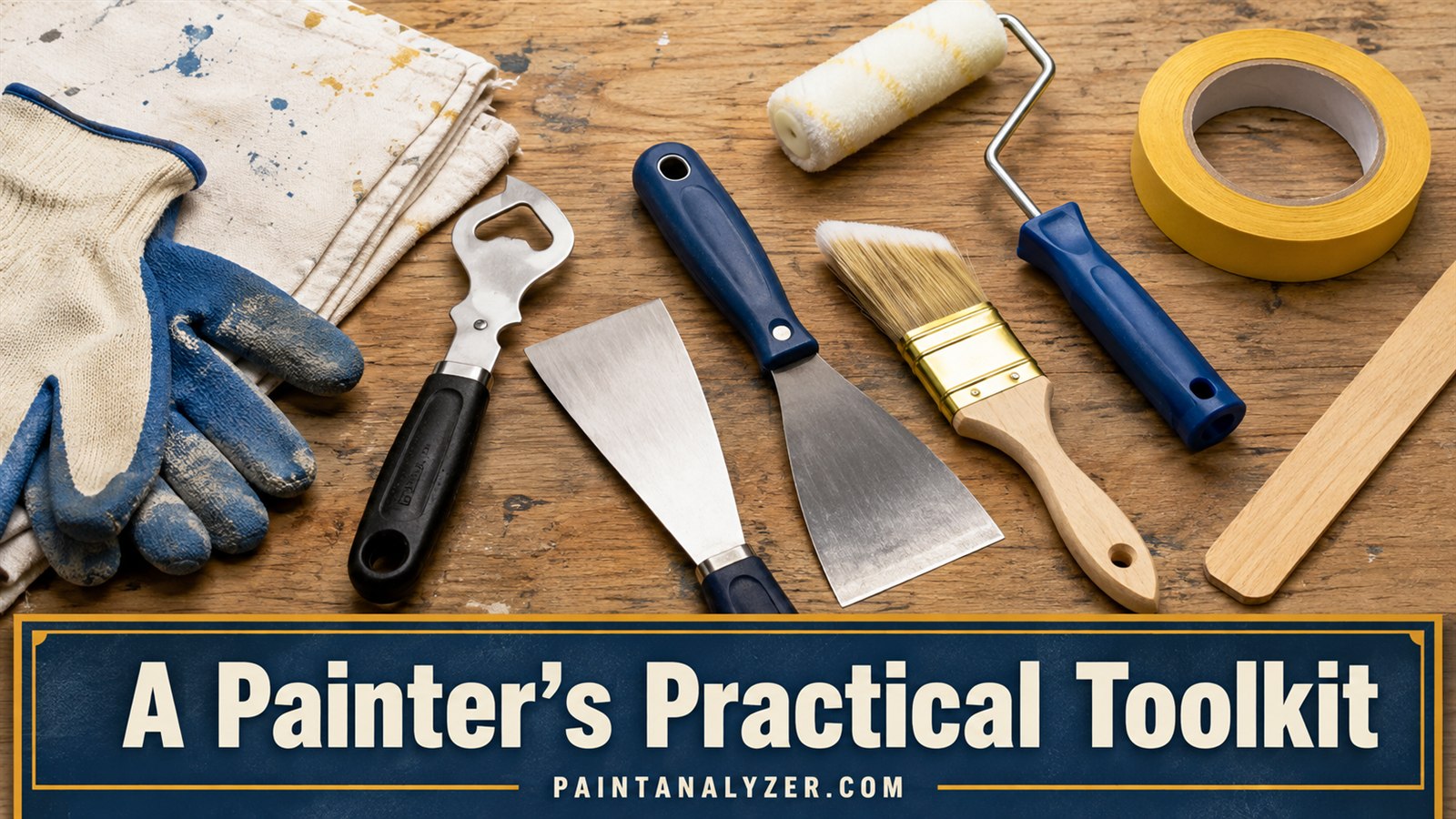
Beyond the core brush, roller, and paint, a handful of small tools and simple habits make a real, practical difference in how smoothly a painting project goes — none of these require major expense, but each solves a specific everyday annoyance.
1. Removing a gallon paint bucket lid without a struggle
A flathead screwdriver, inserted at an angle around the lid's rim and gently levered upward at several points around the circumference (rather than prying hard at just one spot, which can bend the lid or spill paint), pops most gallon lids off cleanly — a dedicated paint can opener tool does the same job with even less risk of spilling or bending the lid.
2. Pouring paint out cleanly
Pouring from the side opposite the pour spout (most gallon cans have a small indentation or spout built into the rim) and wiping the rim clean immediately after pouring prevents paint from building up in the rim groove, which otherwise dries and interferes with getting the lid back on cleanly for storage.
3. Unclogging a spray paint can and preventing future clogs
A clogged spray can nozzle can often be cleared by removing the nozzle and soaking it in a solvent appropriate to the paint type, or using a can-specific unclogging tool/pin to clear the small nozzle opening — preventing clogs in the first place by turning the can upside down and spraying briefly until only clear propellant comes out after each use keeps the nozzle clear for next time.
4. Using a paint mixer attachment on a drill
A dedicated paint mixing attachment for a power drill mixes paint more thoroughly and with less physical effort than hand-stirring, particularly useful for a larger quantity of paint or one that's settled significantly during storage — using a slower drill speed avoids introducing air bubbles, following the same stirring-not-shaking principle covered for mixing paint generally.
5. Marker pens made for painters
Paint marker pens (distinct from standard permanent markers) are formulated to write on a wider range of surfaces, including some already-painted or glossy surfaces, and are handy for touch-up work, labeling paint cans, or small detail work where a brush is impractical.
6. Manual paint scrapers for walls
A quality manual scraper, with a comfortable handle and a sharp, replaceable blade, makes removing loose or peeling paint from walls considerably more efficient and controlled than an improvised tool — keeping the blade sharp (replacing it when it dulls, rather than continuing to work with a dull edge) makes a genuine difference in how cleanly it removes failing paint without gouging the surface underneath.
7. Natural vs. synthetic paintbrushes: choosing the right one
Natural bristle brushes are generally better suited to oil-based paint, since they hold and release oil-based products more effectively, while synthetic bristle brushes (nylon or polyester) work better with water-based paint, since natural bristles can absorb water and go limp — matching the brush bristle type to the paint being used affects both application quality and how long the brush itself lasts.
8. Why these small details add up
None of these tools or habits is individually essential, but together they remove a series of small frictions and frustrations from a painting project — a bit of upfront attention to having the right small tools on hand pays off in a noticeably smoother, less frustrating project overall.
Guides are researched against primary documentation and observable evidence. Archived material is rewritten, checked, and substantially improved before publication.