
How to Prepare a Canvas for Acrylic Painting
A pre-primed, store-bought canvas is ready to paint on straight away — raw or unprimed canvas needs gesso first, both to seal the fibers and to give acrylic paint a surface it can actually grip.
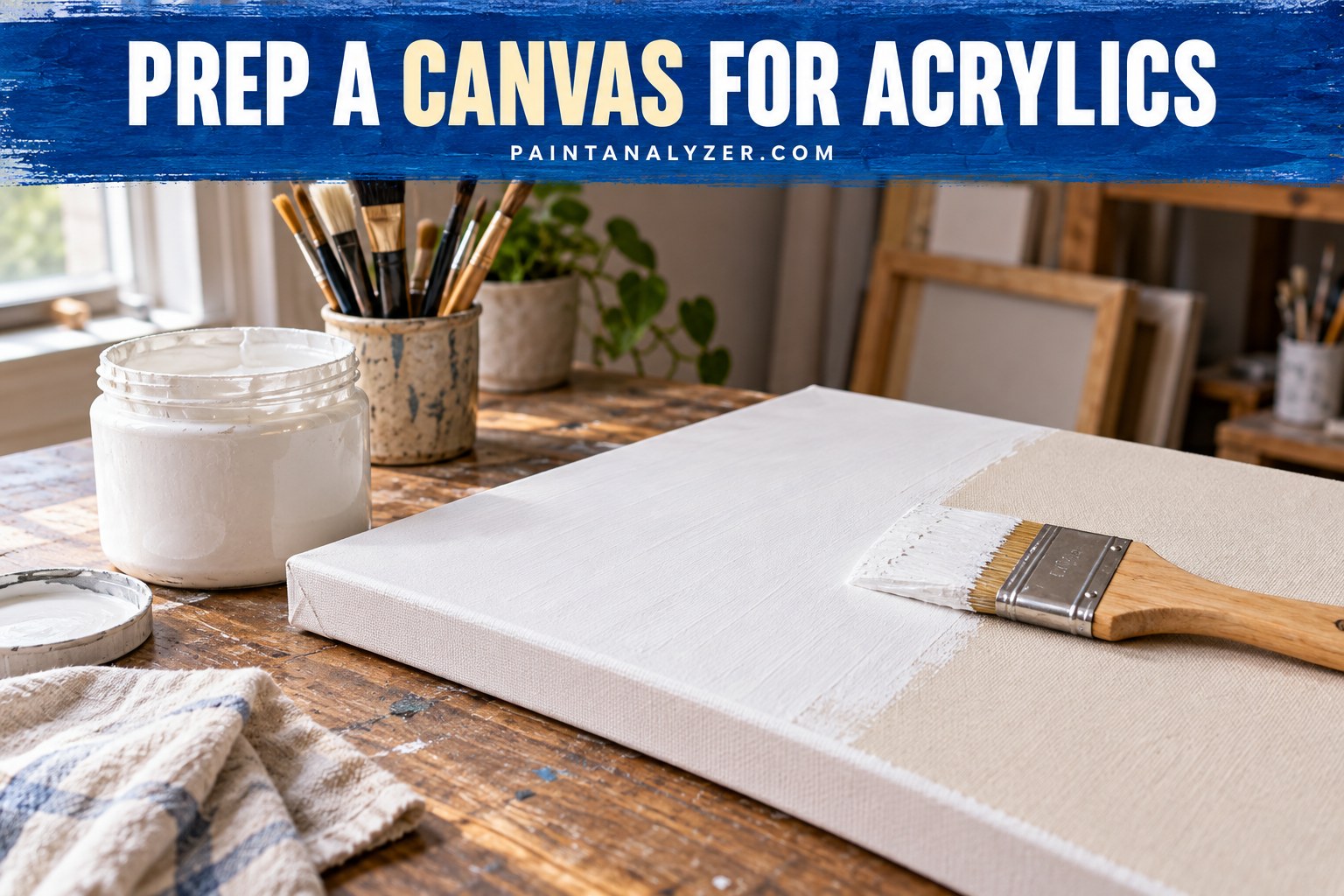
Most canvas sold for painting — stretched canvases, canvas boards, canvas pads — comes pre-primed with gesso already, and can be painted on directly out of the packaging. Preparation only becomes a real step when working with raw, unprimed canvas, or when a specific painter wants more control over the surface's texture and absorbency than the factory priming provides.
1. Why raw canvas needs priming at all
Unprimed canvas fabric (cotton duck or linen) is porous and absorbent — paint applied directly soaks into the fibers rather than sitting on top of them, which both wastes paint and, over the long term, can weaken the fibers themselves as the paint's binder interacts directly with the fabric. Gesso creates a sealed, slightly toothy layer between the fabric and the paint that solves both problems.
2. Choose the right gesso
Acrylic gesso (the standard, widely available kind) is compatible with acrylic paint directly. If working with oil paint on canvas instead, the canvas still needs a sealing layer, but oil paint over acrylic gesso is generally considered acceptable practice by most manufacturers (acrylic-primed canvas is what most "oil painting" canvas sold at art stores actually is) — the reverse, acrylic gesso over an oil-primed surface, is not recommended, since oil-based layers don't bond reliably under a water-based one applied afterward.
3. Applying gesso
1. Stretch or secure the raw canvas first
2. Apply a thin, even coat of gesso with a wide brush or roller, working in one direction
3. Let dry fully (check label; often 30 minutes to a few hours)
4. Lightly sand with fine sandpaper for a smoother finish (optional)
5. Apply a second coat in the perpendicular direction
6. Let cure fully before painting (typically 24 hours for a fully cured surface)
Two thin coats, applied in alternating directions, give more even coverage and a more consistent texture than one thick coat — a single heavy coat is prone to visible brush ridges and uneven absorption across the canvas.
4. Controlling texture and absorbency
More gesso coats (3–4 instead of 2) build a smoother, less absorbent surface, closer to painting on a sealed panel — useful for detailed, controlled work. Fewer coats or a single thin coat leave more of the canvas's natural tooth and absorbency, which some painters prefer for a more textured, traditional feel where the brush drags slightly against the weave.
5. Pre-primed canvas still benefits from a light gesso layer, sometimes
Store-bought pre-primed canvas is ready to use as-is, but some painters add one more thin gesso coat anyway — either to smooth out a factory surface that feels too rough or absorbent for their technique, or simply to establish a slightly toothier surface than the factory finish provides. This is a preference, not a requirement; most pre-primed canvas performs fine straight from the package.
Guides are researched against primary documentation and observable evidence. Archived material is rewritten, checked, and substantially improved before publication.