
Is Acrylic Paint Washable? On Walls, Fabric, and Skin
Whether acrylic paint washes off depends entirely on whether it has cured — and on which surface. Here is what actually comes out, and what does not.
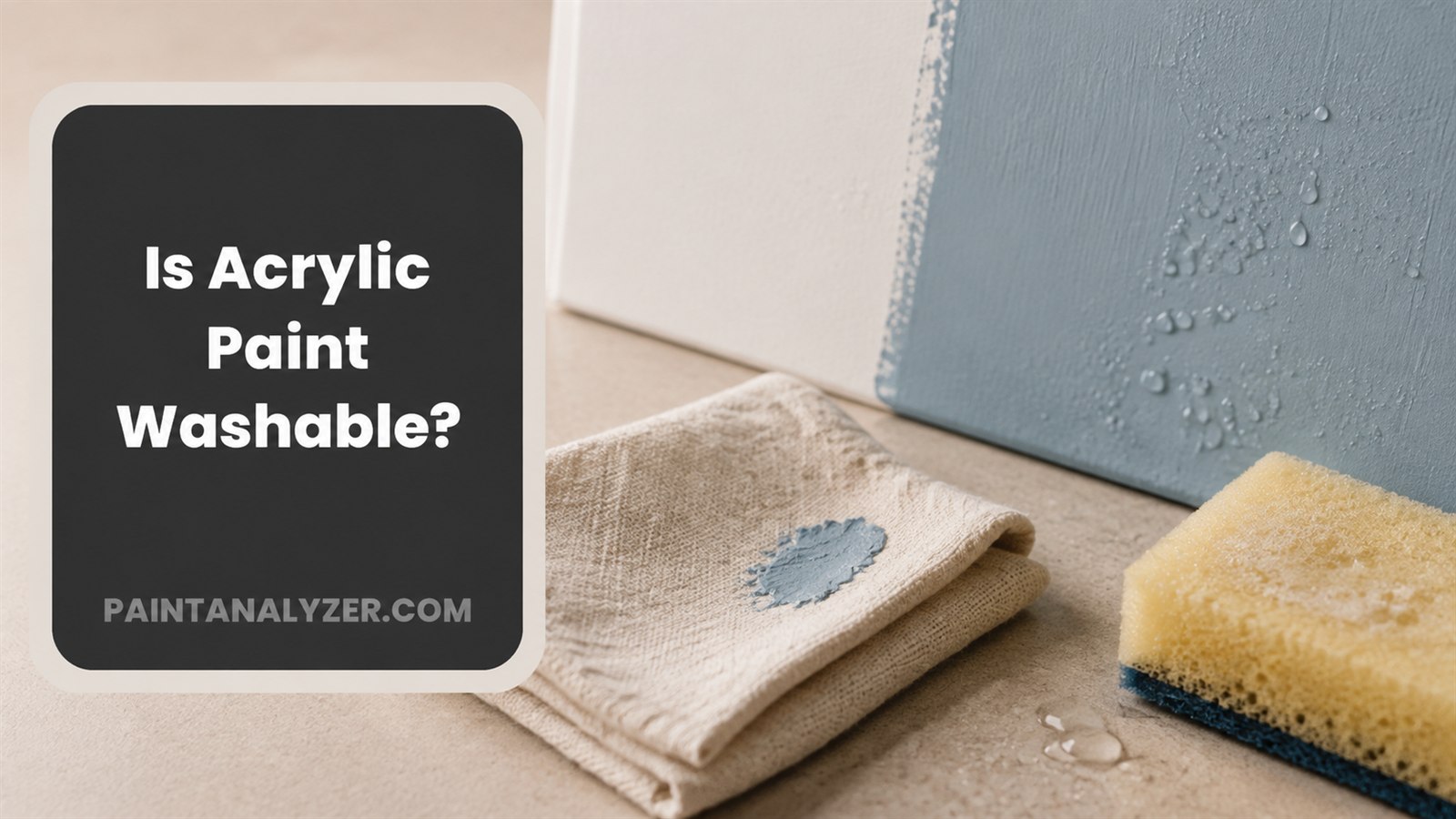
The honest answer is "it depends on whether it has dried" — acrylic paint's defining property is that it cures into a flexible, water-resistant plastic film. Wet, it's water-soluble. Cured, it very much isn't, on most surfaces.
While still wet
Wet acrylic paint wipes off most surfaces with water and comes out of most fabrics with a normal wash — acrylic hasn't cross-linked into its final plastic form yet, so it behaves like a water-based paint should.
Once fully cured
- Walls — cured acrylic wall paint is designed to be washable by hand with mild soap and water; that's the entire point of the "washable paint" marketing claim on wall-paint cans, and it holds up for normal cleaning, not solvent-level scrubbing.
- Fabric — cured acrylic craft paint on clothing is largely permanent through normal washing; it doesn't dissolve back out the way it did when wet. Acetone or specialized fabric-paint removers can sometimes lift a fresh cured stain, with no guarantee on older ones.
- Skin — cured acrylic paint on skin usually peels or rubs off within a day or two as the outer skin layer naturally sheds, though it isn't formulated as a body-safe product and shouldn't be treated as one for large areas or broken skin.
The practical takeaway
If a spill or drip just happened, act immediately with water — this is the only genuinely easy window. Once it's dry to the touch, treat it as a permanent mark on fabric and skin, and as intentionally washable (not solvent-removable) on painted walls.
"Washable" can mean two opposite things
When people ask whether acrylic paint is washable, they may mean "can I wash the painted object without removing the paint?" or "can I wash the paint out of something I stained?" Cured architectural acrylic is often washable in the first sense and difficult to wash out in the second. That apparent contradiction disappears once you separate cleaning the coating from removing the coating.
Dry-to-touch is not the same as ready to scrub
Water leaves acrylic paint quickly, but the film continues developing after it feels dry. Scrubbing a freshly painted wall can burnish, soften, or mark it before it has reached normal wash resistance. Follow the product's cure guidance before cleaning a new paint job, and start with mild soap, water, and a soft cloth rather than abrasive pads.
Fabric is difficult because acrylic surrounds the fibers
While wet, rinse from the back of the stain with cool water and keep working before heat is applied. A dryer or other heat can make an already-drying stain harder to remove. Once the acrylic film has formed around fibers, aggressive solvents that attack the paint may also remove fabric dye or damage synthetic fibers, so test any stain treatment first.
Art acrylic on an object may need a suitable protective finish
Craft or artist acrylic being water-resistant after cure does not mean every painted object is safe for dishwashing, outdoor immersion, food contact, or repeated scrubbing. The substrate, paint formulation, and any clear coat all matter. Use a coating system specifically rated for the object's service conditions rather than extrapolating from "acrylic becomes water-resistant."
Skin cleanup should stay simple
For wet paint, soap and water are the first choice. For dried paint, soften it with normal washing and allow it to release rather than reaching for harsh solvents on skin. Acrylic craft paint is not body paint; avoid using it around eyes, mucous membranes, broken skin, or large skin areas regardless of how easily a small accidental spot eventually washes off.
Guides are researched against primary documentation and observable evidence. Archived material is rewritten, checked, and substantially improved before publication.