
How to Paint Wrought Iron Fence and Railings
Wrought iron's real enemy is rust starting under the paint film, not the paint itself failing — which is why removing existing rust and priming with a rust-inhibiting primer matters more than the topcoat.
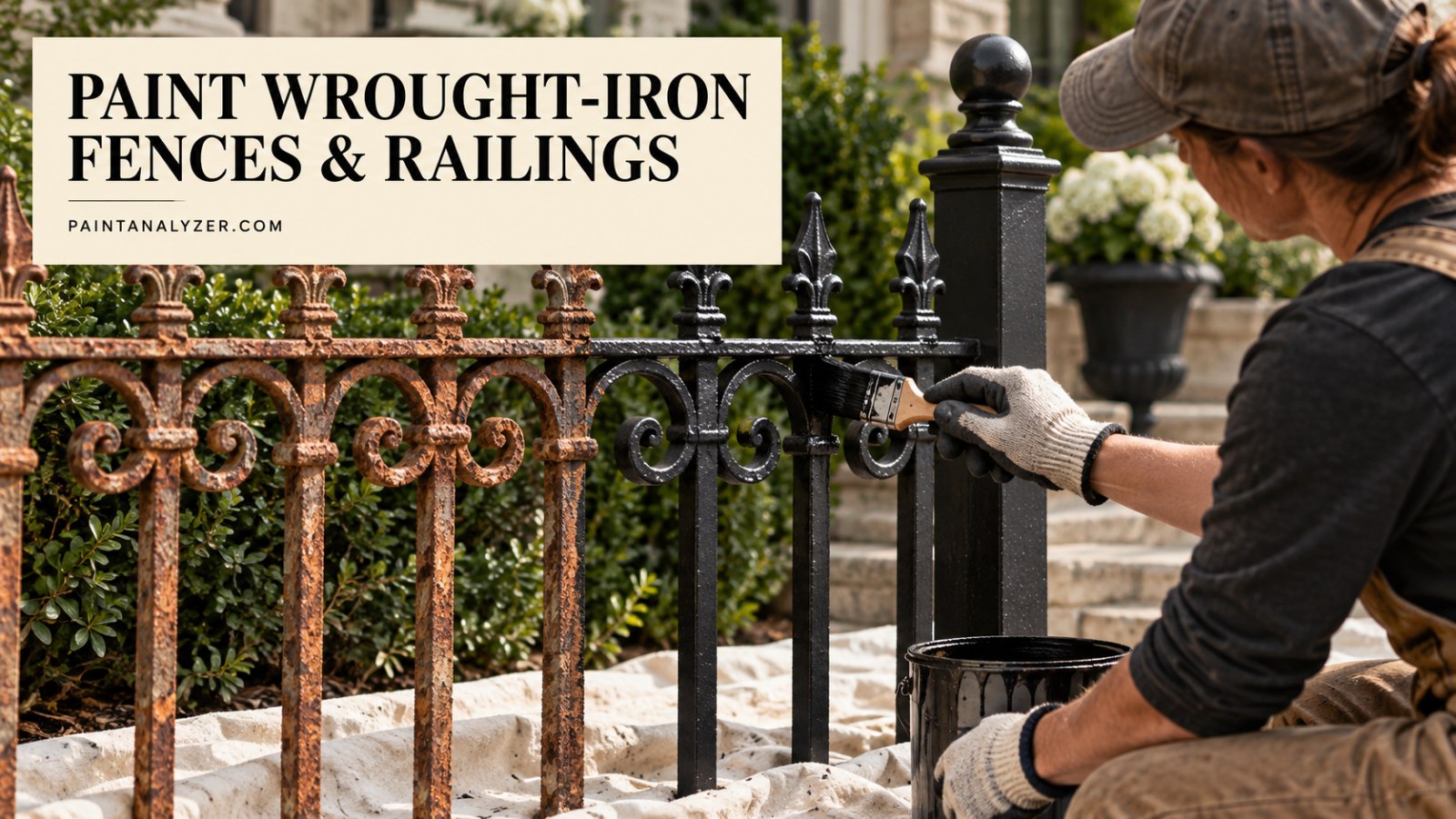
Painted wrought iron typically fails from the inside out: moisture gets under a chip or scratch in the paint film, rust starts forming against the bare metal underneath, and that rust continues spreading and pushing the paint up around it — long before the paint itself has actually worn out. Surface prep that actually removes rust, not just paints over it, is the part that determines how long the job lasts.
1. Remove loose paint and rust
Use a wire brush, wire wheel on a drill, or sandpaper to remove all flaking paint and visible rust down to sound metal — any rust left under new paint will keep spreading underneath it, since paint doesn't stop an active corrosion reaction that's already started. For heavily rusted pieces, a rust-dissolving product (phosphoric-acid based) can help before mechanical removal.
2. Clean and degrease
Wipe the cleaned metal with mineral spirits or a dedicated degreaser to remove oils, then let it dry completely — any residual grease under paint or primer prevents proper adhesion in that spot, which becomes a failure point later even if the surrounding areas hold up fine.
3. Prime with a rust-inhibiting metal primer
This is the single most important product choice in the whole job. A rust-inhibiting primer (many oil-based formulas, and some modern water-based DTM primers) both bonds to bare metal and includes corrosion-inhibiting additives that slow rust formation at the metal surface, under the paint film, going forward.
4. Choose a paint rated for exterior metal
A direct-to-metal (DTM) exterior enamel — oil-based or a quality 100% acrylic — is the standard choice; some are sold specifically as "rust-preventive" paints that combine the inhibiting chemistry into the topcoat as well as the primer. Gloss or semi-gloss sheens are typical for railings and fencing because they shed water better than a flat finish, which matters for something exposed to weather year-round.
5. Get into the joints and welds, not just the flat surfaces
Wrought iron's decorative scrollwork and welded joints are exactly where water collects and rust starts first — a foam brush or a smaller detail brush worked into every joint, weld seam, and tight curve matters more for long-term durability than an even coat on the flat, easily-reached bars.
6. Two thin coats over one thick one
A heavy single coat is more likely to sag on vertical bars and slower to cure fully — two thinner coats, each dried per the label's recoat window, hold up to weather and UV exposure better and are less likely to show brush marks or drips on the rounded surfaces typical of wrought iron.
Guides are researched against primary documentation and observable evidence. Archived material is rewritten, checked, and substantially improved before publication.