
How to Clean Up Purple PVC Primer From Your Floor
Purple PVC primer stains dry extremely fast and set into porous flooring quickly — acting within minutes, before it fully cures, gives the best chance of a clean removal.
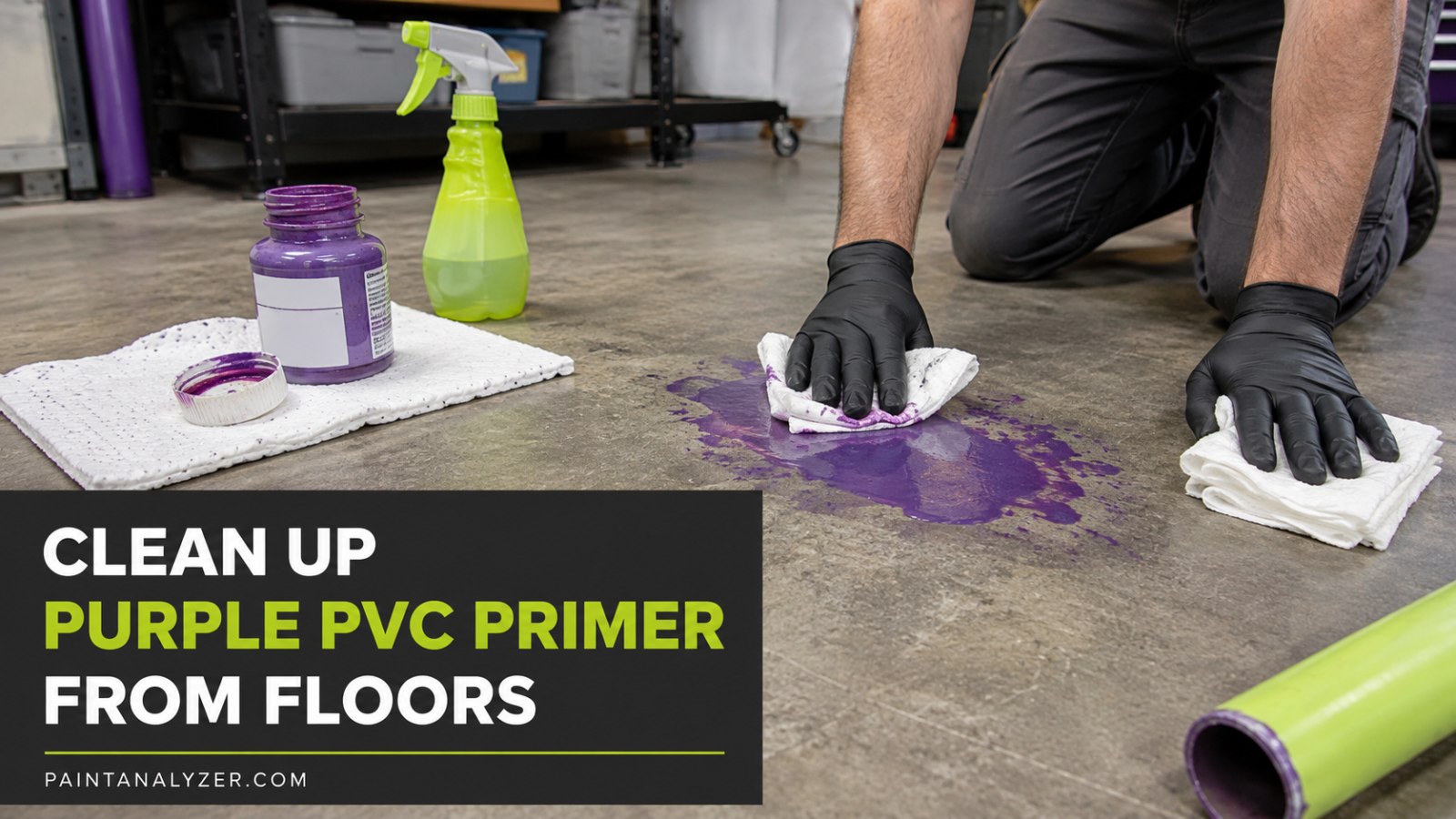
Purple PVC primer, used in plumbing work to prep pipes before solvent welding, is notorious for staining floors and surfaces almost instantly and drying extremely fast — dealing with a spill quickly and with the right approach makes a real difference in how completely it can be removed.
1. Act immediately while the primer is still wet
Purple PVC primer dries and sets remarkably fast, often within just a minute or two — blotting up as much wet product as possible immediately, using a cloth or paper towel without rubbing (which spreads it further), gives the best chance of minimizing the stain before it fully sets.
2. Use acetone for a fresh stain
Acetone is generally effective at dissolving PVC primer while it's still relatively fresh — applying it to a cloth and working on the stain, rather than pouring acetone directly onto the floor, controls the treated area and avoids spreading the stain further.
3. Test acetone on an inconspicuous area of the specific flooring first
Acetone can affect certain flooring finishes and materials, similar to the caution covered for using it near other plastics and finishes throughout this site — testing on a hidden area confirms it's safe for the specific flooring material before applying it more broadly to the visible stain.
4. For a stain that's already set and hardened
Once purple PVC primer has fully cured, it becomes considerably more difficult to remove — a combination of acetone applied repeatedly with some gentle mechanical scraping (using a plastic scraper appropriate to the flooring, to avoid scratching) may reduce but not always fully eliminate a fully set stain.
5. For flooring where acetone isn't safe to use
For flooring materials sensitive to acetone (some vinyl or finished wood floors), a specialized adhesive or solvent remover product formulated to be gentler on finished surfaces, tested first in a hidden area, may offer a safer alternative, though possibly with less complete stain removal than acetone.
6. Preventing future PVC primer stains
Laying down protective covering (drop cloths, cardboard) before any plumbing work involving PVC primer prevents this problem entirely — given how notoriously difficult this specific stain is to fully remove once set, prevention is considerably more reliable than any after-the-fact removal method.
7. When a stain simply won't come out
For a fully set, stubborn purple primer stain that resists all reasonable removal attempts, especially on a smaller, less visible area of flooring, accepting the stain (or covering it with furniture or a rug, for a highly visible spot) may be more practical than continuing aggressive removal attempts that risk damaging the flooring itself.
Guides are researched against primary documentation and observable evidence. Archived material is rewritten, checked, and substantially improved before publication.