
How to Clean and Repaint Your Old Rusty Chain-Link Fence
A chain-link fence's many thin wire surfaces make thorough rust treatment and spray application especially practical compared to trying to brush each individual link.
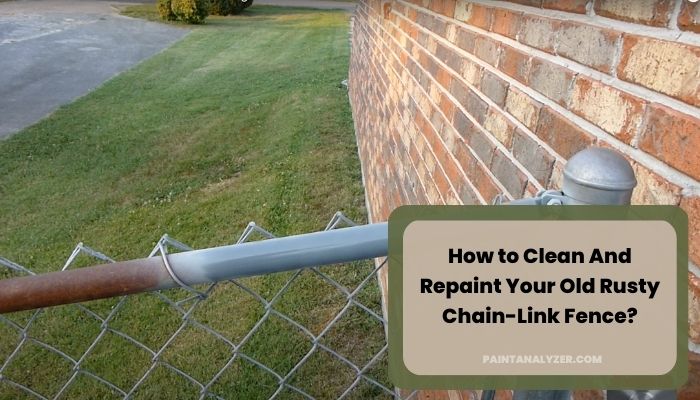
Cleaning and repainting a rusty chain-link fence follows the standard rust-treatment and metal painting fundamentals covered throughout this site, adapted for a fence's many individual thin wire surfaces, which make certain techniques (particularly spray application) especially practical compared to other metal projects.
1. Clean the fence thoroughly first
A stiff brush or pressure washer removes loose dirt, debris, and any vegetation growth tangled in the fence — giving the subsequent rust treatment and priming steps a clean surface to work with across the fence's full length.
2. Remove loose rust with a wire brush
A wire brush, worked along the individual wires and at joints, removes loose rust scale — this is more labor-intensive on a chain-link fence than a flat metal surface given the many individual wire intersections, but remains an important step before treating remaining rust.
3. Treat remaining rust with a rust converter
Following the standard rust-treatment approach, a rust converter applied to any rust that couldn't be fully removed mechanically chemically stabilizes it into a paintable surface, addressing rust across the fence's full wire surface.
4. Consider whether full rust removal and treatment is practical for a large fence
For a very long fence run with extensive rust, weighing the labor involved in thorough rust treatment against the fence's remaining useful life and the practicality of the project overall is a reasonable consideration — sometimes a more targeted approach (addressing the worst sections thoroughly, spot-treating lighter rust elsewhere) is a practical compromise.
5. Use a spray application for efficient, even coverage
Given chain-link's mesh structure, spray application (a dedicated fence paint sprayer or a standard spray gun, following standard technique covered elsewhere) covers the many individual wire surfaces far more efficiently and evenly than trying to brush or roll each section.
6. Choose a paint specifically rated for chain-link or exterior metal fencing
A paint formulated for exterior metal fencing, rated for sustained outdoor exposure, holds up considerably better on a chain-link fence's constant weather exposure than a general-purpose metal paint not designed for this specific, fully exposed application.
7. Protect surrounding areas during spray application
Masking or covering nearby plants, structures, and any surface not intended to be painted protects them from the overspray that's an inherent part of spraying a mesh fence structure, where paint inevitably passes through gaps in the chain-link pattern.
Guides are researched against primary documentation and observable evidence. Archived material is rewritten, checked, and substantially improved before publication.