
How Often Should You Paint Your House?
Exterior repaint intervals genuinely vary by siding material, climate, and paint quality — a general 5-10 year range is a reasonable starting expectation, adjusted for your specific situation.
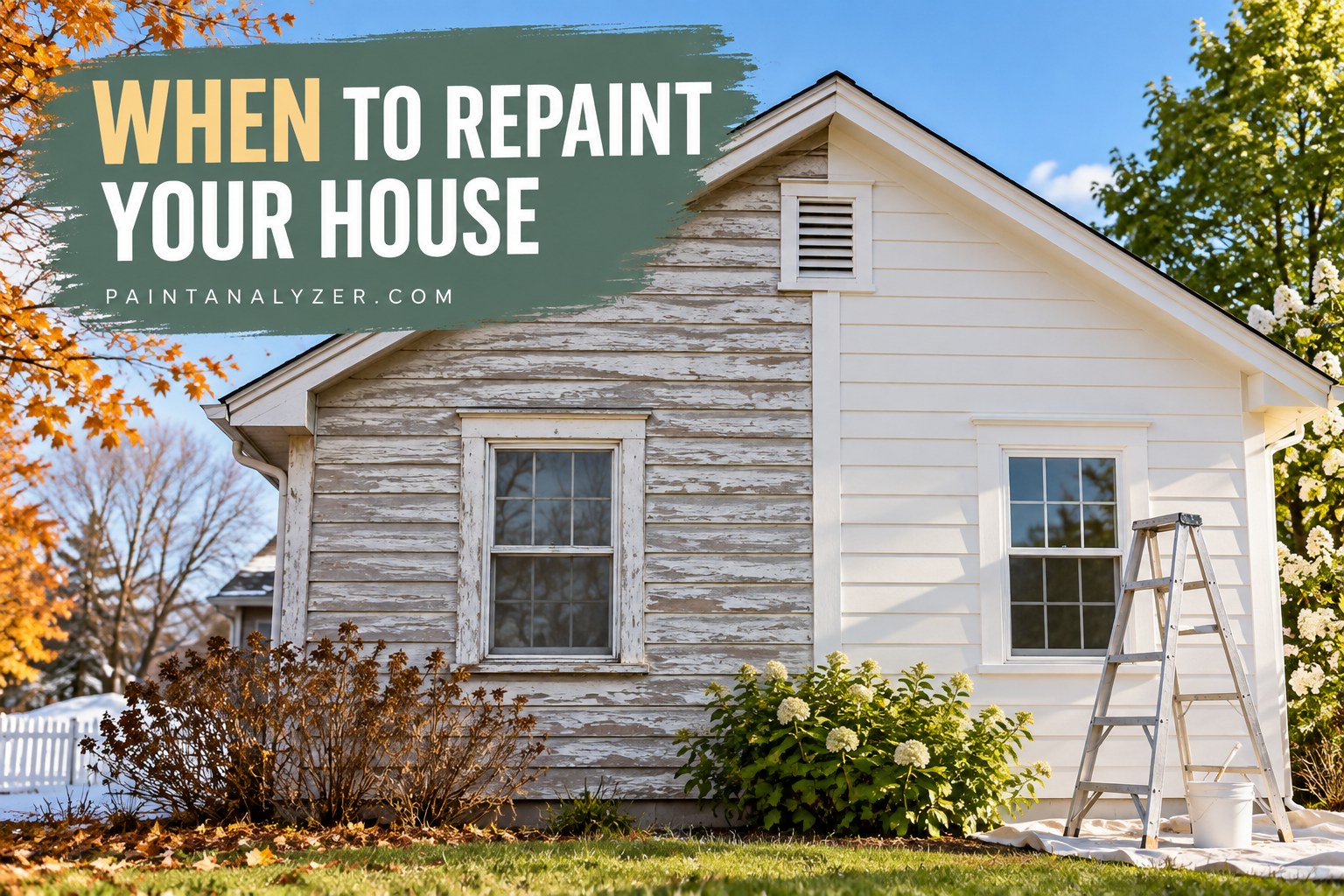
How often a house needs repainting genuinely varies based on siding material, local climate, sun exposure, and the quality of the previous paint job — a general 5 to 10 year range is a reasonable starting expectation, though the right answer for a specific home depends on these real, variable factors.
1. Siding material affects repaint frequency significantly
Wood siding generally needs repainting more frequently (often the shorter end of the range) than vinyl, fiber cement, or brick, which can go longer between paint jobs — checking typical repaint intervals for your specific siding material gives a more accurate baseline than a single universal number.
2. Climate and sun exposure matter substantially
A home in a climate with intense sun, significant temperature swings, or harsh winters will generally need repainting sooner than one in a milder, more stable climate — the sun-facing side of a house often shows wear and fading sooner than more shaded sides, sometimes needing earlier attention even on the same structure.
3. Paint quality affects how long a paint job actually lasts
A higher-quality paint, properly applied with correct prep, generally lasts longer before needing repainting than a lower-quality product or a job with inadequate prep — this is part of why paint quality is worth the investment for exterior work specifically, where longevity translates directly into fewer repaint cycles.
4. Signs it's time to repaint, regardless of how much time has passed
Fading, chalking, peeling, or cracking are visual signs that repainting is due, independent of a specific time interval — checking the home's actual current condition is more reliable than assuming a fixed schedule applies regardless of how the paint is actually holding up.
5. Interior paint generally lasts longer between repaints than exterior
Interior surfaces, facing far less weather exposure, typically go considerably longer between repaints than exterior surfaces — high-traffic interior areas (hallways, kids' rooms) may need more frequent attention for scuffs and marks, while lower-traffic rooms can go many years without needing a full repaint.
6. Regular inspection helps catch the right timing
Periodically walking around and inspecting the exterior (checking for the fading, chalking, or peeling signs mentioned above) helps catch the right repainting window before minor issues develop into more significant problems requiring more extensive prep work.
7. The practical takeaway
Rather than relying on a single fixed number, checking your home's specific siding material, climate exposure, previous paint quality, and current visual condition gives a more accurate, personalized sense of when repainting is genuinely due — the 5-10 year range is a reasonable general guideline to check your specific situation against, not a rule to follow blindly.
Guides are researched against primary documentation and observable evidence. Archived material is rewritten, checked, and substantially improved before publication.