
How to Seal Marine Plywood
Marine plywood still needs a finish system. Seal faces, end grain, holes, and joints; use epoxy where a moisture barrier is needed, then protect cured epoxy from UV with a compatible finish.
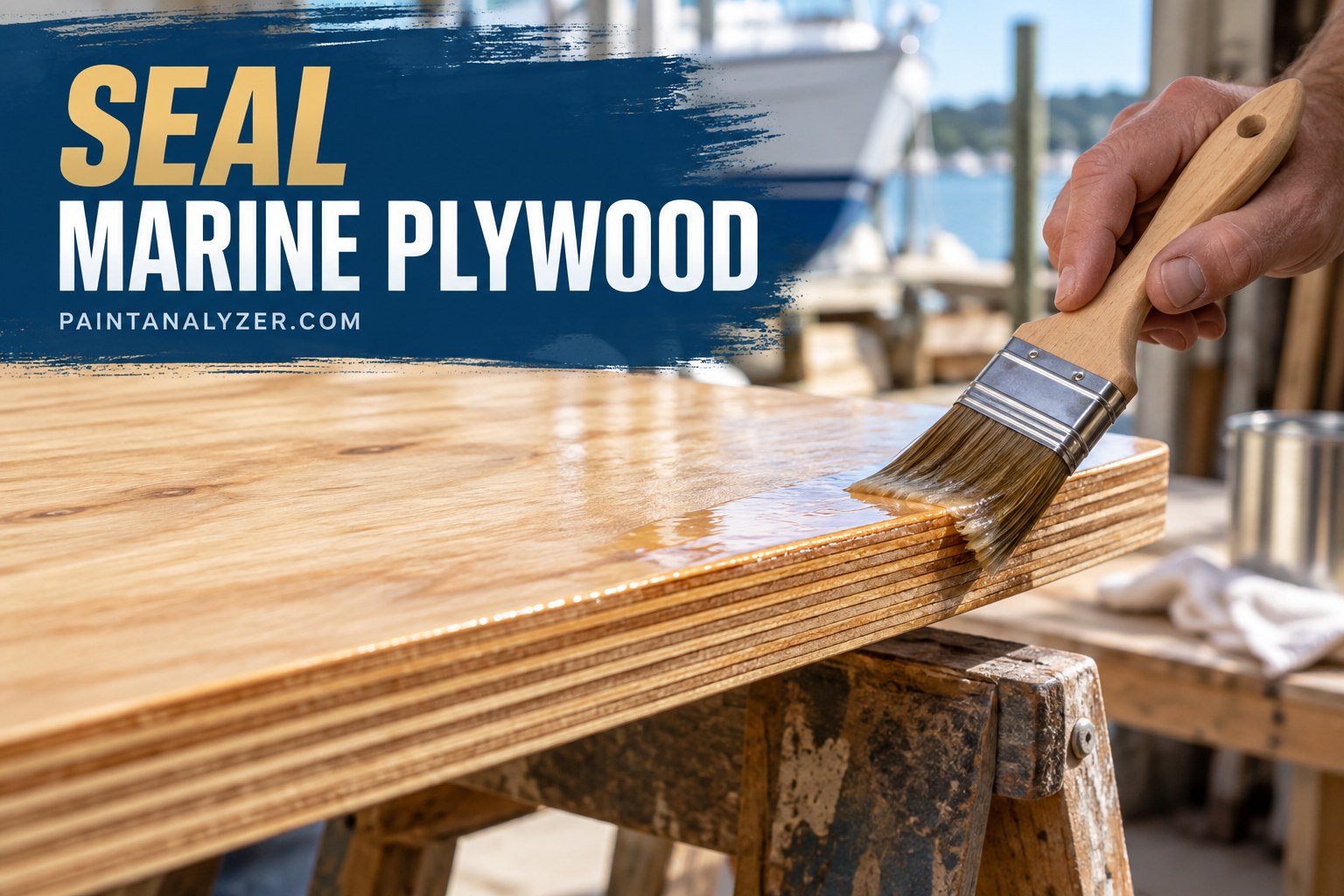
Marine plywood is not a finished waterproof surface. Its construction uses high-grade veneers and waterproof structural adhesive, but the wood itself can still absorb moisture, and marine-grade plywood is not automatically treated against decay. For demanding wet service, a common approach is to coat all accessible faces, cut edges, holes, and joints with a properly mixed marine epoxy system, then protect cured epoxy from sunlight with a compatible paint or varnish.
The correct system depends on exposure. A painted exterior cabinet that gets occasional rain is different from a boat component, bilge panel, deck, or part that may stay wet. For continuous immersion, structural boat work, or a component whose failure could affect safety, use the plywood, epoxy, reinforcement, and coating schedule specified by the boat designer or coating manufacturer rather than a generic DIY recipe.
What “marine plywood” does—and does not—mean
APA describes marine-grade plywood as a premium exterior-rated panel with high-grade veneers, limited core gaps, and fully waterproof structural adhesive. That improves resistance to delamination, but it does not mean the wood fibers cannot take up water. APA also notes that marine-grade plywood is not chemically treated to improve decay resistance.
Choose the sealing system by exposure
| Exposure | Typical approach | Key concern |
|---|---|---|
| Interior, occasional splash | Compatible primer/paint or clear finish may be adequate | Seal edges and penetrations; follow coating TDS |
| Exterior above waterline | Epoxy moisture barrier plus UV-resistant paint/varnish, or a manufacturer-approved exterior marine system | UV exposure and water entry at edges/fasteners |
| Boat/deck component with repeated wetting | Marine epoxy system, detailed joints/holes, often reinforcement where specified, plus UV/protective finish | Complete encapsulation and mechanical wear |
| Continuous immersion or structural marine use | Designer/manufacturer-specified system | Safety, osmotic/moisture exposure, fastening and laminate design |
How to seal marine plywood with epoxy
1. Start with dry, sound plywood
Do not trap active moisture under a barrier coating. The panel should be clean, dry, structurally sound, and free of contamination. Round or ease sharp outside edges when the epoxy manufacturer recommends it; very sharp corners are difficult to coat at a uniform film thickness.
2. Fit and drill before final coating when practical
Plan joints, fasteners, hardware holes, and cutouts early so newly exposed wood can be sealed. End grain at cut edges and the walls of drilled holes deserve deliberate attention because they expose more absorbent wood structure than a face veneer.
3. Mix epoxy exactly to the system ratio
Use the resin and hardener as a matched system. Measure at the specified ratio and mix for the time and method required by the manufacturer. Do not change the hardener ratio to make epoxy cure faster or slower.
4. Coat faces, edges, holes, and joint details
Apply a continuous barrier coat at the coverage and recoat schedule specified for the epoxy. Watch cut edges and end grain for areas that absorb the first coat quickly. Joints, fillets, fiberglass reinforcement, and hardware bedding are separate details; use the epoxy manufacturer's procedure for those tasks rather than assuming a surface coat alone seals every joint.
5. Recoat within the approved window or prepare the cured surface
Epoxy systems have specific recoat rules. If the surface has fully cured, it may require washing to remove amine blush, drying, and sanding before the next coating. WEST SYSTEM, for example, instructs users to let the final coat cure, wash the surface, and sand it before a final finish.
6. Add UV protection
Epoxy needs protection from long-term sunlight. Apply a compatible marine paint or varnish over properly prepared cured epoxy. The topcoat is not decorative only: it shields the epoxy moisture barrier from ultraviolet degradation. Verify compatibility with the epoxy and finish manufacturers, especially for two-part or specialty coatings.
Painting marine plywood
If the final appearance will be opaque, use a coating system intended for the service environment. “Marine paint” is not one universal chemistry. Topsides, decks, bilges, and below-waterline areas can require different products. Follow the coating maker's primer, film-build, recoat, and immersion instructions.
Common failure points
- Unsealed cut edges: water enters where the panel was trimmed after coating.
- Fastener holes: drilling through a finished panel exposes fresh wood unless the detail is resealed.
- Epoxy left in direct sun: the moisture barrier lacks its required UV-protective finish.
- Coating damp wood: moisture is trapped or adhesion suffers.
- Ignoring joints: a coated face does not compensate for an unsealed seam or poorly bedded fitting.
- Using a generic schedule for immersion: continuous wet service needs the specific marine system and design requirements.
How to check the finished job
Before installation, inspect under bright light for pinholes, bare end grain, thin corners, damaged coating around holes, and missed underside areas. After installation, inspect periodically for cracks, abrasion, failed topcoat, or water entry around hardware. Repair coating damage before exposed wood stays wet.
Seal penetrations and end grain, not just the visible faces
Boatbuilding guidance from WEST SYSTEM repeatedly treats exposed plywood end grain and fastener holes as high-priority wet-out areas. End grain can absorb substantial epoxy, and drilled holes expose fresh wood even after the faces have already been coated. If hardware is installed after finishing, the hole detail needs to be resealed according to the system used for the project.
Epoxy coating is not the same as structural fiberglass sheathing
A clear epoxy barrier coat can reduce moisture uptake, but a structural laminate is a different assembly. Fiberglass cloth, fillets, scarf joints, tabbing, and hardware bonding add reinforcement and load transfer only when designed and installed for that purpose. Do not assume that “two coats of epoxy” turns ordinary joinery into a structural marine laminate.
Pay attention to temperature trend and outgassing
Wood contains air in its pores. When a warming substrate causes that air to expand through fresh epoxy, bubbles can form. Marine epoxy manufacturers commonly recommend planning coating conditions so the substrate is not rapidly warming during application, and following their product-specific guidance for viscosity, hardener speed, and recoat windows. Do not heat a freshly coated panel aggressively in an attempt to speed cure.
What changes for below-waterline or continuously wet service
Continuous immersion adds requirements that an above-waterline clear-finish project may not have: minimum barrier-coat thickness, compatible antifouling or underwater coatings, laminate design, osmosis protection, and strict launch/immersion windows. The exact system must come from the selected marine coating manufacturer or boat designer. If the plywood is part of a hull, transom, structural deck, fuel-space enclosure, or other safety-critical component, generic web instructions are not an adequate specification.
Epoxy safety
Uncured epoxy resin and hardener can irritate or sensitize skin. Wear the gloves, clothing, eye protection, and ventilation/respiratory controls specified by the SDS, and avoid breathing sanding dust from partially cured epoxy. Do not clean epoxy from skin with solvents; follow the epoxy manufacturer's skin-cleaning guidance.
Bottom line
To seal marine plywood effectively, think beyond the broad faces. Protect the edges, penetrations, joints, and hardware details; use a matched epoxy system where a true moisture barrier is appropriate; and protect cured epoxy from UV with a compatible finish. For immersed or safety-critical marine components, follow the engineered coating schedule for that application.
Sources and further reading
Guides are researched against primary documentation and observable evidence. Archived material is rewritten, checked, and substantially improved before publication.