
Can You Paint Teak Wood?
Yes, but teak's high natural oil content is a real adhesion obstacle — the wood needs thorough degreasing (not just cleaning) before paint has any real chance of bonding properly.
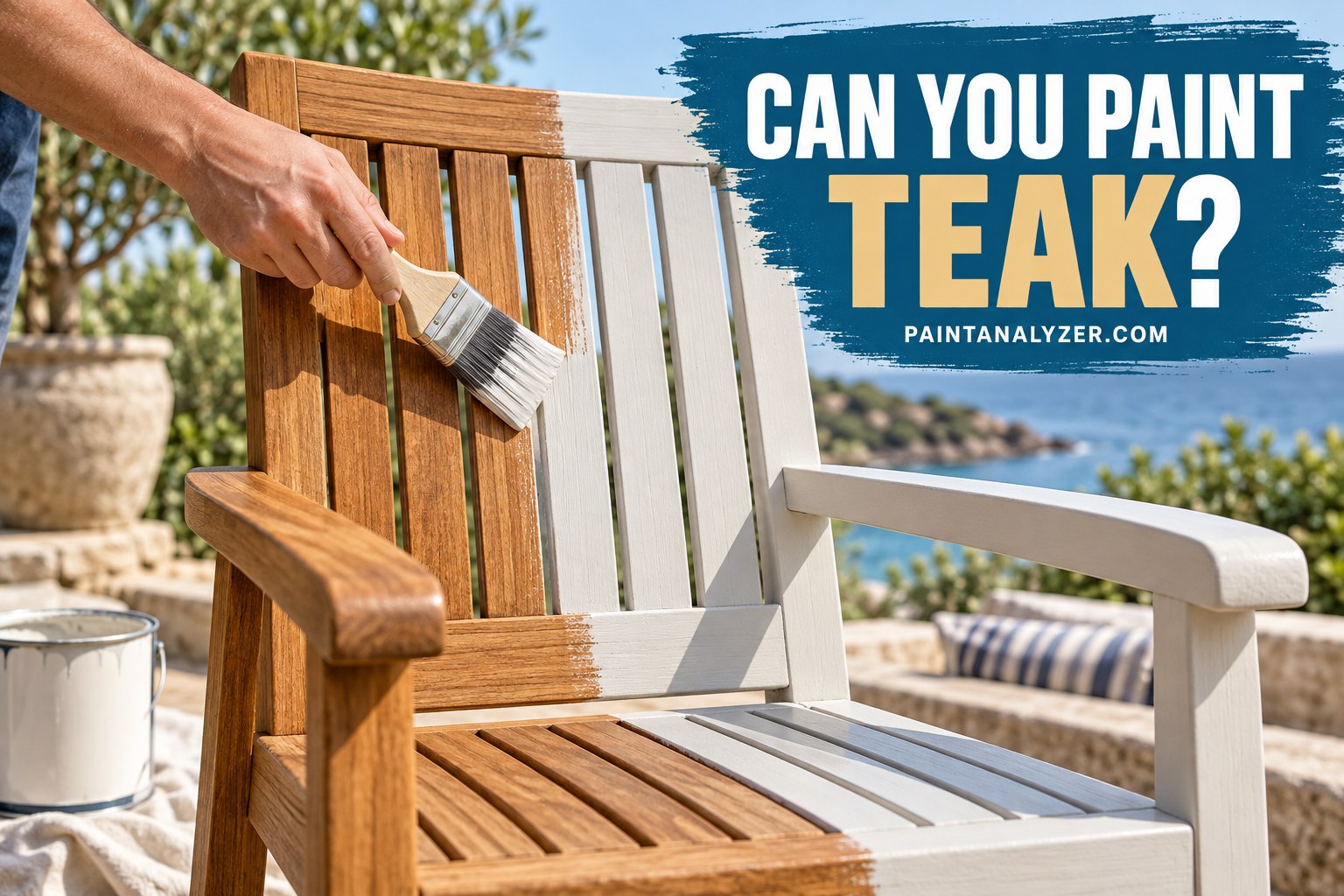
Teak is naturally rich in oils (part of what makes it so weather- and rot-resistant, and popular for outdoor furniture) — but that same oil content is exactly what makes it a genuinely challenging wood for paint adhesion, more so than most other wood species covered on this site.
1. Why teak's natural oils resist paint
Teak's high natural oil content sits at and near the wood's surface, creating a naturally water- and paint-resistant barrier — this is the same property that makes teak so durable outdoors untreated, but it directly works against paint's ability to penetrate and bond to the wood the way it would on a less oily species.
2. Thorough degreasing is the essential first step
1. Clean with a dedicated teak cleaner or a solvent-based degreaser
   specifically to strip surface oils, not just dirt
2. Rinse thoroughly and allow to dry completely
3. Some teak may need more than one degreasing pass, given how oil-rich
   the wood naturally is
This is a genuinely different, more intensive cleaning step than standard wood prep — a basic soap-and-water wash addresses dirt but doesn't meaningfully remove the wood's own internal oil content sitting at the surface, which is the actual adhesion obstacle here.
3. Sanding to open up the surface further
After degreasing, a sanding pass (starting around 120-grit, finishing around 220-grit) helps remove the oil-saturated outer wood layer and exposes fresher wood underneath, which accepts primer more readily than the naturally oil-rich surface layer alone.
4. Use a primer specifically suited to oily or exotic hardwoods
Some primers are specifically formulated or recommended for oily, dense hardwoods like teak — checking for this specific compatibility, rather than assuming a standard wood primer performs identically on teak as it would on pine or oak, matters more here given teak's particular challenge.
5. Consider whether painting teak is actually the right call
Teak's natural weathering (fading to an attractive silvery-gray over time if left untreated) or a teak-specific oil finish (maintaining its natural warm color) are both well-established, lower-effort alternatives to painting — many people choose teak furniture specifically for these natural finish options, and painting it (fighting against the wood's own oil-rich nature) is a less common choice worth being a deliberate decision rather than a default.
6. If proceeding with paint: realistic maintenance expectations
Even with thorough degreasing and proper prep, painted teak may show adhesion issues over time as the wood's ongoing, slow oil migration continues to work against the paint film from underneath — periodic touch-ups and closer monitoring for early chipping or peeling, compared to painting a less oily wood species, is a reasonable expectation to carry into this specific project.
Guides are researched against primary documentation and observable evidence. Archived material is rewritten, checked, and substantially improved before publication.