
Can You Paint Hot Glue?
Yes, and it's a common craft technique for adding raised texture or detail — hot glue's slightly flexible, low-porosity surface takes acrylic paint reasonably well once it's fully cooled and hardened.
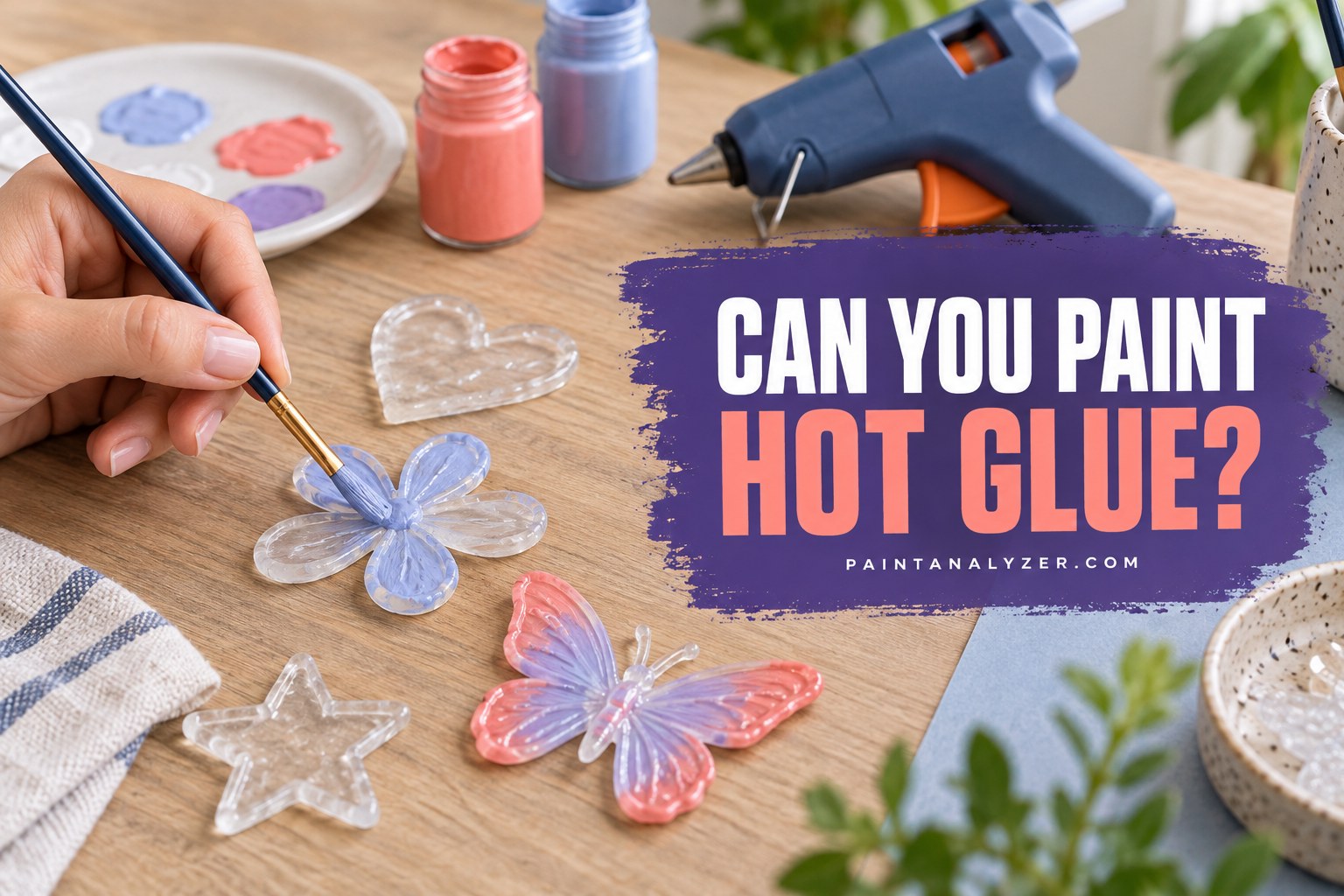
Painting over cooled, hardened hot glue is a common craft technique — used to add raised texture, faux gems, or dimensional detail to a project, then painted over to blend it into the surrounding design. Hot glue accepts acrylic paint reasonably well once it's fully cooled, though its slightly flexible, low-porosity surface benefits from a few specific considerations.
1. Let the glue cool and harden completely before painting
Hot glue needs to fully cool and set (typically a few minutes for a small application, though thicker applications take longer) before painting — attempting to paint over glue that's still warm or not fully hardened disturbs its shape and doesn't give paint a stable surface to bond to.
2. Acrylic craft paint is the standard, appropriate choice
Water-based acrylic paint works well on cooled hot glue and is the standard choice for this technique — following the same general logic covered for other craft substrates, acrylic's flexibility as it dries actually pairs reasonably well with hot glue's own slight flexibility, reducing the chance of the paint cracking at any flex points.
3. Light surface prep can help adhesion on a larger or smoother glue application
For a larger hot glue application with a notably smooth, glossy surface, a very light scuff (fine sandpaper, used gently) can improve paint adhesion — similar in principle to deglossing any smooth surface, though for small decorative glue-dot applications this step is often unnecessary and paint adheres fine directly.
4. Multiple thin coats work better than one thick coat
As with most surfaces, building color with two or three thin coats rather than one heavy coat gives more even coverage and reduces the risk of the paint pooling unevenly in hot glue's characteristic raised, sometimes uneven texture.
5. Sealing the painted glue for durability
For a project that will be handled regularly, a clear sealant or topcoat over the painted glue adds some durability — hot glue and paint together are still a relatively delicate combination compared to a solid material, and a project meant to last through regular handling benefits from this extra protective step.
6. What hot glue painting is commonly used for
- Faux dimensional details — raised dots, swirls, or lines painted to look like a different, more expensive material (metallic accents, faux gems).
- Texture effects — adding physical texture to a flat craft surface before painting the whole piece as one unified design.
- Ornament and decoration detail work — small decorative accents on holiday or seasonal craft projects.
7. Limitations to keep in mind
Hot glue remains a relatively soft, low-durability material compared to the surrounding craft substrate it's usually applied to — painted hot glue details are best suited to decorative pieces rather than anything expected to withstand regular physical contact, flexing, or wear, since the glue itself (not just the paint on top of it) has real physical limits.
Guides are researched against primary documentation and observable evidence. Archived material is rewritten, checked, and substantially improved before publication.