
Can Butcher Block Countertops Be Painted?
Yes, with the same food-safety consideration covered for choosing a butcher block finish generally — full opaque paint works, but it needs a genuinely food-safe topcoat if the surface still does any food-prep duty.
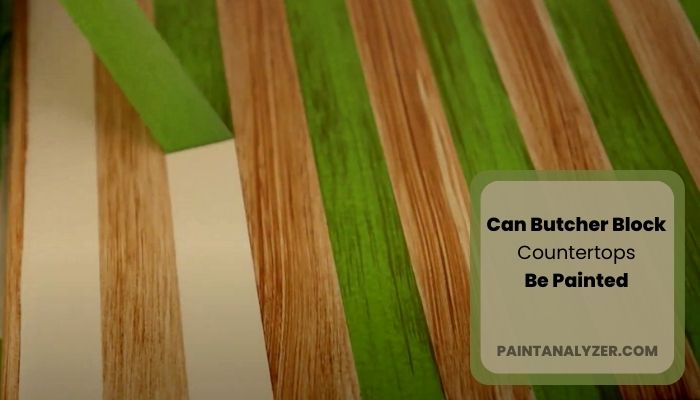
Butcher block countertops can be painted for a full color change, following the same food-safety priority covered separately for choosing a butcher block finish — the process itself is straightforward wood painting technique, but every product choice needs to account for whether the surface still contacts food.
1. Clean and sand the existing surface
1. Remove any existing oil or wax finish — a degreasing cleaner, since oiled
   butcher block resists new paint adhesion until that oil is removed
2. Sand thoroughly, starting around 120-grit and working to 220-grit
3. Wipe away all sanding dust
Butcher block's typical oil-based conditioning treatment is a real adhesion obstacle if not fully addressed first — new paint applied over an oiled surface without proper cleaning and sanding often fails to bond well, similar to painting over any surface with residual oil or wax.
2. Prime with a stain-blocking, food-area-appropriate primer
Given butcher block's typical use in a kitchen, choosing a primer without concerning off-gassing for a food-prep area, and one that blocks the wood's natural tannins (as covered for various wood species generally), sets up the topcoat for both a clean appearance and food-area appropriateness.
3. If the surface will still be used for food prep: use food-safe products throughout
As covered for choosing a butcher block finish generally, any primer, paint, and topcoat sealer used on an active food-prep surface needs to be genuinely food-safe once cured — this is worth confirming for every product in the system, not just the final topcoat, if the counter will continue serving its food-prep function after painting.
4. If the surface is being repurposed as decorative, not food-prep
For a butcher block piece being converted to a purely decorative surface — a painted island top no longer used for direct food contact, for instance — the food-safety requirement relaxes, and standard quality paint and topcoat products can be used following normal wood-painting practice, without needing every product in the system to carry food-safe certification.
5. Sealing the painted finish
A clear topcoat (food-safe if the surface remains food-prep-active, standard if it doesn't) over the paint adds durability against the wear a countertop naturally experiences — following the same general logic covered for sealing painted furniture, but with the food-safety consideration layered on top for an active kitchen work surface specifically.
6. Realistic durability expectations for a painted countertop
A painted butcher block surface, even well-sealed, generally shows wear (scratches, dulling) faster in an actively used kitchen than the original conditioned wood finish would — this is a genuine trade-off for the color change, and being realistic about needing more frequent touch-ups than an oiled, unpainted butcher block would need is part of going into this project with accurate expectations.
Guides are researched against primary documentation and observable evidence. Archived material is rewritten, checked, and substantially improved before publication.